

Whether you’re a daily commuter trying to mute a rattling train, a remote worker sharing space with a noisy household, or a frequent flyer hoping to soften the roar of an engine, the right pair of audio cancelling headphones can change how your day sounds. Active noise cancellation (ANC) uses tiny microphones and onboard processing to generate a counter-signal that cancels low-frequency rumble before it reaches your ears, and the models below approach that goal in very different ways. Some lean on marathon battery life, others chase studio-grade accuracy, and a few focus on value and comfort. Here’s a lineup of ten audio cancelling headphones that each carve out a clear lane for a specific kind of listener.
A Closer Look At The Lineup

Ivrydas Wireless ANC Headphones Bluetooth 6.0 66H

Beats Studio Pro AppleCare+ Sandstone

Audio-Technica ATH-M50X Studio Monitor Black

Audio-Technica ATH-M20x Studio Monitor Black

Raycon Essential ANC Headphones Over-Ear Blue

Raycon Essential ANC Headphones Over-Ear Purple

Raycon Essential ANC Headphones Over-Ear Black
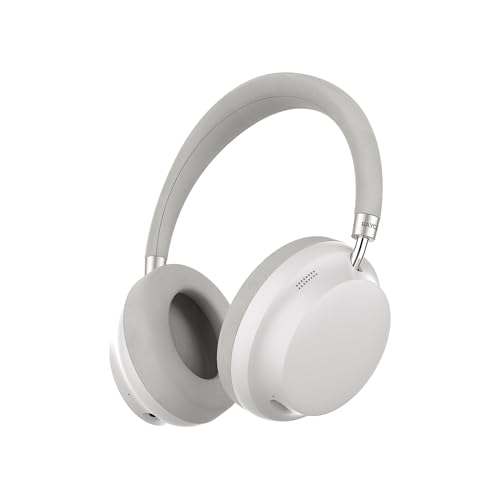
Raycon Essential ANC Headphones Over-Ear White
Audio-Technica ATH-M20xBT Wireless Black

Qecnato Wireless Earbuds Bluetooth 5.4 Rose Gold
Meet The Standout Selections
These Ivrydas headphones target the listener who simply doesn’t want to think about charging for days at a time. The 66-hour battery rating is the headline feature, and in a category where 30 hours is typical, that gap matters if you take long flights, work extended shifts, or just dislike the weekly ritual of topping up a battery.
The 35dB ANC figure suggests moderate rather than aggressive noise reduction, which translates to softened engine rumble and air-conditioning hum rather than total silence. Bluetooth 6.0 with a stated 10-meter range and dual-device pairing keeps a phone and a laptop connected at the same time, a quietly useful feature for hybrid workers. Compared to the Beats Studio Pro further down this list, the Ivrydas offers far longer endurance at a presumably lower cost, though the trade-off shows up in noise depth.
The Good Stuff
- 66-hour playback covers a full work week of commutes between charges
- Dual-device pairing saves you from re-pairing when switching between phone and laptop
- Type-C charging aligns with the cable you already carry
- Transparency Mode lets you hear announcements without removing the headset
- AUX input adds a wired fallback when Bluetooth isn’t welcome, like on older in-flight systems
Things To Consider
- 35dB of ANC is modest, so loud cafés may still bleed through during focused work
- Brand-agnostic features like app-based EQ customization are not part of the package
Key Specs
Who It Suits Best
Frequent travelers, hybrid workers, and anyone tired of daily charging will get the most out of this pick.
Skip It When
Step up to the Beats Studio Pro if deeper ANC and a richer feature ecosystem matter more than battery endurance.
The Beats Studio Pro leans into a polished, lifestyle-oriented experience rather than a pro studio tool. The included two-year AppleCare+ coverage is unusual for headphones and softens the long-term risk of accidental drops or battery wear, which is genuinely useful if you plan to carry these daily.
You also get USB-C lossless playback and the option of a 3.5mm analog cable, so the Studio Pro flexes between casual wireless use and more demanding wired listening. The Sandstone finish offers a warmer look than the standard black or navy Beats options. For Apple-device households, the seamless handoff between iPhone, iPad, and Mac feels like the headline benefit.
Useful Highlights
- Two-year AppleCare+ coverage cushions the cost of accidental damage and battery wear
- USB-C lossless playback delivers higher-fidelity audio than standard Bluetooth streams
- Custom acoustic platform aims at a balanced sound for music, calls, and casual listening
- 3.5mm cable input keeps the headphones useful when wireless isn’t an option
Points To Note
- ANC depth isn’t specified, so you’re trusting Beats’ tuning rather than reading a dB number
- The premium positioning means the cost climbs quickly once you add AppleCare
Made For
Apple ecosystem users who value long-term coverage, polished design, and tight iPhone integration will appreciate this pick.
Look Elsewhere When
Switch to the Audio-Technica ATH-M50X if wired studio accuracy is your priority rather than wireless convenience.
The ATH-M50X has spent years as a default recommendation for anyone who records, mixes, or just wants honest wired sound. The detachable cable is the practical upgrade over the older M50, making the headset easier to live with on a crowded desk and easier to replace if the cord eventually wears out.
Unlike the Ivrydas and Beats above, this Audio-Technica is a passive design, meaning it blocks noise through the seal of the earcups rather than electronic cancellation. That keeps the audio path clean for critical listening, but it also means loud environments will still creep in on planes and busy offices. For most home studios and quiet workspaces, the trade-off is well worth it.
What Earns Its Place
- Critically acclaimed M-Series tuning, prized by audio engineers and reviewers
- Detachable cable extends the headset’s working life and simplifies storage
- Robust build quality that holds up to daily studio and travel use
- Sound-isolating earcups reduce bleed in untreated rooms
Trade Offs
- No active noise cancellation, so loud commutes still leak in
- Wired-only design requires an adapter for phones without a headphone jack
- Larger earcups can feel warm during long summer sessions
Feature Snapshot
Best Suited To
Home producers, podcast editors, and anyone making critical listening decisions will get the most from this model.
Not Your Match When
Grab the Audio-Technica ATH-M20xBT if you want the same studio lineage with Bluetooth freedom for practice sessions.
The ATH-M20x is the entry point into Audio-Technica’s M-Series, and it carries more of the family DNA than you might expect at this tier. The 40mm drivers with rare earth magnets and copper-clad aluminum voice coils deliver a tuning that leans slightly toward enhanced low frequencies, which suits modern music and gaming soundtracks.
The circumaural (around-the-ear) design contours around the ears for a solid passive seal, helpful in noisy environments without adding active processing. A single-side cable exit keeps the cord out of the way during tracking sessions. For someone starting a podcast or learning to mix, this is a friendly first step that won’t feel limiting.
The Case For It
- 40mm drivers bring punchy low end for the price tier
- Circumaural fit reduces external noise passively
- Single-side cable exit keeps clutter down on a small desk
Points To Keep In Mind
- Wired only, no Bluetooth option for casual phone use
- Tuning is on the bass-heavy side, which may color critical mixing decisions
Whose Shelf It Belongs On
First-time producers, students, and budget-conscious listeners will find this an easy first pair.
A Better Fit Elsewhere
Move up to the Audio-Technica ATH-M50X if you need a more neutral tuning for serious production work.
The Raycon Essential lineup is built around accessibility rather than audiophile credentials. The Blue finish adds a punch of personality for shoppers who treat their headphones as part of their everyday look. Active noise cancellation pairs with an Awareness Mode (transparency), so you can drop into a coffee shop, mute the chatter, then flip back on for a quick conversation.
Battery life lands at roughly 50 hours, which clears a long week of casual listening. Five-microphone call clarity targets voice pickup for remote meetings, and the over-ear cushions aim at all-day comfort. Compared to the Audio-Technica wired models above, this is firmly a lifestyle pick, prioritizing convenience and comfort over studio detail.
Benefits That Matter
- Awareness Mode keeps you tuned to announcements and traffic
- About 50 hours of battery life per charge
- Five-microphone array sharpens voice pickup for calls
- Cushioned over-ear fit suits long listening days
Honest Caveats
- ANC depth isn’t published, so performance is a trust-the-brand situation
- Soft cushioning may run warm in hot climates
Quick Facts
Right Fit For
Remote workers, students, and casual daily listeners who want comfort and Bluetooth simplicity will appreciate this pick.
Reach For A Different Pick When
Consider the Beats Studio Pro if tighter Apple integration and lossless playback matter more to your workflow.
Functionally identical to the Blue version above, this Purple pair exists for shoppers who want their headphones to coordinate with a personal color palette. The internal hardware, ANC tuning, and battery life match the rest of the Essential family.
For most listeners, the choice between this and the Black or White variants is purely aesthetic, and that’s exactly the point. If your gear lives on a desk that doubles as a workspace and a content backdrop, a confident color choice makes the headphones feel intentional rather than incidental.
The Practical Payoff
- Distinct Purple finish stands out in a sea of black headphones
- Same ~50-hour battery life as the rest of the Essential line
- Awareness Mode for quick conversations without removing the headset
Worth Noting
- No spec differences from the other Essential color options, so you’re paying for looks
- Lighter finishes may show wear on the headband over time
Perfect Match For
Style-minded shoppers who want their tech accessories to match a wardrobe or desk setup will enjoy this pick.
Another Choice May Suit
Pick the Raycon Essential in Black if you prefer a neutral finish that hides scuffs during daily commutes.
The Black Raycon Essential is the safe, invisible choice in the lineup, the pair you toss in a backpack without thinking twice. The matte shell forgives the daily wear of commuting and shared workspaces, and the familiar color keeps the headphones visually quiet in professional settings.
You get the same roughly 50-hour battery, Awareness Mode, and 5-mic call clarity as the other Essential variants. For shoppers who don’t care about color but want a reliable wireless pair for daily use, this is the practical anchor of the lineup.
A Few Strong Suits
- Discreet Black finish that resists visible wear
- Comfortable over-ear cushions for long work calls
- Bluetooth simplicity for non-technical users
Room For Improvement
- ANC strength isn’t quantified, so deep office noise may still intrude
- No wired fallback if the battery runs dry mid-day
Who Should Grab It
Commuters, office workers, and anyone wanting a no-fuss wireless pair will appreciate the straightforward profile.
Swap It Out When
Choose the Ivrydas Wireless ANC Headphones if marathon battery life and a wired AUX option are higher priorities.
The White Raycon Essential rounds out the color lineup with a finish that pairs naturally with bright, minimal workspaces. If your desk is all light wood, neutral ceramics, and a single indoor plant, this headset will blend in instead of interrupting the look.
Internally, you’re getting the same driver and ANC platform as the rest of the Essential family. The trade-off is the finish itself: lighter shells typically show smudges and grime faster than darker options, so the headphones may need occasional wipe-downs to stay crisp.
The Upside
- Clean White finish complements minimalist setups
- ~50-hour battery supports a long work week
- Awareness Mode helps during doorbell runs and quick conversations
Small Caveats
- Light finish shows fingerprints and bag grime more readily
- No published ANC depth, so manage expectations in loud environments
Right Fit For
Aesthetic-focused shoppers who curate a calm, bright workspace will appreciate the visual consistency.
Not Your Match When
Step up to the Black Raycon Essential if you want a finish that forgives daily scuffs and sweat.
The ATH-M20xBT is the wireless translation of the wired M20x reviewed earlier, designed for musicians and learners who want studio lineage without being tethered. The 40mm drivers aim to preserve the same sonic signature as the wired model, with enhanced bass and full-range response.
For most practicing musicians, this is a practical middle ground: you get the Audio-Technica tuning for monitoring practice tracks, plus Bluetooth freedom for casual listening or Zoom lessons. Compared to the Raycon models, the tuning skews more analytical and less lifestyle-oriented, which is a feature if accuracy is your goal.
Where It Helps
- Carries the M20x studio tuning into a wireless form factor
- 40mm drivers for full-range audio across practice sessions
- Bluetooth convenience for moving between desk and couch
Possible Compromises
- Wireless adds another component that can fail over time
- Still no active noise cancellation, so loud spaces leak in
At A Glance
Who Will Love This
Musicians in training, podcasters, and listeners who want studio tuning without the cable will find a natural fit here.
Where A Sibling Pick Shines
Choose the wired Audio-Technica ATH-M50X for full studio production where latency-free monitoring matters.
Unlike the over-ear picks above, the Qecnato earbuds target active use with ear-hook tips that stay planted during runs and gym sessions. The IP7 waterproof rating suggests solid resistance to sweat and rain, which matters for outdoor training and high-intensity cardio.
Bluetooth 5.4 provides a stable connection, and the LED display on the case keeps battery status visible at a glance. ENC (Environmental Noise Cancellation) microphones sharpen call quality during outdoor use, though passive isolation rather than active cancellation does the heavy lifting against gym noise.
Well-Handled Touches
- Ear-hook design keeps the buds secure during movement
- IP7 rating handles sweat and rain with confidence
- LED case display shows charge levels without opening an app
- Four ENC microphones clean up outdoor call audio
Factors To Consider
- Ear-hook design adds bulk compared to compact earbuds
- Passive seal is less effective at low-frequency cancellation than over-ear ANC
Built With In Mind
Runners, cyclists, and gym-goers who need a secure, sweat-resistant fit will get the most from this pick.
Consider Something Else When
Pick the Raycon Essential over-ear pair for desk-bound comfort and stronger passive isolation in shared spaces.
Choosing Audio Cancelling Headphones That Actually Fit Your Routine
Start with the listening environment. A pair that thrives on a quiet home office can feel underwhelming on a packed subway, so match the headset to where you’ll spend the most hours. Active noise cancellation (ANC) works through tiny external microphones that sample ambient sound and generate a mirror “anti-noise” signal in real time. This is most noticeable against steady, low-frequency rumble like engines and HVAC systems, while sudden sharp sounds still slip through. For studio or critical listening, passive isolation through well-sealed earcups sometimes matters more than electronic cancellation, because it doesn’t color the audio signal.
Next, weigh battery life and connection style. Over-ear wireless headphones typically last 20 to 60 hours per charge, and fast-charging through USB-C is now common. Bluetooth 5.0 and above is the current baseline; versions 5.3 and 5.4 add stability in crowded wireless environments. Multipoint pairing lets you stay connected to two devices simultaneously, which is useful for hybrid work setups with a laptop and phone.
Finally, think about comfort during multi-hour sessions. Earcup material (memory foam vs. basic foam), clamping force, and weight distribution all shape how a headset feels after hour three. Clamp force is the inward pressure the headband applies to keep earcups sealed; tighter clamps help isolation but can press uncomfortably on the temples over time.
How Cancellation Depth Translates To Real Use
ANC depth is measured in decibels (dB) of noise reduction, and higher numbers mean more rumble removed. A 20dB reduction noticeably softens a busy café, while 30dB-plus is closer to the experience of quieting an airplane cabin. Lower numbers, around 15 to 20dB, are enough for an office or study spot but may leave plane engines largely intact. Your listening volume also matters: quieter environments let ANC work harder without needing extra volume to mask what’s left.
Comfort, Fit, And Long-Session Reality
Over-ear designs spread pressure around the ears, while on-ear models press directly on them. For glasses wearers, over-ear cushions tend to interfere less with frame arms. Lighter headphones (under 250 grams) are easier to forget during long workdays, while heavier studio designs feel substantial but may cause fatigue after several hours. Plan to try the clamp on your own head when possible.
Key Considerations Across These Picks
Common Buying Mistakes Shoppers Hit
The most common slip-up is chasing maximum dB ratings without checking whether the headset fits your head comfortably. A 35dB ANC rating means little if the earcups clamp too tightly after an hour. Another frequent trap is overlooking passive isolation. Many wireless ANC pairs rely on a strong seal as much as electronic processing, so a poorly sealed fit undermines the tech inside. Finally, shoppers sometimes assume all wireless codecs (the format used to send audio over Bluetooth) sound identical. In reality, basic SBC is compressed, while AAC and LDAC preserve more detail on compatible devices.
Where Spending More Actually Helps
A higher tier often buys better microphone arrays for calls, which matters if you take meetings from cafés or airports. Premium models also tend to include app-based EQ (equalizer, or tone-shaping tools) for fine-tuning, plus multipoint pairing that holds connections to two devices at once. None of those upgrades matter for every listener, but for hybrid professionals, the difference is tangible in daily use. Higher-priced pairs also tend to deliver a more refined finish and longer-lasting hardware, which spreads the cost over years of use rather than months.
Frequently Asked Questions
Do audio cancelling headphones help with voice calls?
Yes, most modern pairs include microphones that pick up your voice while the ANC circuit reduces background noise. The clarity depends more on the microphone array than the cancellation depth, so shop for models that specifically mention call-quality tuning if calls matter.
Can I use audio cancelling headphones without playing music?
Absolutely. Many users wear them on flights or in offices purely to reduce ambient noise. Some pairs add a transparency mode that pipes external sound in, useful for conversations or announcements without removing the headset.
How long does the battery typically last on a single charge?
Most over-ear wireless ANC pairs deliver between 20 and 60 hours per charge, depending on volume and whether ANC stays on. Turning off cancellation in quiet environments can extend endurance further, and most modern headsets include fast charging through USB-C.
Are wired headphones better for music production?
Often yes, because a wired connection sidesteps Bluetooth compression and avoids any added latency (audio delay). For mixing and mastering, a wired studio monitor like the Audio-Technica ATH-M50X gives a more reliable reference signal.
Will sweat damage audio cancelling headphones?
Most over-ear pairs handle light sweat, but dedicated gym sessions benefit from a sweat-resistant model or in-ear designs with an IPX rating (a standardized scale for water resistance). Wiping down earcups after workouts also extends the life of the cushions and headband padding.
Closing Remarks
The best audio cancelling headphones are the ones that disappear into your routine: a quiet commute, a sharper work call, a calmer flight. Use these picks as a starting map, then weigh battery, fit, and connection style against how you actually listen. Once the headset fits your day, the rest follows naturally.