

A cable is the last thing most players think about, but it’s the first thing their tone bumps into. Cheap connectors, poor shielding, and stiff jackets turn a great rig into a brittle, noisy one. The right bass cable keeps your signal intact, takes the abuse of gigging life, and stays flexible when you’re coiling up at the end of a long set.
Below, you’ll find nine solid options across different lengths, builds, and price points. Some lean toward studio refinement, others toward road-tested toughness. The goal: help you match a cable to the way you actually play, whether that’s bedroom practice, weekly bar gigs, or a full touring schedule.
The Main Contenders

Fender Deluxe Series Instrument Cable (5ft)

Fender Professional Series Instrument Cable (25ft)

JSAUX Guitar Cable 10ft Right Angle

JSAUX Guitar Cable 3ft Right Angle

Pig Hog PCH10BKR Woven Cable 3-Pack

Ernie Ball Braided Instrument Cable 10ft
JSAUX Guitar Cable 15ft Right Angle

BOSS Bic-5 Instrument Cable 5ft
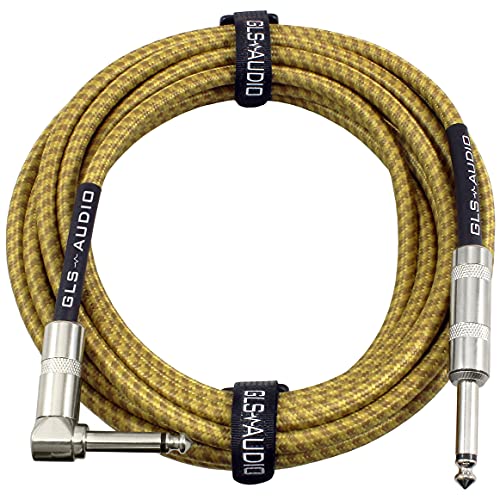
GLS Audio Instrument Cable 20ft
Inside Each Recommended Option
Short cable, big-cable energy. The Fender Deluxe Series 5ft run sits in that sweet spot where pedalboard patch cables often live, yet it brings studio-grade thinking to the role. The 24K gold-plated connectors resist tarnish over years of plugging and unplugging, and the braided outer jacket shrugs off the scuffs and coil marks that wear down ordinary cables. For a bedroom player running a small amp on a desktop, this length keeps things tidy without slack dragging across the floor.
Where it really earns its keep is in short, signal-sensitive spots. A cable this close to the source benefits from quiet shielding, and the braided construction here is designed to keep hum and handling noise down. It’s noticeably stiffer than the longer Fender Professional Series covered later, which matters on a pedalboard where flexibility helps routing.
Notable Gains
- Gold-plated connectors resist corrosion across years of regular use
- Braided shielding keeps handling noise low in short, signal-critical runs
- Tweed jacket adds real scratch and abrasion resistance
- 5ft length is well-matched to desktop amps and compact pedalboards
Honest Caveats
- Stiffer feel can fight tight pedalboard routing
- 5ft is limiting for anything beyond a close-to-amp setup
Quick Technical Notes
Who It Suits Best
Studio players and home recording enthusiasts who run a short, premium-quality patch between bass and amp, or between amp and a nearby effects unit.
Where Another Pick Suits Better
Players needing a long stage run should reach for the Fender Professional Series Instrument Cable, whose 25ft length and spiral shielding handle longer, kink-prone cable paths far more gracefully.
A 25ft cable answers a specific need: distance. The Fender Professional Series 25ft run gives a bassist room to roam on a wide stage, walk to the front of the stage for a solo, or simply bridge a large rehearsal space without feeling anchored to the amp. Spiral shielding keeps the cable flexible, and Fender built this one to resist twisting and kinking. That matters because long cables are the ones most likely to develop memory coils and eventually fail at stress points.
It’s a notably different personality from the Deluxe Series covered just above. The Professional line uses a thicker gauge conductor and prioritizes a pliable feel over the dense, armored look of the Deluxe. For the player who coils and uncoils nightly, that trade feels right.
A Favorable Mix
- 25ft length covers large stages and roomy studios
- Spiral shielding engineered to resist twisting and kinking
- Thick gauge conductor supports clean signal over long runs
- Flexible jacket coils neatly for transport
Where It May Fall Short
- 25ft adds bulk to small pedalboard setups
- Plain black jacket shows scuffs over time
Best Suited To
Working bassists who play wide stages, large rehearsal halls, or venues where the amp sits well away from the playing position.
Skip It When
Home players with a desktop amp should choose the Fender Deluxe Series 5ft instead, since its shorter length and quieter braided shielding suit close-quarters use better.
The 10ft JSAUX cable lands in the most common length category for bass, the sweet spot between a desktop amp and a mid-sized stage. Right-angle 1/4-inch connectors on one end (a plug oriented at 90 degrees rather than straight out) keep the jack flush against the body of a bass or the side of an amp, which reduces strain on the instrument’s output jack during long sessions. The nylon-braided jacket gives it a slightly more rugged feel than smooth PVC, and the oxygen-free copper core targets stable signal transfer.
Compared to the Fender Deluxe covered earlier, this cable is a step down in shielding refinement but a step up in everyday flexibility. The trade-off is the right one for practice rigs and student setups.
The Value In It
- Right-angle connector reduces strain on instrument jacks
- 10ft length covers most bedroom and small-stage needs
- Nylon-braided exterior resists daily wear
- Oxygen-free copper supports stable signal transfer
Points To Note
- Shielding is solid for the category but not as refined as premium braided options
- Gray color may show dust and pocket lint more visibly
Feature Snapshot
Whose Shelf It Belongs On
Students, bedroom players, and weekend hobbyists who want a flexible right-angle cable without stretching into premium pricing.
A Better Fit Elsewhere
Players who need a much shorter run for a pedalboard patch will find the JSAUX Guitar Cable 3ft covers that job more neatly than this 10ft length.
Three feet is short, almost absurdly so for a full bass rig, but in the right place it earns its space. The JSAUX 3ft cable is purpose-built for pedalboard patches, the short jumpers between effects pedals where every inch of slack becomes a snag hazard. Right-angle to straight 1/4-inch connectors let the cable hug the board and route cleanly along the top or side without sticking up where a foot could catch it. The same oxygen-free copper and braided jacket from the longer JSAUX cables carry over, so tone stays consistent across your chain.
It’s the smaller sibling of the 10ft JSAUX covered just above, and the two together make a sensible pairing: one for the pedalboard, one for the run to the amp.
The Case For It
- 3ft length is ideal for tight pedalboard patching
- Right-angle connector keeps the cable flush with the board
- Nylon-braided jacket handles pedal-stepping pressure
- Matches the longer JSAUX cable family for tonal consistency
Small Caveats
- Too short for any run between bass and amp
- Right-angle plug orientation must match your pedal layout
Right Fit For
Pedalboard builders wiring multi-effect rigs who need low-profile patch cables between pedals.
Consider Something Else When
Anyone running their bass straight into an amp without pedals will want the longer JSAUX 10ft or 15ft cables instead, since this short length can’t bridge the gap from instrument to amp.
Three cables in one box changes the math. The Pig Hog PCH10BKR pack delivers three 10ft right-angle cables with woven outer jackets and gold-plated 1/4-inch connectors, aimed at players who want spares on hand or who run multiple rigs at once. The woven jacket is more than aesthetic: it grips well underfoot and tends to coil flat after a break-in period, which matters when you’re stuffing cables into a gig bag between sets.
The bundle format also makes sense for bands. A bassist and a guitarist or two can each grab a cable, or you can keep one in the rehearsal room, one at home, and one in the gig bag. Compared to single-cable picks like the JSAUX 10ft above, this trades flexibility for redundancy.
Notable Upsides
- Three cables cover a full band’s needs or your own backup rotation
- Woven jacket adds grip and resists visible wear
- Gold-plated right-angle connectors reduce jack strain
- 10ft length fits the most common stage scenarios
Practical Considerations
- Three-pack may be more cable than a solo bedroom player needs
- Right-angle only on one end limits some routing options
Made For
Working gigging musicians and band setups where having a spare cable in the bag isn’t optional.
Not Your Match When
Solo players who only need one cable should consider the single-pack options like the Fender Deluxe Series 5ft or the JSAUX 10ft, which deliver the same connector quality without the surplus inventory.
Ernie Ball built its reputation on strings, and the brand applies the same gig-minded thinking to cables. The 10ft braided instrument cable pairs dual shielding with dual conductors, which in plain terms means cleaner tone over a longer working life and better rejection of the radio-frequency interference that can sneak into a long, poorly shielded run. The braided exterior is tangle-resistant and tends to lay flat once broken in, a small but real benefit on cramped stages.
Compared to the JSAUX 10ft covered earlier, this cable sits a tier up in shielding design, with dual layers doing the work instead of a single braided wrap. The straight-to-angle connector setup offers more routing flexibility than a single-angle plug.
Benefits That Matter
- Dual shielding rejects interference more aggressively than single-layer designs
- Braided jacket resists tangling and lays flat after break-in
- Straight-to-angle configuration suits varied routing needs
- 10ft covers most practice, studio, and small-stage situations
Some Limits To Know
- 10ft may fall short for very wide stages
- Black braid shows dust and scuffs in low light
Who Should Grab It
Weekly gigging bassists who need a flexible, durable cable that survives frequent coiling and transport.
Look Elsewhere When
Players running a wider stage layout will find the Fender Professional Series 25ft gives them the reach they need, while this Ernie Ball excels in closer-quarters setups.
Fifteen feet covers ground the 10ft can’t. The JSAUX 15ft right-angle cable bridges the gap between bedroom-friendly lengths and full stage runs, fitting mid-sized club stages, larger rehearsal rooms, and home setups where the amp sits across the room. The right-angle plug at one end preserves the same jack-strain relief as the shorter JSAUX models, while the nylon-braided jacket and oxygen-free copper core stay consistent with the rest of the family covered in this list.
It sits between the JSAUX 10ft and the GLS Audio 20ft covered below, and the choice between them mostly comes down to how much slack you actually want across your playing area.
Good Reasons To Consider
- 15ft length fits mid-sized stages without excess coil
- Right-angle plug protects instrument output jack
- Nylon-braided exterior handles regular transport
- Maintains tonal consistency with other JSAUX cables in this list
Less Ideal Details
- Longer than needed for compact desktop setups
- 15ft of cable is awkward to coil on a small pedalboard
The Right Fit For
Mid-stage bassists and home players whose amp sits a moderate distance from the playing position, in mid-sized rehearsal rooms or home studios.
Swap It Out When
Players who need even more reach, especially for wide stages or large rooms, should step up to the GLS Audio Instrument Cable 20ft covered below, which delivers that extra distance at a similar price tier.
BOSS approaches cable design from a stompbox builder’s perspective: tight tolerances, consistent build, and a focus on the details that affect tone rather than flash. The Bic-5 runs 5ft with straight 1/4-inch connectors at both ends, which keeps the plug profile low against the bass body and the amp input. The studio-grade oxygen-free copper core is paired with custom-designed connectors using 24K gold-plated contacts, and a heavy-duty braided shield aims to keep hum and handling noise under control.
Compared to the Fender Deluxe 5ft covered at the top, the BOSS offers a different take on a similar length: more emphasis on the conductive core and connector quality, less on a tweed-styled exterior. Either choice works, but the personality differs.
Real-World Strengths
- Straight connectors at both ends keep the jack profile low
- Heavy-duty braided shield targets quiet operation
- 5ft suits desktop amps and close recording setups
- From a brand with deep pedal and amp design heritage
Points To Keep In Mind
- No right-angle option in this listing, which can add jack strain on some instruments
- 5ft is restrictive for any stage-style use
Who Should Grab It
Players running compact desktop amps, home recording setups, or short patch duties who value brand consistency with BOSS pedals and amps.
A Better Fit Elsewhere
Anyone needing jack-strain relief should consider the JSAUX 3ft or Fender Deluxe 5ft instead, since both offer right-angle configurations that protect instrument outputs over time.
Twenty feet gives a bassist freedom to roam, and the GLS Audio cable delivers that reach at a budget-conscious price point. The braided tweed jacket in brown and yellow stands out visually, helpful on dark stages where stepping on a cable is the fastest way to end a song. Oxygen-free copper conductors and a low-capacitance design (low capacitance means the cable preserves high frequencies over longer distances rather than rolling them off) target consistent signal transfer, which is the main concern with any cable running past 15ft.
Compared to the Fender Professional 25ft covered earlier, this cable trades a bit of brand recognition and shielding refinement for a friendlier price. For the player who needs reach but doesn’t need flagship build, that’s often the right trade.
Everyday Wins
- 20ft length covers wide stages and large rooms
- Low-capacitance design supports cleaner signal over long runs
- Brown-and-yellow tweed jacket is highly visible on dark stages
- Budget-friendly price point for a full-length cable
A Few Limitations
- Shielding is solid but not as refined as premium dual-layer designs
- 20ft is awkward to manage in smaller rehearsal rooms
Perfect Match For
Home players in larger rooms and gigging bassists who need generous stage reach without a premium price tag.
Reach For A Different Pick When
Players who need maximum stage length and a more road-tested shielding design should consider the Fender Professional Series 25ft, which trades a bit of price for added durability.
What To Weigh Before Choosing Bass Cables
Cable length shapes your stage reality more than any other spec. Short runs (3ft to 5ft) fit pedalboard patches and desktop amps, where every inch of slack becomes a snag. Medium runs (10ft to 15ft) cover most home and small-stage setups, while long runs (20ft and up) give you room to roam on wide stages and large rehearsal rooms. As a rule, buy the shortest cable that still lets you move freely, since signal can degrade slightly over very long runs.
Connector configuration matters more than most players expect. A right-angle plug (a plug that exits at 90 degrees from the cable) sits flush against the body of a bass or the side of an amp, reducing leverage on the instrument’s output jack. Straight plugs at both ends keep the profile low and work well in tight pedalboard wiring. Mixing a right-angle plug at the bass end and a straight plug at the amp end is a common combination that balances strain relief with routing flexibility.
Shielding is the unsung hero. Braided shielding (a woven mesh of fine wires wrapped around the central conductor) rejects interference better than basic foil, and dual-layer designs go a step further. If you play in venues with old wiring, fluorescent lights, or dimmer-controlled stage lighting, stronger shielding translates to a noticeably quieter signal. For bedroom practice, basic shielding is usually enough. For club and stage use, invest in braided or dual-layer designs.
Jacket material affects how a cable feels and ages. PVC jackets are flexible and inexpensive, while nylon-braided jackets resist scuffing and tend to grip better underfoot. Woven tweed jackets sit between the two, with a vintage aesthetic and reasonable durability. For gigging players, jacket choice often comes down to feel during coiling and how visible the cable needs to be on a dark stage.
Key Considerations Across These Picks
Pitfalls Worth Dodging
Buying a cable that’s too short is the most common mistake. A cable that tugs at your instrument every time you step forward restricts your movement and slowly stresses the output jack. Measure the longest distance you actually need, then add a foot or two of slack for comfort. Buying a cable that’s far longer than necessary creates the opposite problem: excess coil on stage, awkward storage, and a slightly higher chance of tripping over your own cable.
Ignoring connector style is another frequent slip. A straight-to-straight cable works fine on a desktop, but on a strap-held bass, the plug can lever against the jack with every movement. Right-angle plugs solve that, but only if the orientation matches your instrument’s jack location. A right-angle plug pointing the wrong way can be worse than a straight plug.
Where The Extra Money Goes
Higher-tier cables invest in three areas: conductor purity, shielding complexity, and connector quality. Oxygen-free copper at higher purity levels supports cleaner signal transfer over longer runs, which matters most above 15ft. Dual shielding, layered foil plus braid, rejects interference that single-layer designs miss. And 24K gold-plated connectors resist the oxidation that slowly degrades tone in cheaper plugs. For bedroom players, those upgrades are subtle. For gigging bassists who play weekly in unpredictable venues, they add up to fewer tone surprises and longer cable life.
Frequently Asked Questions
How long should a bass cable be?
Most home and small-stage setups work well with a 10ft to 15ft cable, while wide stages and large rehearsal rooms often need 20ft or more. For pedalboard patches between effects pedals, 3ft to 6ft right-angle cables keep things tidy.
Do bass cables need to be different from guitar cables?
Most bass and guitar cables use the same 1/4-inch TS (tip-sleeve) connectors and the same basic shielding, and they are often interchangeable in practice. Bass players sometimes prefer cables with low capacitance, since very long instrument cable runs can subtly dull high frequencies, and the same feature tends to keep a treble-heavy guitar tone articulate as well.
What does oxygen-free copper actually do?
Oxygen-free copper (copper refined to reduce oxygen content, which can corrode conductors over time) is the standard conductor material in mid-tier and premium cables. It supports stable signal transfer and resists corrosion at the contact points, helping a cable hold its tone over years of use rather than degrading quickly.
Are braided jackets worth it?
Braided jackets resist scuffing, grip better underfoot on stage, and tend to coil flatter after a break-in period. They cost a bit more than basic PVC but hold up noticeably better under regular gigging conditions.
How often should you replace a bass cable?
There’s no fixed lifespan, since usage and care vary. Inspect the cable regularly for shielding exposed through jacket wear, intermittent signal when the cable is flexed, or scratchy sound when you wiggle the connector. Any of those signs mean it’s due for replacement, since a failing cable can introduce hum, dropouts, or unwanted noise into your signal chain.
Closing Remarks
The right bass cable is the one that fits how you play, where you play, and how often you pack up and move. Match the length to your stage, pick a connector configuration that protects your instrument’s jack, and choose shielding that suits the venues you frequent. With those basics covered, any of the nine cables above will serve you well for years of playing.


