

Pulling a record out of its sleeve, dropping the needle, and watching it glide into the first track still feels like a small ritual. For newcomers, though, the gear side of that ritual can be intimidating. The lineup below keeps first spins simple with built-in speakers, automatic speed switching, and forgiving designs, while leaving room to grow into a proper separates setup when the habit takes hold.
The Lineup, Simplified

Fluance RT82 Reference High Fidelity Vinyl Turntable (Piano Black)
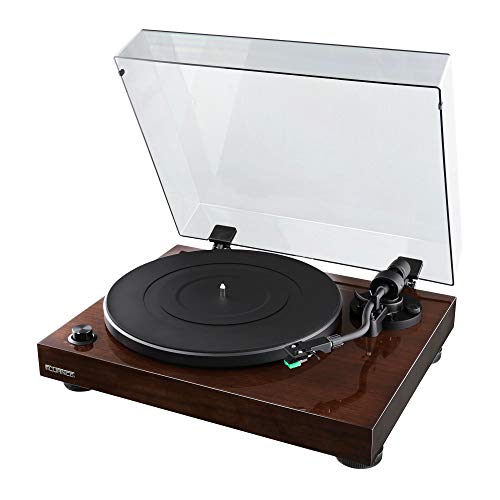
Fluance RT81 Elite High Fidelity Vinyl Turntable (Walnut)

Audio-Technica AT-LP120XUSB-BK Direct-Drive Turntable

Seasonlife Retro Vinyl Record Player with Stereo Speakers (Walnut Red)

ONE-Q All-in-One Vinyl Record Player with Bluetooth 5.4

Seasonlife Vinyl Record Player with Speakers (Wood Black)

Seasonlife Vinyl Record Player with Speakers (Pale Pink)

Seasonlife Vintage Vinyl Record Player with 2 External Speakers (Bark Red)

Seasonlife Vinyl Record Player with Speakers (Retro Brown)

Seasonlife Vinyl Record Player with Speakers (Wood Cyan)
Meet the Standout Selections
The Fluance RT82 sits at the top of this list because it does the unusual thing of welcoming newcomers without capping their ceiling. A high-mass MDF wood plinth gives the deck a planted, low-resonance feel, while vibration isolation feet keep footfall and speaker rumble from sneaking into the groove. Speed accuracy is handled by a speed-control motor, which means pitch stays consistent across a full side of a record rather than drifting as the belt warms up.
Out of the box the tonearm wears an Ortofon OM10 elliptical cartridge, a step up from the stock units on most entry decks. For newcomers this translates into clearer channel separation and a tighter low end on familiar pressings. You will need a separate phono stage and speakers, so the RT82 is really for someone already planning a small system rather than a one-box starter.
Noteworthy Benefits
- Speed-control motor holds pitch steady across long albums, a comfort on classical and live sets where drift becomes obvious.
- Ortofon OM10 elliptical stylus traces grooves with noticeably less distortion than the conical styluses common on cheaper decks.
- MDF plinth and isolation feet reduce the turntable’s sensitivity to footsteps and nearby speaker placement in tight apartments.
- Manual belt drive teaches proper cueing habits early, the same habits a future upgrade will reward.
- Piano black finish reads as furniture-grade on a shelf, rather than plastic toy-like.
Trade Offs To Consider
- No built-in preamp means you’ll need a phono stage or powered speakers with a phono input before sound comes out.
- Full-manual operation requires hand-on cueing, which feels finicky on day one until muscle memory builds.
Feature Snapshot
Who It Suits Best
Committed newcomers who already own (or plan to buy) a phono stage or powered speakers and want a deck that grows with them rather than gets replaced in a year.
Where Another Pick Suits Better
Shoppers who want sound from the box without extra components should look at the Seasonlife Retro Vinyl Record Player with Stereo Speakers instead, since it includes built-in drivers and a phono output.
Step one rung down from the RT82, the Fluance RT81 keeps the same belt-driven, high-mass foundation but swaps in an Audio Technica AT95E cartridge and adds a built-in phono preamp. For a first-time owner who doesn’t want to learn the difference between MM and MC inputs on day one, that built-in preamp is genuinely useful. You plug it into any line input on powered speakers or a home stereo and you’re playing records.
The walnut plinth looks at home on a bookshelf, and an adjustable counterweight lets you dial tracking force as your ear develops. Compared to the Audio-Technica AT-LP120XUSB-BK we’ll meet next, this deck has no USB output and no DJ-style pitch slider, so it leans more toward music listening than tinkering.
The Value In It
- Built-in phono preamp removes a whole layer of beginner confusion around amps and signal levels.
- Audio Technica AT95E with elliptical stylus is widely respected as a step-up replacement, so the cartridge can grow with you.
- Adjustable counterweight teaches anti-skating and tracking force, the two adjustments that matter most for sound quality.
- Belt drive keeps motor noise away from the stylus, which matters in quiet evening listening sessions.
Honest Caveats
- No USB output means digitizing a vinyl collection requires an external audio interface.
- The fixed counterweight setup is slightly fussier than the auto-return arms on all-in-one units.
Who It Suits Best
First-time deck owners who want real analog playback without buying a stack of extra boxes on the same day.
Reach For A Different Pick When
Anyone planning to rip vinyl to a computer should choose the Audio-Technica AT-LP120XUSB-BK, since it ships with a USB output for direct digital transfer.
The Audio-Technica AT-LP120XUSB-BK is the deck you graduate to when “just listen to records” stops being enough. A direct-drive motor brings the platter up to speed in about a second, which is why you’ll also see this model in DJ booths and small radio stations. Three speeds (33-1/3, 45, and 78 RPM) cover everything from modern LPs to inherited 78s, and a switchable phono preamp lets you bypass its built-in stage when you finally buy a better one.
Anti-skate control and variable pitch slider sit up front, where you’d actually want them, and the fully manual tonearm rewards careful cueing. The headline feature for many is the USB output, which feeds audio straight into recording software on a computer for archiving or remixing old records.
A Few Highlights
- USB output lets you archive records as digital files, a major perk for collectors with rare pressings.
- Three-speed motor plays 78 RPM shellac records, opening a path into older formats most beginner decks ignore.
- Direct-drive torque handles quick start-and-stop cues without the platter slowing mid-track.
- Switchable phono preamp means you can use the built-in stage now and upgrade to an external one later.
- Variable pitch slider is genuinely fun for casual mixing, even if you never touch a DJ controller.
Points To Keep In Mind
- Fully manual operation means no auto-return, so the tonearm stays parked at the end of side and needs lifting back manually.
- Direct-drive motors can transmit small vibrations into the stylus, so a stable shelf matters more here than with belt-driven decks.
Feature Snapshot
Who It Suits Best
Tinkerers and archive-minded listeners who want manual control, USB ripping, and the ability to play unusual record formats.
Swap It Out When
Someone who wants a simpler one-cable setup with built-in speakers should pick the Seasonlife Vintage Vinyl Record Player with 2 External Speakers instead.
Where the first three decks assume you’ll add speakers, the Seasonlife Retro Vinyl Record Player arrives ready to play out of the box. Walnut-red cabinet styling mimics mid-century consoles, and the hinged dust cover protects the platter when the player sits idle on a sideboard. For a first record player in a small apartment or a starter gift, this is the kind of unit that lowers the barrier to entry almost to zero.
Three speed options cover 33-1/3, 45, and 78 RPM records, including the 7-inch and 12-inch sizes in between, and an auto-stop function pauses the platter when the needle reaches the run-out groove. That last detail protects stylus life on busy evenings when you might forget you’re at the end of a side.
Useful Touches
- Auto-stop prevents the needle from grinding in the run-out groove, extending both stylus and record life.
- Hinged dust cover keeps the platter clean between sessions, useful in homes with pets or open shelving.
- Built-in stereo speakers eliminate the immediate need for a separate audio setup.
- 45 RPM adapter is included in the box, so playing singles doesn’t require an extra accessory.
Worth Noting
- Built-in speakers favor convenience over detail, so critical listening sessions will likely push you toward external speakers eventually.
- The wood-grain finish shows fingerprints and dust more readily than solid-color cabinets.
Built With In Mind
Plug-and-play newcomers who want a complete tabletop setup without buying extra speakers or amps on the same day.
Look Elsewhere When
Listeners chasing room-filling sound should pick the ONE-Q All-in-One Vinyl Record Player with Bluetooth 5.4, which pairs a four-driver array with a switchable phono stage.
The ONE-Q is the most feature-dense all-in-one on this list, and that shows up in two places right away: Bluetooth 5.4 input lets a phone or tablet stream into the deck’s speakers, and a switchable phono preamp keeps options open for external amplifiers. Four full-frequency drivers handle stereo separation without leaning on a separate subwoofer, which keeps the cabinet footprint reasonable on a desk or console.
It plays 7-inch, 10-inch, and 12-inch records at 33 and 45 RPM, with the same auto-stop convenience seen on smaller siblings. Headphone and external speaker jacks sit on the back panel for late-night listening without waking a household.
What Helps Most
- Bluetooth 5.4 input lets the deck double as a wireless speaker when no record is playing.
- Switchable phono preamp means you can use built-in speakers now and external amps later without rewiring.
- Four-driver array delivers noticeably wider stereo imaging than the typical two-driver all-in-ones.
- Headphone output supports quiet listening sessions without disturbing others.
Soft Spots
- Bluetooth streaming adds a small compression cost compared to wired playback from a phone.
- The added electronics and drivers push the weight up, so it’s less portable than smaller all-in-ones.
Whose Shelf It Belongs On
Multi-source casual listeners who want a single box to handle vinyl, phone streaming, and headphones without extra adapters.
Swap It Out When
Listeners who care more about pure analog playback should choose the Fluance RT81, since it skips the streaming electronics entirely.
The Wood Black Vintage Turntables model leans into furniture as much as it does into audio. The dark wood-grain cabinet reads more like a small credenza than an appliance, which makes it a popular pick for living rooms where the turntable stays visible. Like other Seasonlife decks in this roundup, it integrates speakers into the main cabinet, so there’s no cable spaghetti trailing across the floor.
A balanced tonearm with a lifting arm control makes cueing easier for first-time users, since you can raise and lower the needle without dragging it across the record surface. Three speeds cover the standard LP, single, and short formats.
Everyday Advantages
- Lifting arm control avoids scratching record grooves during cueing, a frequent beginner mistake.
- Wood-grain cabinet doubles as decor, useful in living rooms where the deck stays in plain sight.
- Three-speed motor covers LP, EP, and 78 RPM formats from inherited collections.
- Built-in speakers keep the first-day setup to a single power cord.
Practical Considerations
- Vintage styling adds bulk compared to slimmer modern decks.
- The integrated speakers are tuned for casual listening, so anyone wanting room-shaking volume will eventually upgrade.
Who It Suits Best
Decor-minded casual listeners who want a record player that earns its place on a shelf next to books and plants.
Consider Something Else When
Anyone planning to plug into a full hi-fi setup later should pick the Fluance RT81, which has RCA outputs and a built-in preamp ready for that handoff.
Pale pink finish aside, the Seasonlife Pale Pink model behaves like a straightforward three-speed starter deck with built-in stereo speakers and a Bluetooth receiver. It covers 7-inch, 10-inch, and 12-inch records at 33, 45, and 78 RPM, so the format learning curve is small. The Bluetooth input means a phone can stream playlists when the turntable side of the house feels quiet.
The sleek but old-school silhouette reads as a deliberate style statement in bedrooms and dorm rooms, where a black or walnut deck would feel too serious for the space. Owners commonly treat the Pale Pink model as a daily companion rather than a trophy piece.
The Helpful Details
- Bluetooth receiver lets the deck double as a wireless speaker for non-vinyl listening sessions.
- Three-speed support covers inherited collections alongside modern pressings.
- Soft pink finish suits bedroom or dorm decor better than neutral wood tones.
- Compact footprint slides onto narrow dressers or floating shelves.
Where It May Fall Short
- Pale finish shows smudges more readily than darker cabinets, so wiping it down regularly becomes part of the routine.
- Built-in speakers prioritize convenience over imaging depth in larger rooms.
Right Fit For
Bedroom or dorm setups where the turntable doubles as decor and a Bluetooth speaker on quieter days.
Not Your Match When
Anyone wanting louder, fuller room sound should reach for the ONE-Q All-in-One Vinyl Record Player, which uses four drivers for a wider stereo image.
Two external speakers instead of integrated drivers change how this Seasonlife deck sits in a room. The Bark Red cabinet stays on a shelf or side table, and the speakers can be pulled apart by a few feet for proper stereo separation. For shared spaces like kitchens, lofts, or open-plan living areas, that flexibility tends to matter more than the wattage numbers on the box.
An AUX input port on the back accepts a phone or tablet for non-vinyl playback, and the hinged dust cover protects the platter when the unit sits between sessions. The setup-and-operate wording on the spec sheet matches the experience; this is a beginner-oriented deck that doesn’t ask for any audio knowledge to use.
Strong Points
- Detachable external speakers allow real stereo separation, a noticeable step up from integrated drivers.
- AUX input plays MP3s and streaming audio from a phone or tablet without extra adapters.
- Hinged dust cover protects the platter during long stretches between listening sessions.
- Bark red finish adds warmth to wood furniture without competing visually with darker electronics.
Some Limits To Know
- More cables and speakers to position means a slightly more involved first-time setup than all-in-one units.
- External speakers still rely on the deck’s built-in amplifier, so volume and dynamics cap out below powered bookshelves.
Feature Snapshot
Best Suited To
Shared spaces and gift shoppers who want something that looks like furniture and sounds fuller than typical all-in-ones.
A Better Fit Elsewhere
Listeners who want Bluetooth streaming built into the same unit should choose the Seasonlife Pale Pink model instead, which adds a Bluetooth receiver.
The Retro Brown Vintage Turntable picks up where the Wood Black leaves off, with a warmer cabinet tone that pairs naturally with wood floors and rustic shelving. Functionally it behaves like the other Seasonlife three-speed decks in this roundup: built-in speakers, balanced tonearm, lifting arm control, and a hinged dust cover for between-session protection.
Gift shoppers often gravitate toward this finish because it photographs well in packaging and reads as timeless rather than trendy. Compared to the Pale Pink model, the brown tone hides everyday smudges better in households with pets or kids.
Points In Its Favor
- Retro brown finish blends into wood-heavy interiors and forgives everyday smudges.
- Balanced tonearm with lifting arm control makes cueing gentler on record grooves.
- Three-speed motor covers LPs, EPs, and 78 RPM records from inherited collections.
- All-in-one design keeps setup to a single power cord, useful in dorms and rental units.
Points To Note
- Built-in speakers trade stereo separation for compactness, so the soundstage stays centered on the cabinet.
- The vintage profile takes up more shelf depth than slimmer modern decks.
Who Should Grab It
First-time gift recipients who want a turntable that looks at home on a wooden shelf and plays without extra gear.
Skip It When
Listeners who want wider stereo separation should pick the Seasonlife Bark Red model, whose detachable speakers spread the soundstage across the room.
Closing out the list is the Wood Cyan Vintage Turntables model, a teal-leaning finish that pops against neutral walls without veering into novelty territory. Mechanically it mirrors the rest of the Seasonlife trio already covered here: three-speed belt drive, balanced tonearm with lifting arm, hinged dust cover, and built-in stereo speakers.
For a small studio, kids’ room, or creative workspace, the cyan tone can anchor a corner the way a piece of art does. Like its siblings, it leans into gift culture and casual listening rather than critical audio work.
Where It Helps
- Wood cyan finish brings a splash of color to neutral rooms without reading as a toy.
- Lifting arm control helps newcomers cue records without dragging the stylus across the surface.
- Hinged dust cover keeps the platter clean in busy rooms.
- Compact cabinet fits on desks and narrow shelves where larger decks won’t sit.
Things To Weigh
- The bold color may clash with established decor schemes, so it’s a more deliberate style choice than neutral cabinets.
- Built-in speakers prioritize convenience over audio detail, similar to other all-in-ones in this lineup.
Made For
Small studios, kids’ rooms, or creative spaces where the turntable is part of the decor as much as the audio system.
Consider Something Else When
Anyone who wants a neutral wood tone should look at the Seasonlife Retro Brown model instead, since it blends more easily into traditional interiors.
What To Weigh Before Picking Your First Turntable
Drive Type And Motor Noise
Belt-drive decks isolate the motor from the platter with a rubber belt, which keeps motor noise from reaching the stylus. Direct-drive decks like the Audio-Technica AT-LP120XUSB-BK spin the platter directly off the motor, trading a touch of rumble for quicker start-up and stronger torque. For living rooms where quiet listening matters more than cue tricks, belt drive usually wins. For DJ-style cueing or playing 78 RPM records on demand, direct drive has the edge.
Cartridge And Stylus Shape
The cartridge is the small component that traces the record groove, and the stylus (the needle tip) determines how precisely it does so. Elliptical styluses like the Ortofon OM10 on the Fluance RT82 contact more of the groove wall than conical styluses, pulling out finer detail at the cost of slightly more careful alignment. For most beginners, an elliptical stylus with a replaceable tip offers the cleanest upgrade path later.
Built-In Preamp Versus Separates
A phono preamp boosts the tiny signal a cartridge produces up to a level your speakers or amplifier can use. All-in-one decks like the Seasonlife models include one internally, while separates-style decks like the Fluance RT82 expect you to supply it. Built-in preamps lower the barrier to entry on day one, while external stages tend to sound cleaner once your system grows. A few decks, including the ONE-Q and the AT-LP120XUSB-BK, ship with a switchable preamp so you can use either path.
Speed Coverage And Format Range
Three-speed decks that cover 33-1/3, 45, and 78 RPM protect you when an older relative hands down a box of singles or shellac records. Two-speed decks are usually fine for modern LPs and EPs, but you’ll miss those inherited 78s. If your collection today is 100 percent modern reissues, two speeds may be all you’ll ever need; if you suspect your collection will grow, three speeds cost almost nothing extra.
Speakers And Room Size
Built-in speakers keep the setup compact but cap volume and stereo imaging. Detachable external speakers (Seasonlife Bark Red) spread the soundstage, while RCA outputs (Fluance RT81, AT-LP120XUSB-BK) let you graduate to powered bookshelves or a full amplifier later. Smaller rooms tend to forgive integrated speakers; larger rooms really benefit from separated cabinets.
Key Considerations Across These Picks
Mistakes Worth Dodging
The most common beginner slip is buying the cheapest all-in-one and expecting it to grow with a hobby that lasts more than a season. Solid plinth, replaceable cartridge, and standard RCA outputs (where possible) protect the investment. Another trap is forgetting to budget for a phono stage or powered speakers; separates-style decks sound better but need at least one matching component to produce any sound at all.
Where The Extra Money Goes
Higher-tier decks like the Fluance RT82 spend the budget on a speed-controlled motor, heavier plinth, and a better cartridge out of the box. That translates into steadier pitch, lower resonance, and a stylus you don’t have to replace right away. For someone who plans to play records every week for years, those upgrades matter more than Bluetooth streaming or built-in speakers, which the cheaper decks already deliver reasonably well.
Frequently Asked Questions
Do beginner turntables really need a built-in preamp?
Built-in preamps make a turntable easier to use on day one, since you can plug into any line input on powered speakers. They do not improve sound quality on their own; an external phono stage usually outperforms a built-in one once your speakers can reveal the difference.
What’s the difference between belt drive and direct drive?
Belt drive uses a rubber belt to spin the platter, isolating motor noise from the stylus. Direct drive spins the platter directly off the motor, which gives quicker start-up and stronger torque at the cost of a touch more mechanical noise.
Is Bluetooth on a turntable just a gimmick?
Bluetooth input lets the deck double as a wireless speaker for non-vinyl playback, which is genuinely useful in small setups. Sound quality takes a small compression hit compared to wired playback, so vinyl purists tend to leave Bluetooth off when spinning records.
How long does a stylus typically last?
A typical elliptical stylus lasts roughly 500 to 1,000 playing hours before the tip wears enough to affect sound. Conical styluses tend to last a bit longer; high-end line-contact styluses wear faster. Replacing the stylus is usually cheaper than replacing the whole cartridge.
Can I digitize my records with any of these decks?
Only decks with a USB output, like the Audio-Technica AT-LP120XUSB-BK, can send audio directly into recording software on a computer. All-in-one decks without USB require an external audio interface to archive them, adding cost to a hobby that started out cheap.
Wrap Up
A first turntable should invite the ritual, not complicate it. If plug-and-play matters most, any of the Seasonlife all-in-ones will get you spinning in minutes. If you want a deck that travels with you into a real hi-fi setup later, the Fluance RT81 and Audio-Technica AT-LP120XUSB-BK are the safer long bets. Match the deck to your room, your collection, and your patience for cables, and the records will do the rest.


