

Finding the right BNC adapter often comes down to a small but stubborn detail: two devices that should talk to each other, separated by a connector mismatch. Whether you’re wiring a security camera, patching a ham radio to an external antenna, or chasing a stable signal across an RF rig, the right BNC coaxial cable adapter quietly solves the problem. The ten picks below cover common gender changes, mixed-type transitions, short jumpers, and a few handy accessories that round out any bench.
The Leading Options At A Glance

TUOLNK Dual N-Type 3-Way Coaxial Adapter (2 Pack)
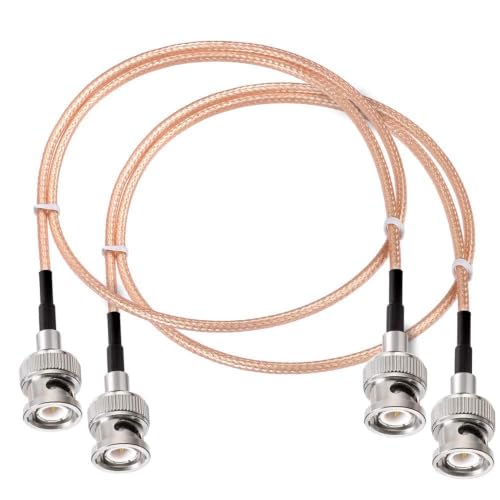
Superbat BNC Cables 2FT 50 Ohm RG316 (2-Pack)

onelinkmore N to UHF Adapter Kit, 4-Piece

Superbat BNC Male/Female Adapter Kit (6 Pcs)

TUOLNK PL259 SO239 to BNC Adapter Kit (4 pcs)

TUOLNK SMA Female to N Male RF Adapter (2 pcs)

TUOLNK N to F Coax Adapter Kit, 4-Type Set

Superbat 3G HD SDI BNC Jumper 30cm RG179

TUOLNK N to BNC Coax Adapter Kit (4 pcs)
TUOLNK Waterproof Coax Connector Cover (5 Pack)
A Breakdown Of The Leading Choices
Splitting one feed into two without buying a powered splitter is the niche this N-type tee adapter fills cleanly. The triple-tee layout takes a single N male input and fans it out to dual N female outputs, a pattern that shows up often in outdoor antenna test rigs or in lab setups where you want to send the same signal to two instruments at once. Because it ships as a two-pack, you can stage a backup or build a more elaborate passive split on the fly.
The brass body with nickel plating gives the unit a solid feel in hand and helps keep oxidation at bay in a damp garage or attic. For hobbyists working with RF, microwave, or amateur radio gear, the low-loss spec claims are worth paying attention to, especially on runs that already push cable length.
The Case For It
- Tee configuration lets you passively split one signal into two without extra hardware.
- Brass-and-nickel body shrugs off corrosion in damp locations like basements and outdoor enclosures.
- Two-pack gives you a spare tee for redundancy or a more complex passive network.
- N-type interface suits professional RF and microwave gear that BNC adapters cannot reach.
- Compact footprint keeps the assembly tidy behind equipment racks.
Things To Consider
- This is a passive tee, so two-way splits will halve signal strength unless you compensate downstream.
- N-type connectors are larger and bulkier than BNC, so tight enclosures may feel cramped.
Who It Suits Best
RF hobbyists and ham operators running multi-antenna test setups where one feed needs to feed two destinations.
A Better Fit Elsewhere
If your work stays in BNC territory for cameras or lab gear, the Superbat BNC Adapter Kit covered below is a more day-to-day fit.
Sometimes you don’t want another adapter at all. You want a short, ready-made cable. The Superbat 2-foot BNC male-to-male jumper uses RG316, a thin 50-ohm coax that bends easily behind a desk or inside a radio go-bag. The soldered BNC connectors stay put once seated, which matters when gear gets knocked around during transport.
Where this fits best is anywhere you need a quick patch between two BNC-terminated devices, from a signal generator to a counter, or a handheld radio to a test antenna. Because impedance is locked at 50 ohms, it pairs naturally with RF work rather than video runs.
Strengths Worth Knowing
- Pre-terminated BNC ends remove the guesswork of hand-crimping coax in tight spaces.
- RG316 stays flexible enough to route around corners without kinking.
- 50-ohm rating matches most ham and RF equipment for accurate signal transfer.
- Two-pack means you can wire two test stations or keep a backup on the bench.
Worth Noting
- The 2-foot length is fixed, so longer runs will require a different cable entirely.
- RG316 is thin, so it is not the right choice for high-power transmitter chains.
Made For
Anyone patching a two-way radio, scanner, or signal generator to a nearby antenna on a cluttered workbench.
Look Elsewhere When
If you need a 75-ohm video feed between cameras, the Superbat 3G HD SDI BNC Jumper reviewed later in this list is the proper match.
Mixed connector kits save real time when you stop guessing which adapter is in the drawer. This onelinkmore set ships all four N-to-UHF gender combinations in one box, so you cover male-to-male, male-to-female, female-to-male, and female-to-female without four separate orders. The PL259 and SO239 naming refers to the UHF end, the standard threaded connector that anchors most CB and ham radio antennas.
For anyone running a modern N-type radio or scanner alongside a legacy UHF antenna, this kit is the kind of thing you stash in a drawer and forget until you need it. Then it earns its keep in one afternoon.
The Upside
- All four N/UHF gender combos included, so almost any pairing is covered.
- Useful for both PL259 (plug) and SO239 (socket) antenna systems in ham and CB setups.
- Compact adapters slip into a tool bag or bench drawer without adding bulk.
Trade Offs
- Gender confusion is real, so verifying both sides of the connection before ordering pays off.
- Owners commonly report that the small adapters are easy to misplace on a busy workbench.
Best Suited To
Ham radio operators and antenna experimenters who keep mixing gear with different connector standards.
Consider Something Else When
If your crossover is purely BNC, the TUOLNK N to BNC Adapter Kit further down is a tighter, more focused choice.
The six-piece Superbat BNC kit is one of those small investments that pays for itself the first time a CCTV camera, oscilloscope probe, or signal injector shows up with the wrong gender. You get two each of male-to-male, female-to-female, and female-to-male barrels. The 50-ohm impedance and nickel-plated brass body match the needs of typical RF and security work.
Most home lab builders reach for this kind of kit when they realize that almost every device arrives with its own opinion about which BNC end is up. Having all three combos on hand means you stop improvising with whatever is in the junk drawer.
Noteworthy Benefits
- Three gender combinations in one kit, with two pieces of each for redundancy.
- 50-ohm impedance pairs well with common RF and CCTV equipment.
- Nickel-plated brass body resists wear from repeated connect/disconnect cycles.
Room For Improvement
- This kit only covers BNC-to-BNC, so any N or UHF crossover needs a separate adapter.
Right Fit For
Home lab owners and CCTV installers who patch multiple BNC-terminated devices and want spares on hand.
Swap It Out When
If you routinely bridge BNC gear to N-type antennas, the TUOLNK N to BNC Adapter Kit gives you that crossover in one box.
CB radio owners and ham operators often find themselves staring at a UHF threaded antenna lead and a BNC-terminated radio. This TUOLNK kit bridges that gap with four adapters covering both UHF female-to-BNC female and related gender swaps, built from gold-plated copper and nickel-plated brass for low-loss signal transfer.
It sits in a similar niche to the onelinkmore kit reviewed earlier, but the focus here stays on the UHF-to-BNC crossover rather than N-to-UHF. If your rig ends in BNC and your antenna ends in PL259, this is the set to keep nearby.
Benefits That Matter
- Targeted UHF-to-BNC selection that matches common CB and ham antenna setups.
- Gold-plated copper center contacts aim to keep contact resistance low over time.
- Small four-pack covers the most common gender swaps without excess inventory.
Points To Keep In Mind
- You still need a separate kit if you also bridge to N-type gear.
- Owners commonly report finger-tightening is enough, so over-torquing can damage the threads.
Who Will Love This
CB radio operators and ham users who run BNC-terminated handhelds against UHF-threaded base antennas.
Another Choice May Suit
For a broader N-to-UHF mix rather than a BNC focus, the onelinkmore kit covered above serves more crossovers in one box.
Wi-Fi routers, hotspots, and mini PCs usually terminate in SMA, while higher-gain external antennas tend to use N-type connectors. The TUOLNK SMA-female-to-N-male adapter closes that gap so you can mount a more capable outdoor antenna without rewiring the radio. The 50-ohm, low-loss design suits typical 2.4 and 5 GHz gear.
For people chasing better signal in a basement office or extending a hotspot to a workshop, these adapters unlock antennas that would otherwise stay in the box.
Notable Gains
- Direct path from a typical SMA Wi-Fi radio to an N-type outdoor antenna.
- 50-ohm low-loss design suits common Wi-Fi frequency ranges.
- Two-pack covers a router plus an extension or a spare for the drawer.
Softer Spots
- SMA threads are delicate, so over-tightening can crack the connector body on the radio side.
Perfect Match For
Network tinkerers upgrading a stock Wi-Fi antenna to a higher-gain N-type model without replacing the radio.
Reach For A Different Pick When
If your extension runs toward an F-type antenna lead instead of N-type, the TUOLNK N to F Coax Adapter Kit fits the bill.
F-type connectors show up on residential antenna and cable TV installs more often than people expect. The TUOLNK four-type set adapts between N-type gear and F-type terminations in every common gender pairing, which matters when you want to reuse an existing coax run instead of pulling new cable through a wall.
For a home user extending an indoor antenna or attaching an outdoor mast to a modem or tuner that expects F-type, this kit is the kind of part that turns a frustrating afternoon into a quick swap.
Where It Delivers
- Four-type set covers male and female combinations on both N and F ends.
- Gold-plated copper with nickel-plated brass body aims for stable signal transfer.
- Reuses existing residential coax where pulling new cable would be impractical.
Honest Caveats
- F-type threads can loosen over time on outdoor runs, so a periodic re-tighten helps.
Built With In Mind
Home users bridging N-type antenna gear to F-type residential coax without rewiring the wall plate.
Where Another Pick Suits Better
If your extension ends at a Wi-Fi radio with SMA, the TUOLNK SMA-to-N adapter pair handles that path more directly.
Video work plays by different rules than RF, and the Superbat 30-centimeter SDI jumper reflects that. It uses 75-ohm RG179 coax, the right impedance for HD video runs, and ships in both straight-to-straight and straight-to-right-angle variants so you can route around tight rack rails without bending the connector.
For broadcast, surveillance, or studio setups where cameras live close to a switcher or monitor, a short precision jumper avoids the cable mess that comes with using a longer coax run.
Practical Pluses
- 75-ohm impedance is the correct match for SDI and analog video signals.
- Right-angle option helps where space behind a rack is tight.
- 30-centimeter length keeps the run short and tidy on a desktop or in a flypack.
Minor Gripes
- RG179 is thin, so it is not designed for long cable pulls across a venue.
- SDI-focused design is not a good match for 50-ohm RF gear.
Whose Shelf It Belongs On
Studio operators and broadcast techs patching cameras to switchers or monitors at short distances.
Not Your Match When
For RF work at 50 ohms, the Superbat RG316 jumper reviewed earlier is the closer fit.
Mixing modern N-type antennas with BNC-terminated radios is one of those crossovers that catches out new operators. The TUOLNK four-piece N-to-BNC kit gives you N male and female combinations on both ends, with two-piece redundancies for the most common pairings. The gold-plated copper and nickel-plated brass construction aims to keep contact resistance low across repeated mating cycles.
Compared with the broader onelinkmore N-to-UHF kit earlier in this roundup, this set stays focused on the N-to-BNC crossover, which is useful when you know exactly which two worlds you are bridging.
The Practical Payoff
- Covers the most common N/BNC gender pairings in a single four-piece set.
- Gold-plated contacts target reliable long-term conductivity.
- Compact size keeps the kit portable for field days and portable operation.
Potential Drawbacks
- Scope is limited to N/BNC, so UHF or F-type crossovers need a different kit.
- Storing four small adapters in a busy bag benefits from a small labeled pouch, which is not included.
Who Should Grab It
Operators with BNC-terminated handhelds or test gear who want to use N-type base-station antennas.
Skip It When
If your crossovers are more varied, the onelinkmore N-to-UHF kit handles more pairings in one purchase.
Antennas and outdoor coax junctions take a beating from rain, dust, and UV. This five-pack of dustproof covers fits N female and UHF SO239 ports and includes a small chain so the cap stays attached to the cable when you remove it. The nickel-plated brass body matches the hardware it protects.
For anyone who has opened an enclosure after a winter to find green corrosion on a connector, these covers are a cheap insurance policy. They are not glamorous, but they pay for themselves the first time you avoid replacing a corroded SO239.
Positive Takeaways
- Seals unused N female and SO239 ports against moisture and debris.
- Attached chain prevents lost caps during temporary disconnects.
- Five-pack covers multiple antennas or spares for the field bag.
Some Limits To Know
- These covers do not replace proper weatherproofing tape on active outdoor connections.
- Fit is specific to N female and SO239, so other connector types need a different cap.
The Right Fit
Outdoor antenna owners and field operators who want to keep spare ports clean between deployments.
Where A Sibling Pick Shines
For active signal connections outdoors, pair these caps with the TUOLNK N to F Adapter Kit to extend an antenna lead cleanly.
What Matters Most Before Choosing Bnc Coaxial Cable Adapters
Connector Type And Gender Match
Every adapter is defined by two things: the connector family on each end, and the gender of each side. BNC, N-type, UHF (PL259/SO239), SMA, and F-type all look slightly different and use different threads or bayonet locking styles. The first step is to identify exactly what is on the cables or devices you already own, then verify both ends before ordering. Gender confusion is the most common reason adapters arrive that almost, but not quite, fit.
Impedance: 50 Ohm Versus 75 Ohm
Impedance is the electrical characteristic that should match end-to-end for the cleanest signal. Most RF, ham radio, and test equipment uses 50 ohm coax and connectors. Video, broadcast SDI, and residential cable installations use 75 ohm. Mixing the two does not always cause a failure, but it introduces signal reflections that show up as ghosting in video or reduced range in radio work.
Build Materials And Plating
Brass bodies with nickel or gold plating resist corrosion and keep contact resistance low over years of use. For outdoor or damp locations, plated brass is worth the small step up from unplated steel. Plating also helps when adapters are mated and unmated often, since it slows wear on the threads or bayonet slots.
Cable Length And Use Case
A short, pre-made jumper like the Superbat RG316 covers bench patches cleanly, while longer equipment runs often need a full coax cable rather than an adapter. Think about whether you need a coupler between two cables, a gender swap, or a complete bridge between two connector families.
Where Shoppers Go Wrong And When Paying More Pays Off
Common Shopping Slip Ups
The most frequent mistake is ordering by connector family alone and ignoring gender. Two N-type adapters can still refuse to mate if both are male or both are female. A close second is treating a 50 ohm adapter like a universal fit, even when the downstream device is clearly 75 ohm video. Always cross-check the device label, not just the cable jacket, before clicking through.
What Separates Premium From Basic
Higher-tier adapters typically use better plating, tighter machining, and brass bodies rather than stamped steel. You feel the difference in the threading and in how flat the connector faces sit. For occasional bench use, a basic kit is enough. For permanent outdoor installs or repeated mating cycles, the premium build holds up noticeably longer and keeps contact resistance stable across seasons.
Frequently Asked Questions
What is the difference between BNC and UHF connectors?
BNC uses a quick-twist bayonet locking collar and is common on test gear and video. UHF (PL259 and SO239) uses screw threads and is standard on most CB and ham antennas. They are not interchangeable without an adapter.
Can I use a 50 ohm adapter on a 75 ohm video cable?
It will physically connect, but the impedance mismatch introduces reflections that degrade video quality. For SDI or residential video runs, a 75 ohm adapter or jumper is the correct choice.
Do I need gold-plated adapters for outdoor use?
Gold plating helps keep contact resistance low over time, especially in damp conditions. Nickel plating is also corrosion-resistant. For permanent outdoor antennas, either plating is far better than bare steel.
Are these adapters reusable after being disconnected many times?
Quality brass-and-plated adapters handle repeated mating cycles well. Owners commonly report that cheaper stamped adapters loosen or lose plating sooner, especially when hand-tightened rather than torqued.
What is a gender changer?
A gender changer is a small inline adapter that flips a male connector to female or vice versa without changing the connector family. It is the simplest fix when two cables arrive with the same gender on the ends you need to join.
Bottom Line
The right BNC coaxial cable adapter is the smallest part of your signal chain, but it is the part that decides whether everything else works. Match the connector family, match the gender, and match the impedance, then pick the build quality your environment demands. Start with the kit that solves your most frequent crossover, and the rest of your bench tends to fall into place around it.


