

Hooking a coax run into a rack-mount monitor sounds simple until you face the connector mismatch. Surveillance installers, ham operators, and broadcast techs all hit the same wall: the cable ends in BNC, the gear expects UHF, SMA, or banana posts. A small adapter solves it cleanly, and the right one keeps signal loss invisible to the eye.
Below are ten options grouped by the job they actually do, from SDI video feeds and CCTV bulkheads to handheld radio conversions and bench-test bindings. Each pick explains what it connects, what impedance it carries, and where it fits in a real toolkit.
Your Options, Compared

MOOKEERF SDI BNC Female-to-Female Barrel Connector 75 Ohm
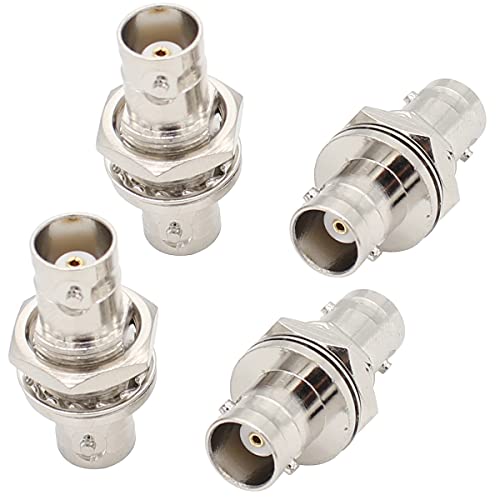
exgoofit BNC Female-to-Female Bulkhead Adapter 4-Pack

ANHAN UHF Female to BNC Female Adapter 2-Pack

TUOLNK PL259/SO239 to BNC Adapter Kit 4-Pack

exgoofit BNC Male to UHF Female PL259 Adapter 2-Pack

Bingfu BNC Female-to-Female 50 Ohm Adapter 2-Pack

exgoofit SMA to BNC Adapter Kit 4-Pack

onelinkmore BNC Male to Dual Banana Post 2-Pack

QLXHBOT SMA Female to BNC Female Adapter 8-Pack

onelinkmore SMA to BNC Adapter Kit 12-Piece 50 Ohm
The Picks, Examined More Closely
Joining two SDI coax runs into one continuous feed calls for a barrel coupler built for the 75 ohm standard that broadcast video relies on, and MOOKEERF’s adapter sits squarely in that lane. The body is pure brass with a nickel finish, while the inner contact pin carries a gold plate to fight corrosion over repeated mating cycles.
Where earlier picks on this list might lean toward CCTV or radio work, this one targets HD-SDI, 3G-SDI, and even 4K or 8K camera chains feeding a rack-mounted production monitor. The signal attenuation stays below 0.1 dB, which matters when a single dropped frame ruins an otherwise clean take.
The Value In It
- 75 ohm rating matches SDI video gear, avoiding the impedance mismatch that wrecks return loss
- Gold-plated center pin resists tarnish, so long cable trays stay reliable
- Sub-0.1 dB attenuation keeps 4K and 8K signals intact across the joint
- Brass body with nickel plating handles repeated insertion without thread wear
Things To Consider
- Only joins BNC female ends, so gender mismatches upstream still need a separate adapter
- Pack of two leaves no spare for bench teardowns, depending on your workflow
Key Product Details
Whose Shelf It Belongs On
Studio engineers and live-event video crews feeding SDI monitors who need a clean inline join without re-terminating cable ends.
Look Elsewhere When
You’re terminating CCTV runs into a wall plate, where the exgoofit BNC Female-to-Female Bulkhead Adapter 4-Pack is the more useful fit.
Mounting a coax feed through a wall plate, patch panel, or enclosure is a different job from joining two loose cable ends, and the exgoofit bulkhead coupler is built for that panel-mounted use case. Threading on the body pairs with a mounting nut so the adapter drops cleanly into a drilled chassis or junction box.
The brass body avoids the alloy shortcuts that some budget couplers use, and PTFE (polytetrafluoroethylene, the same insulator used in high-end cookware) insulation holds up to temperature swings in attic or outdoor enclosures. Where the MOOKEERF barrel coupler earlier targets SDI video, this one leans toward 50 ohm RF work common in CCTV and security setups.
Real Benefits
- Bulkhead threading with a mounting nut secures the coupler into a panel cutout
- Brass body construction resists corrosion in damp locations like basements
- PTFE insulator handles heat better than standard plastic dielectrics
- Four-pack covers multiple cameras without a second trip to the retailer
Trade Offs
- 50 ohm impedance suits CCTV and RF, not the 75 ohm SDI video standard
- Bulkhead design needs a drilled hole and mounting hardware, which adds install time
Who It Suits Best
Security system installers wiring multiple CCTV cameras through a patch panel or weatherproof enclosure.
Where Another Pick Suits Better
You’re extending a single SDI video feed without panel mounting, where the MOOKEERF barrel coupler is a more direct match.
Between-series adapters solve the most common coax headache: one cable ends in UHF (PL-259 or SO-239, the standard threaded RF connectors used on amateur radio gear), and the gear expects BNC. ANHAN’s straight F/F adapter bridges that gap without converting gender.
The straight body design works in tight inline runs where a right-angle adapter would create strain on the connector. It fits cleanly behind a desk-mounted transceiver or inside an equipment rack. For ham operators patching test gear into an antenna feed, this is a quiet little helper.
Why It Works Well
- Inline straight body fits where right-angle adapters won’t
- Two-pack lets you keep one at the bench and one in the field bag
- No gender conversion, so existing cable ends stay matched to their gear
- Useful for test lead patching between transceivers and bench instruments
Room For Improvement
- UHF connectors thread on slowly compared to BNC’s bayonet twist-lock, slowing setup
- Lacks the gold or nickel plating notes found on multi-pack kits
Best Suited To
Amateur radio operators bridging UHF antenna cables to BNC-equipped test gear or scanners at the workbench.
Not Your Match When
You need male-to-female conversion for SO-239 jacks, where the TUOLNK PL259/SO239 to BNC Adapter Kit 4-Pack covers more combinations.
CB radios, mobile antennas, and coax extension runs each demand a different gender combination at the joint, and the TUOLNK kit bundles four UHF-to-BNC adapters to cover the common pairings. Gold-plated copper and nickel-plated brass construction handles outdoor antenna mast work without premature corrosion.
The kit spans PL259 male, SO239 female, and BNC male and female ends, giving CB operators and antenna installers a flexible bench drawer option. Compared with the single-purpose ANHAN adapter earlier, this one trades simplicity for coverage across multiple rigs.
A Few Strong Suits
- Four adapters cover the common UHF/BNC gender combinations
- Gold-plated copper center pins fight oxidation in outdoor antenna runs
- Useful for CB radio, ham antenna coax, and mobile scanner hookups
- Reusable across multiple projects without thread galling
Points To Note
- Two-piece UHF female to BNC female adapters leave only two pieces for the other combinations
- Gold and silver mixed finishes can be hard to tell apart in low light
Made For
CB radio operators and mobile antenna installers who switch between coax genders on different vehicles or setups.
Consider Something Else When
Your work stays on a single BNC-to-BNC join, where the Bingfu BNC Female-to-Female 50 Ohm Adapter 2-Pack is a tighter fit.
Hooking a BNC-equipped wireless LAN card or Wi-Fi radio to a UHF external antenna is a common bench job, and this adapter handles that pairing without inline signal surprises. The body uses brass copper with nickel plating, and the center pin carries a gold plate for stable contact.
VSWR (Voltage Standing Wave Ratio, a measure of how efficiently RF power transfers from source to antenna; lower is better) stays under 1.15 across the DC to 1 GHz range, which is the window where most Wi-Fi and ISM-band (industrial, scientific, and medical radio bands) gear lives. Signal attenuation holds under 0.1 dB, so the adapter stays close to invisible in the RF chain.
The Upside
- VSWR under 1.15 keeps RF reflections quiet on Wi-Fi and LMR (Land Mobile Radio) frequencies
- Sub-0.1 dB attenuation preserves signal strength across the joint
- Brass copper body with gold-plated pin resists corrosion in outdoor antenna runs
- Two-pack covers a primary and spare for field service calls
A Few Limitations
- Limited to the BNC-male to UHF-female pairing, so other combinations need a different kit
- Frequency performance is specified for DC to 1 GHz, not the higher UHF TV bands
The Right Fit
Wireless network techs and CCTV installers connecting BNC-terminated Wi-Fi radios to threaded UHF external antennas.
Skip It When
You need a panel-mount solution, where the exgoofit BNC Female-to-Female Bulkhead Adapter 4-Pack fits that scenario better.
Wireless microphone receivers, amateur radio rigs, and CB radios all tend to land on 50 ohm BNC patch points, and the Bingfu adapter joins two of those female ends inline. The 50 ohm impedance matches UHF/VHF (Very High Frequency, the 30 MHz to 300 MHz band used for FM broadcast and some ham radio) mobile ham antennas and front-panel rack mounts cleanly.
Compared with the MOOKEERF barrel coupler at the top of this list, this one trades SDI video optimization for RF versatility. For stage crews and ham operators, that swap usually pays off.
Strengths Worth Knowing
- 50 ohm impedance suits wireless mic, ham, and CB radio setups
- Compatible with rack-mount patch panels for clean rack wiring
- Two-pack fits the typical front-and-rear antenna path on a single receiver
- Handles VHF and UHF mobile ham antenna extensions without issue
Honest Caveats
- 50 ohm rating is wrong for 75 ohm SDI video gear like the MOOKEERF barrel
- Inline design adds connection length that can affect strain relief in tight racks
Who Should Grab It
Live sound techs and amateur radio operators building out patch panels and antenna feeds on 50 ohm RF systems.
Swap It Out When
Your signal chain is SDI video, where the MOOKEERF barrel adapter at the top of this list handles the 75 ohm path correctly.
SMA (SubMiniature version A, a small threaded RF connector common on Wi-Fi gear, SDR dongles, and modern handheld radios) to BNC conversions come up constantly for SDR (Software Defined Radio) hobbyists and anyone using modern handhelds with legacy antennas. This kit ships one of each gender combination so you stop guessing before a project.
The brass body with nickel plating and gold-plated contact parts handles the repeated mating cycles that come with bench experimentation. 50 ohm impedance lines up with SDR dongles and Wi-Fi radios, where mismatches would distort readings.
Features That Help
- Four pieces cover SMA and BNC in both male and female combinations
- Gold-plated contact parts stay clean through repeated bench swaps
- 50 ohm impedance matches SDR dongles and Wi-Fi radio gear
- Brass construction resists thread damage from frequent mating cycles
Things To Weigh
- SMA threading is fine-pitch and easy to cross-thread on rushed installs
- Four pieces is enough for one project but tight for a busy repair bench
Feature Snapshot
Perfect Match For
SDR enthusiasts and ham tinkerers who swap between SMA and BNC antennas across different projects at the bench.
Another Choice May Suit
You need twelve pieces for a busy service bench, where the onelinkmore SMA to BNC Adapter Kit 12-Piece 50 Ohm offers more inventory.
Bench testing doesn’t always speak BNC. The onelinkmore adapter converts a BNC male plug into dual 4 mm banana jacks, the standard binding post style on most oscilloscopes, multimeters, and bench power supplies. QRP (low-power amateur radio) builders and scope users rely on this kind of bridge daily.
It also enables four-terminal network isolation when you need a clean differential measurement rather than a grounded single-ended read. The 2-pack lets you set up two test stations or keep a spare nearby.
What Works In Its Favor
- Converts BNC signal sources to standard banana jacks for scope and multimeter leads
- Useful for QRP rigs, dipole antennas, and frequency generator probing
- Enables four-terminal isolation for cleaner differential measurements
- Two-pack fits the typical dual-channel scope setup
Possible Compromises
- Banana jacks are binding-post style, which adds bulk behind a crowded bench
- Single BNC input limits simultaneous two-channel scope work without a second adapter
Built With In Mind
Electronics hobbyists and RF engineers probing signals on oscilloscopes and function generators from BNC test sources.
Reach For A Different Pick When
Your bench work stays in the coax domain, where the Bingfu BNC Female-to-Female 50 Ohm Adapter 2-Pack stays in pure BNC territory.
Stocking a bench drawer with eight SMA-to-BNC adapters sounds excessive until you start handing them out to handheld radios in a club or family of operators. The QLXHBOT pack ships pure copper bodies at 50 ohm, which matches BaoFeng UV-5R and FD-880 handhelds without retuning.
Each adapter covers SMA female to BNC female, the common gender combination on those handhelds. The bulk format suits clubs, training programs, and field-day operations where extras disappear fast.
Standout Benefits
- Eight adapters keep spares available for club, classroom, or family use
- SMA female to BNC female matches BaoFeng UV-5R and FD-880 handhelds
- Pure copper body supports stable RF contact across many mating cycles
- Works with Wi-Fi radios, CCTV coax extensions, and broadcast gear
Details To Watch
- Only one gender combination, so the SMA male path needs a different adapter
- Eight identical pieces offer no flexibility if your project needs a different gender
Who Will Love This
Amateur radio clubs and BaoFeng handheld owners who want a shared pool of adapters for training or field-day events.
A Better Fit Elsewhere
You need both genders covered, where the exgoofit SMA to BNC Adapter Kit 4-Pack spreads coverage across four combinations.
When a service call can land on a Yaesu, a Kenwood, an Alinco, an RTL-SDR dongle, or a vintage Uniden scanner, no single adapter covers it. The onelinkmore twelve-pack spans all four SMA/BNC gender combinations with three pieces of each, so the right adapter is almost always in stock.
Gold-plated connection pins keep contact resistance low across the kit. The 50 ohm rating matches handheld radios and SDR receivers that dominate the bench and field service scene. Where the QLXHBOT 8-pack earlier locks you into one gender, this kit trades depth for breadth.
Practical Pluses
- Twelve pieces cover all four SMA/BNC gender pairings with spares to spare
- Works with Baofeng, Yaesu, Kenwood, Alinco, and Uniden handheld radios
- Compatible with RTL-SDR dongles for software defined radio reception
- Gold-plated pins support stable contact over repeated matings
Factors To Consider
- Not compatible with RP-SMA (Reverse Polarity SMA, used on many Wi-Fi routers) or Wi-Fi router antennas
- Adapters only, so they don’t replace a missing coax cable connector
Feature Rundown
Right Fit For
Mobile service techs and well-stocked home benches that handle a rotating mix of handheld radios and SDR gear.
Where A Sibling Pick Shines
Your work stays on a single BaoFeng-focused gender, where the QLXHBOT 8-pack delivers deeper stock at lower breadth.
Matching the Right Adapter to Your Signal Chain
Impedance is the first checkpoint. SDI video, CCTV, and broadcast gear lean 75 ohm, while ham radio, Wi-Fi, and SDR devices sit on 50 ohm. Mixing those numbers causes return loss that shows up as dropped frames on monitors or signal reflections on antennas. Pick the impedance that matches your downstream gear before anything else.
Connector gender and series come next. BNC uses a bayonet twist-lock, UHF (PL259/SO239) threads on, and SMA threads on with a finer pitch. If the cable ends in BNC male and the gear expects BNC male, you need a female-to-female coupler. If the cable is UHF and the gear is BNC, you need a between-series adapter like the ANHAN or TUOLNK picks.
Mounting style matters for permanent installs. Bulkhead couplers with mounting nuts drop into drilled panels for CCTV and patch panels. Inline barrel couplers work for cable extensions behind a desk or rack. Bench-test converters to banana posts belong near the oscilloscope, not in the camera run.
Key Considerations Across These Picks
Common Shopping Slip Ups
The easiest mistake is grabbing a 50 ohm adapter for a 75 ohm SDI video run. The signal passes through, but reflections degrade the eye pattern and the monitor may drop sync. Match impedance to the downstream gear every time.
Another trap is buying the wrong gender combination. If the cable end is BNC male and the device port is also BNC male, a female-to-female coupler is the only answer. Between-series adapters solve a different problem and won’t help if the genders stack the same way.
What The Higher Tier Buys
Premium adapter kits add gold plating on the center contact and PTFE insulation on the dielectric. Both features show up most clearly in high-cycle or outdoor installs where corrosion and heat would shorten a budget adapter’s life. If your install stays indoors and rarely disconnects, a basic nickel-plated brass body covers the need.
Multi-piece kits also earn their keep when you service varied gear. A twelve-piece set covers a service van’s week; a single adapter covers one fixed install. Match kit size to the variety of connectors you’ll touch, not the size of a single project.
Frequently Asked Questions
What does a BNC to monitor adapter actually do?
It bridges a BNC-terminated coax cable to a monitor or other device that uses a different connector series, such as UHF or SMA, or to a panel-mount bulkhead. The adapter preserves the signal path while changing the physical interface.
Can I use a 50 ohm adapter on 75 ohm SDI video gear?
For short patch runs, many users report acceptable results, but the cleanest path on a 75 ohm SDI chain is a 75 ohm adapter like the MOOKEERF barrel coupler. The impedance mismatch creates return loss that grows with cable length and signal frequency.
Do I need a special adapter for CCTV cameras?
CCTV runs typically use 50 ohm BNC and benefit from a bulkhead coupler if the cable passes through a wall plate or enclosure. The exgoofit BNC Female-to-Female Bulkhead Adapter 4-Pack handles that panel-mount scenario with a threaded body and mounting nut.
What’s the difference between SMA and RP-SMA adapters?
SMA and RP-SMA look similar but pin and hole positions swap. Standard SMA adapters fit handheld radios and SDR dongles; RP-SMA fits older Wi-Fi routers. The onelinkmore twelve-piece kit is standard SMA only and won’t help on RP-SMA Wi-Fi gear.
Are gold-plated BNC adapters worth the extra cost?
In outdoor or high-humidity installs, gold-plated center contacts resist tarnish longer than bare nickel. For indoor bench or rack use, plating matters less and a basic brass body performs similarly.
Final Verdict
The right adapter comes down to three honest questions: what impedance does your gear expect, what connector series lives at each end, and where will the joint sit. Match those three, and the small adapter disappears into the signal chain exactly as it should.
For SDI video on a rack, start with the MOOKEERF barrel. For CCTV panel work, the exgoofit bulkhead 4-pack is hard to beat. For bench tinkering across handhelds and SDR, the onelinkmore twelve-piece kit earns its shelf space.