

Cordless phones haven’t disappeared; they’ve just gotten quieter and more reliable. You probably want clear calls, a few handsets placed around the house, and maybe an answering machine that doesn’t require a subscription. This roundup covers ten budget handsets built for everyday home use, from single-room setups to whole-house systems with call blocking. The picks below balance price, features, and build quality so you can match a system to your space, your household size, and the kind of calls you actually take.
A Fast Comparison Of The Options
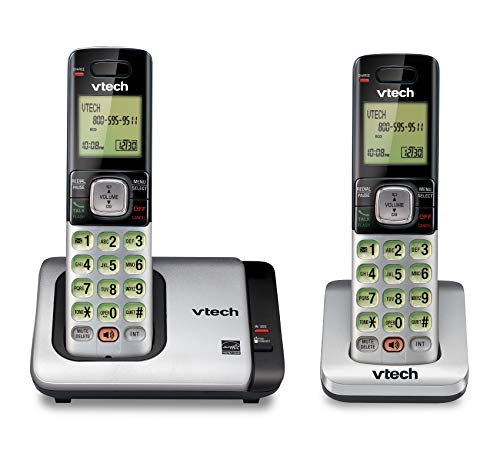
VTech CS6719-2 2-Handset Cordless Phone (Silver)

VTech CS6114 DECT 6.0 Cordless Phone (White/Grey)

AT&T CL82557 5-Handset Cordless Phone (Rose Gold)

VTech CS6649 Corded/Cordless Phone with Answering System

VTech VG232-5 Cordless Phone System with 5 Handsets

AT&T CL82519 5-Handset Cordless Phone (Black)

VTech 2-Line Accessory Handset for DS6151

AT&T BL102-5 5-Handset Cordless Phone (Silver/Black)

AT&T DL72319 3-Handset Cordless Phone with Connect to Cell
VTech VS112-27 2-Handset Cordless Phone with Connect to Cell
More On The Choices That Made The List
The VTech CS6719-2 is the kind of phone you forget about in the best way. It sits in a small kitchen nook or a hallway table, hands you clear calls, and stays out of the conversation. Two handsets let you put one upstairs and one downstairs, which is plenty for a one- or two-bedroom home. DECT 6.0 is the wireless standard it uses, which keeps audio separate from your Wi-Fi so calls stay free of router buzz.
Setup takes about five minutes out of the box. Caller ID and call waiting come standard, and the backlit keypad means you won’t be fumbling for the right number during a late-night call. If you’ve been using a single, ancient cordless phone and want a small step up without learning a new system, this one feels almost invisible in daily use.
The Upside
- Two handsets give you coverage in two rooms for the price of one base station.
- Backlit display and keypad stay readable in low light, helpful in hallways and bedrooms.
- ECO mode trims power use when the handset sits in the cradle overnight.
- Expandable up to five handsets total if your household grows later.
Worth Noting
- No built-in answering machine, so you may rely on voicemail or a separate unit.
- Smaller button labels may feel tight for anyone with limited fine-motor control.
- The included NiMH battery tends to lose a bit of talk time after a couple of years of daily charging.
Right Fit For
Small households in apartments or condos who want a simple, dependable cordless setup without paying for extras they’ll never use.
Where Another Pick Suits Better
Homeowners who want an answering machine built in should look at the VTech VG232-5, which ships with five handsets and a built-in answering system.
The VTech CS6114 is a true minimal cordless phone. One base, one handset, and a footprint of roughly 3.5 by 3.5 inches, so it fits on a crowded nightstand or a narrow kitchen shelf where a chunky multi-handset system simply won’t fit. It sticks to the basics: DECT 6.0 audio, caller ID, and call waiting.
If your calls mostly come in during the day and you don’t need a speakerphone or an answering machine, this is the closest thing to a “just a phone” option in this roundup. The wall-mountable form factor also makes it useful as a garage or workshop line where you wouldn’t trust a delicate unit to survive.
The Helpful Details
- Tiny footprint suits nightstands, desks, and tight counter spaces.
- Wall-mountable, helpful in workshops or entryways.
- DECT 6.0 keeps audio separate from home Wi-Fi traffic.
Some Limits To Know
- Single handset only; no internal intercom to other rooms.
- No answering machine or voicemail built in.
- The older styling trades a smaller screen for less caller-info space.
Made For
Studio dwellers and guest-room hosts who want a single, dependable handset without paying for multi-room features.
A Better Fit Elsewhere
Anyone who wants two-room coverage out of the box will get more value from the VTech CS6719-2, which ships with two handsets.
When the VTech CS6719-2 above feels like one room short, the AT&T CL82557 steps in with five handsets and a built-in answering machine. It’s aimed squarely at multi-floor homes where the kitchen, bedroom, office, and basement each want their own handset.
The smart call blocker is the real differentiator. Robocallers get screened before the phone ever rings, and you can blacklist specific numbers with a single tap. The caller-ID announcer reads incoming names aloud, which is genuinely useful when your hands are covered in flour or you’re reading in another room. The rose-gold finish leans more decorative than utilitarian, but it sits well in a modern living space.
What Works In Its Favor
- Five handsets give whole-home coverage without buying extra parts.
- Smart call blocker stops many robocalls before they ring.
- Caller-ID announcer reads names aloud so you can screen calls from across the room.
- Built-in answering machine avoids monthly voicemail fees.
- Long-range DECT 6.0 holds signal through typical wood-frame construction.
Trade Offs
- Five handsets take up more outlet space for charging cradles around the house.
- The decorative rose-gold finish may clash with more neutral decor.
- Setting up call-blocking rules takes more time than a basic phone.
Best Suited To
Multi-room homes and busy families who take a steady stream of calls and want to silence most robocalls without juggling a separate app.
Skip It When
Apartment dwellers who only need one or two handsets would do better with the simpler VTech VS112-27, which also offers cell-pairing.
The VTech CS6649 is one of the few phones on this list that ships with both a corded and a cordless handset sharing one base. That’s a quietly useful combination. The corded unit always works, even during a power outage, while the cordless handset roams the house. For anyone who remembers running to grab a ringing phone, this design feels reassuring.
The built-in answering system records up to 14 minutes of messages, and quiet mode silences the ringer during specific hours. ECO mode handles the power-conservation side. It expands up to five handsets total, so you can grow from a one-bedroom apartment to a larger house without replacing the base.
What Earns Its Place
- Corded base keeps working during power outages, useful for emergencies.
- Built-in answering machine with 14 minutes of recording time.
- Quiet mode silences the ringer on a schedule.
- Expandable up to five handsets from the same base.
Honest Caveats
- Only one cordless handset ships in the box; extras cost more.
- Older button layout takes a few days to relearn coming from a touchscreen phone.
The Right Fit
Home offices and households in storm-prone areas where a corded fallback phone brings peace of mind.
Reach For A Different Pick When
Anyone who wants five handsets from the jump should look at the AT&T CL82557, which covers more rooms without separate purchases.
The VTech VG232-5 is built around accessibility. Big buttons, a large backlit display, and a one-handed interface that doesn’t ask you to navigate menus to answer a call. For households where someone has arthritis, poor eyesight, or just bigger fingers, those details matter more than any spec sheet suggests.
You get five DECT 6.0 handsets, which use a dedicated 1.9 GHz frequency that runs independently of Wi-Fi routers and microwaves. That separation is the practical reason your calls don’t cut out when someone starts streaming video. Up to seven hours of talk time per handset means fewer mid-conversation charging trips.
What Stands Out
- Oversized buttons and large backlit display help anyone with limited vision or dexterity.
- Five handsets cover a large home without extra purchases.
- DECT 6.0 frequency stays clear of common 2.4 GHz interference.
- Built-in answering machine handles missed calls.
- Seven hours of talk time per handset handles long catch-up calls.
Points To Note
- The system physically grows with you; storing five handsets takes five charging spots.
- Plain styling prioritizes function over visual flair.
Key Specs
Made For
Seniors and family households who want every room covered with handsets large enough to read and dial without fuss.
A Different Pick May Suit
Anyone who wants Bluetooth cell-pairing should step up to the AT&T DL72319 instead, which adds three handsets plus cell linking.
The AT&T CL82519 shares the same five-handset layout as the CL82557 above, but trades the rose-gold finish for a more neutral black that disappears into a desk or kitchen shelf. If your decor runs practical rather than decorative, this is the version that blends in.
Performance is essentially identical between the two. You get the same smart call blocker, caller-ID announcer, and built-in answering system. The unsurpassed-range claim refers to DECT 6.0 signal strength, which generally reaches farther than older 2.4 GHz or 5.8 GHz cordless phones through walls and floors.
Where It Delivers
- Neutral black finish fits office and family-room settings.
- Smart call blocker handles robocalls before they ring.
- Five handsets reach every room in a mid-size home.
Practical Considerations
- No Bluetooth pairing to cell phones, which the AT&T DL72319 offers.
- Five cradles means five outlets to plan for during setup.
Feature Snapshot
Best Suited To
Suburban homeowners who want reliable whole-home coverage and a phone that disappears visually into a busy shelf or counter.
Look Elsewhere When
Cell-phone-first households should look at the AT&T DL72319, which adds Bluetooth pairing so landline and mobile share one handset.
The VTech DS6151 accessory handset isn’t a full system. It’s an expansion piece, designed to add a second line and an extra physical handset to an existing DS6151 base station. If you’re already running that system, this is the cleanest way to add capacity without buying a whole new bundle.
It runs DECT 6.0, includes a speakerphone, and supports caller ID. The two-line support is the real selling point for anyone juggling a home business and a personal line on the same desk. Digital security protects against eavesdropping, which is a quiet benefit often overlooked.
Noteworthy Benefits
- Two-line support helps separate work and personal calls without juggling phones.
- DECT 6.0 digital security reduces eavesdropping risk.
- Speakerphone frees both hands during longer calls.
Less-Strong Areas
- Only useful if you already own a DS6151 base; won’t work standalone.
- Limited to the feature set of the parent system.
Built With In Mind
Home-based workers and small-business owners already running a DS6151 who need a second line in another room.
Swap It Out When
Anyone starting fresh should pick up a full multi-handset system like the VTech VG232-5 instead, which includes five handsets and an answering machine out of the box.
The AT&T BL102-5 rounds out the five-handset category by adding Audio Assist, a feature that boosts volume and clarifies voices on the handset and speakerphone. For anyone with mild hearing loss or for call-heavy home offices where clarity matters, that’s a meaningful addition over the CL82557 and CL82519 above.
You still get the smart call blocker, caller-ID announcer, intercom between handsets, and unsurpassed range. The silver and black finish lands somewhere between the rose-gold CL82557 and the all-black CL82519, so it bridges both decor preferences without standing out.
Standout Benefits
- Audio Assist raises volume and clarifies voices for hard-of-hearing users.
- Five handsets cover a large home from a single base.
- Smart call blocker screens robocalls before they ring through.
- Intercom between handsets makes household paging easier.
Things To Consider
- Five charging cradles need five outlets during initial setup.
- Audio Assist boosts both volume and treble; some voices may sound sharper than natural.
Feature Card
Whose Shelf It Belongs On
Households with a hard-of-hearing family member who want five-room coverage with extra audio help built in.
Not Your Match When
You need cell-phone pairing, in which case the AT&T DL72319 with Connect to Cell is a closer fit.
The AT&T DL72319 changes the category conversation. Connect to Cell pairs the base station with your mobile phone over Bluetooth, so your smartphone’s number rings through any of the three handsets around the house. Cell coverage becomes your home phone’s coverage.
You get three handsets with a 1.8-inch backlit screen, big buttons, smart call blocking, intercom, and unsurpassed range. For cell-reliant households that don’t want a separate landline bill but still want cordless handsets in the kitchen and bedroom, this hits a sweet spot. The trade-off is that without a real landline, you depend on your cell signal reaching the base.
A Few Highlights
- Bluetooth Connect to Cell links mobile calls to all three handsets.
- Big buttons and a 1.8-inch backlit screen stay readable in dim rooms.
- Smart call blocker filters robocalls on landline or paired cell lines.
- Three handsets cover a small home with one base.
Points To Keep In Mind
- Cell calls require your phone to stay within Bluetooth range of the base.
- Three handsets may feel light if you need a cradle in every bedroom.
Feature Rundown
Perfect Match For
Cell-first households and home offices that want cordless handsets without committing to a separate landline plan.
Consider Something Else When
You want five handsets for a multi-floor home; the AT&T BL102-5 covers that footprint with Audio Assist instead.
The VTech VS112-27 rounds out the roundup with the same Bluetooth Connect to Cell approach as the AT&T DL72319, but in a smaller two-handset format aimed at couples or one-bedroom homes. Built-in answering machine, smart call blocker, caller ID, and intercom keep the everyday feature set intact.
The trade-off versus the AT&T DL72319 is fewer handsets. The trade-off versus the AT&T BL102-5 is no Audio Assist. Where it wins is value: two handsets, cell pairing, an answering machine, and call blocking for a modest setup that fits a kitchen and a bedroom.
Points In Its Favor
- Bluetooth Connect to Cell pairs mobile calls without a landline plan.
- Two handsets suit apartments and small homes.
- Built-in answering machine captures missed calls.
- Smart call blocker helps cut robocall volume.
Less Ideal Details
- Two handsets only; no extra cradles for larger homes.
- Cell-pairing depends on Bluetooth range from your mobile phone.
The Right Fit
Couples and small-apartment dwellers who want a cordless handset in two key spots without running a separate landline.
Reach For A Different Pick When
You want a third handset for an office or basement; the AT&T DL72319 adds one more cradle and bigger button labels.
Picking The Right Budget Handsets For Your Home
Choosing between these cordless phones comes down to three honest questions: how many rooms you actually need to cover, whether you rely on a landline or your cell phone, and how much call-blocking help you want built in.
Match Handset Count To Your Floor Plan
A studio or one-bedroom apartment usually runs fine on one or two handsets, which is where the VTech CS6114 and VTech VS112-27 earn their place. A two-story home with a basement or detached office typically wants three to five handsets, which is where the AT&T DL72319, BL102-5, CL82557, and CL82519 stand out. Buying more handsets than you need wastes charging space, while buying too few sends you running for the ringing phone again.
Decide Between Landline And Cell-Pairing
If you still pay for a landline, any of the standard cordless systems in this list will work. If you’ve cut the cord and rely on a cell phone, the AT&T DL72319 and VTech VS112-27 with Connect to Cell let your mobile number ring through home handsets. The catch is Bluetooth range; your phone needs to stay reasonably close to the base for cell calls to come through.
Weigh The Extra Features You Will Actually Use
Smart call blocking, caller-ID announcer, Audio Assist, and built-in answering machines each solve a real problem, but only for the people who hit that problem. A household flooded with robocalls gets huge value from a call blocker. Someone with mild hearing loss will care more about Audio Assist on the BL102-5. If your phone rarely rings, skip the extras and save with the VTech CS6114 or CS6719-2.
Key Considerations Across These Picks
Common Shopping Slip Ups
The most common mistake is underestimating how many handsets you actually need. Another is assuming cell-pairing replaces a landline in every scenario; if your cell signal barely reaches your bedroom, a paired cell handset won’t ring reliably either. Buyers also tend to overlook the physical space five charging cradles require, which can crowd a kitchen counter or nightstand.
Where The Extra Money Goes
Higher-tier models in this category earn their cost through features like smart call blocking, Audio Assist volume boosting, longer DECT range, and pre-paired multi-handset bundles. If your household is small and your call volume is low, the basic two-handset options handle the job well. The extra spending pays off most when robocalls are a daily problem, when someone in the home needs clearer audio, or when you want a handset in every room without buying extras later.
Frequently Asked Questions
How many handsets do most homes actually need?
For one-bedroom apartments, two handsets usually cover the kitchen and bedroom. Multi-floor homes typically want three to five so no one runs between floors for a ringing phone. Measure by counting the rooms where you currently answer calls; that number is your floor plan.
Do cordless phones interfere with home Wi-Fi?
Phones using DECT 6.0 run on a dedicated 1.9 GHz frequency that stays separate from your Wi-Fi router, so calls stay clean even when the network is busy. Older 2.4 GHz or 5.8 GHz cordless phones were more prone to interference, but the picks on this list use the newer standard.
Is a built-in answering machine still worth it?
A built-in answering machine records messages without a monthly subscription, which keeps working even if your internet goes out. For households that rarely miss calls, voicemail through your cell carrier may be enough. The deciding factor is how often you’re away from your handset.
Will a Bluetooth Connect to Cell system work without a landline?
Yes, but your mobile phone needs to stay within Bluetooth range of the base, typically one or two rooms away. For households with strong cell coverage and no landline, it’s a clean way to get cordless handsets at home.
How long do these phones usually last?
Owners commonly report five to seven years of daily use before the rechargeable battery degrades enough to replace, and replacement batteries are inexpensive. The base stations tend to outlast the batteries.
Final Verdict
A budget handset that fits your floor plan and call habits will quietly do its job for years. Start by counting the rooms you actually use, then decide whether cell-pairing or a real landline suits your situation. From there, the right pick on this list is whichever one matches that profile without paying for extras you won’t touch.


