

A short throw projector changes how a living room works. It sits on a coffee table inches from the wall, then unfurls a 100-inch image across the opposite side of the room, no ceiling mount, no long cable run, no shadow when someone walks in front of the lens. Finding one that handles streaming, gaming, or casual movie nights without emptying your wallet takes a little digging, so I pulled together eight models worth a look, ranging from tiny portable units to brighter living-room units, including a few with laser light engines and built-in smart platforms.
A Snapshot Of The Selections
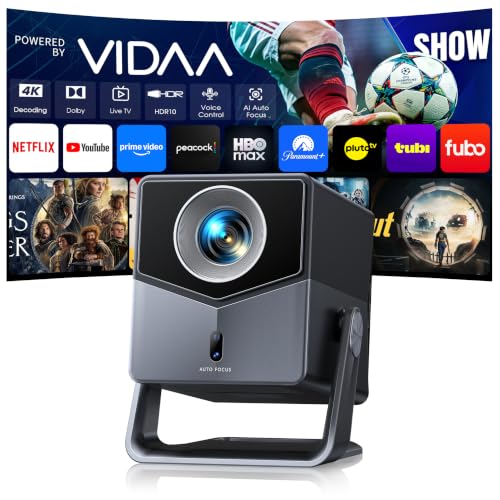
TOPTRO Smart Projector 4K VIDAA with WiFi6 and Bluetooth

BenQ HT2150ST 1080P Short Throw Projector 2200 Lumens

TOPTRO Mini Smart Projector with Built-in Apps and Dolby Audio
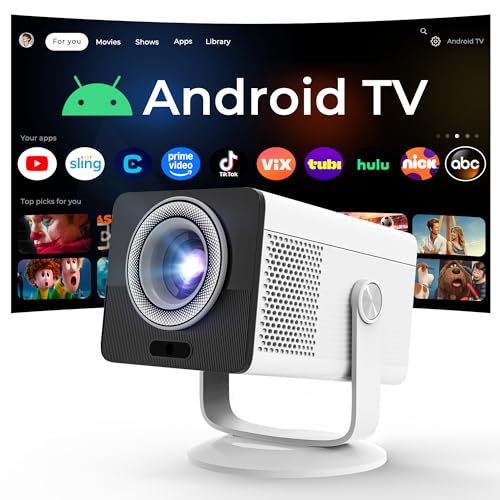
LYNCAST HP Projector MC400 USB-C Power Bank Compatible

LYNCAST X7 2000 ANSI Smart Projector Native 1080P

TOPTRO Portable Smart Projector Google TV 14.0 with Dolby

JmGO O3-Ultra Laser 4K Ultra Short Throw Projector

BenQ TH671ST 3000 Lumens 1080p Short Throw Projector
Meet The Standout Selections
The TOPTRO A2 leans hard into the “smart TV that happens to project” idea. It runs VIDAA, a more streamlined smart platform than typical Android variants, with Netflix compatibility built in, 36W Dolby audio, voice control, HDR10 support, and WiFi6 for cleaner wireless streaming from a phone or laptop. The short throw lens lets it sit close to a wall in a small apartment, and AI auto focus trims setup time on movie night.
For anyone replacing an older bedroom TV, the appeal is skipping the streaming stick entirely. Compared with the portable TOPTRO later in this list, the A2 trades some compactness for stronger built-in speakers and a more mature app platform. Most living rooms with reasonable light control will find the picture solid for casual viewing.
Where It Delivers
- VIDAA smart OS keeps navigation snappy and avoids the lag common in budget Android projectors
- WiFi6 helps wireless streaming stay stable in busy network environments
- Dolby-tuned 36W speakers fill a small room without needing a soundbar
- AI auto focus and HDR10 together lift detail in dim-to-moderate lighting
Trade Offs
- Streaming app selection depends on the VIDAA catalog, which is narrower than Android TV in some regions
- WiFi6 gains are modest unless your home network is already upgraded
- You may find the fan audible during quiet dialogue scenes
Feature Snapshot
Who It Suits Best
Cord-cutters and renters who want a tidy living-room projector with apps baked in and no extra streaming hardware to wire up.
A Better Fit Elsewhere
Hardcore console gamers should weigh the BenQ HT2150ST instead, since its lower input lag and game-tuned modes serve fast-paced play better.
The BenQ HT2150ST targets a specific crowd: people who game on a console or PC and care about input lag more than built-in apps. Native 1080p resolution, a 6x RGBRGB color wheel for clean color separation, 2200 ANSI lumens, and a throw ratio around 0.69 to 0.83 let it push a 100-inch image from roughly three feet away, which keeps the projector off the coffee table and out of the way of foot traffic.
BenQ is a long-standing name in display calibration, and the HT2150ST carries the company’s reputation for accurate color. The 20W built-in speaker is louder than typical projector audio, though a soundbar still beats it for cinematic moments. Where streaming-focused picks lead with apps, this one leads with picture integrity and game response.
Benefits That Matter
- Specialized low input lag and game modes give competitive genres cleaner response
- Short throw ratio suits tight gaming setups where every foot of distance matters
- 96% Rec.709 coverage keeps movies and shows looking close to creator intent
Small Caveats
- Streaming requires an external stick or console since there’s no built-in smart platform
- 2200 lumens is fine for dim rooms but may wash out in sunlit spaces
- Lamp-based light source needs eventual bulb replacement after heavy use
Built With In Mind
Console and PC gamers who want big-screen immersion without dedicating a full media room to a projector.
Look Elsewhere When
Movie-only viewers seeking built-in streaming should consider the TOPTRO A2, since it skips the need for an external streaming device.
The TOPTRO TP1 leans portable, pairing native 1080p output, built-in apps including YouTube and Prime Video, WiFi, Bluetooth, Dolby audio, and an auto focus system in a compact body. The 360-degree adjustable stand is a small but thoughtful touch, letting you angle the lens at awkward walls or ceiling mounts without propping the unit on a stack of books.
For backyard setups, this TOPTRO is easier to haul than the A2 but loses some of its bigger sibling’s audio muscle. A power outlet is still required, so it’s “portable” in the sense of fitting in a backpack, not full off-grid use.
What Pays Off
- Built-in apps sidestep the streaming stick for casual viewing sessions
- Auto focus saves fiddling when moving between rooms
- 360-degree stand eliminates the need for a separate tripod in many setups
Honest Caveats
- Smaller speakers sound thinner than the A2’s 36W system at higher volumes
- Native 1080p is solid, but 4K input support is upscaled rather than pixel-perfect
- Outdoor performance depends heavily on ambient light and screen gain
Quick Facts
The Right Fit
People who want a grab-and-go projector for backyard nights, sleepovers, or spontaneous living-room movie swaps.
Swap It Out When
Shoppers wanting longer battery-free runtime off an outlet may prefer the LYNCAST HP MC400, which adds USB-C power bank compatibility.
The LYNCAST MC400 differentiates itself with a USB-C power input that pairs with a portable power bank, freeing the projector from a wall outlet for true outdoor use. It runs Android TV with Netflix, Prime Video, YouTube, Disney+, and Tubi preloaded, plus a sleep timer that’s handy for late family viewing.
For patio and camping setups, the power-bank flexibility is the headline. You won’t get the laser light engine of the JmGO O3-Ultra or the brightness of the X7, but you trade those for a projector that follows you outside without hunting for an extension cord.
Where It Helps
- USB-C input accepts common power banks, opening up real off-grid viewing
- Android TV with multiple streaming apps pre-installed removes setup friction
- Sleep timer supports automatic shutoff for backyard movie scheduling
Things To Consider
- Runtime depends entirely on the capacity of the power bank you pair it with
- Brightness is modest compared with the X7, so very sunny patios will wash out
- The MC400’s optics favor close-range projection, so placement near a wall matters
Spec Overview
Best Suited To
Campers, tailgaters, and renters who want a projector that travels beyond the reach of extension cords.
Consider Something Else When
Households chasing max brightness for lit living rooms should consider the LYNCAST X7, which delivers considerably more ANSI lumens for daytime viewing.
The LYNCAST X7 is built for the room where lights stay on. 2000 ANSI lumens, native 1080p resolution, and 125% sRGB coverage make it one of the brighter mainstream options, with enough headroom for daytime viewing, sports, and animation-heavy shows that suffer in dim projectors.
4K and 8K input support let it downscale cleanly from modern sources, so a 4K streaming box or laptop doesn’t feel wasted. For a family room with mixed ambient light, the X7 is one of the more forgiving picks on this list.
What It Does Well
- 2000 ANSI lumens hold up under partial daylight better than entry-level projectors
- 125% sRGB coverage delivers a wider color range for animated and HDR content
- 4K and 8K input support future-proofs against newer streaming sources
Points To Note
- Higher brightness usually means more fan noise, so mounting distance from seating matters
- Color accuracy out of the box may need a quick calibration pass for purists
- The X7 runs larger than the TOPTRO mini options, so it’s less backpack-friendly
Made For
Busy family rooms where daytime sports, cartoons, and casual streaming share screen time.
Reach For A Different Pick When
Shoppers who want a quieter, smaller unit for bedroom ceilings should consider the TOPTRO Google TV 14.0 model, which is friendlier to small-room placement.
The TOPTRO Google TV 14.0 model runs one of the most app-friendly smart OS variants, with access to 10,000-plus apps including Netflix, YouTube, Prime Video, Disney+, Sling TV, and Hulu plus Live TV. With 1GB of RAM and 32GB of storage, it skips the lag common in stripped-down projector interfaces, and the unit supports ceiling projection, auto focus, and keystone correction for rooms where straight-on placement isn’t an option.
For renters and apartment dwellers, the ceiling-friendly short throw is the quiet highlight. Compared with the TOPTRO A2 reviewed earlier, this version adds more storage and a wider app catalog but trims speaker power.
Why It Works Well
- Google TV 14.0 unlocks the broadest mainstream app library in this lineup
- Ceiling projection mode suits bedrooms where wall space is tight
- Auto focus and keystone correction make daily setup painless
Trade-Offs To Consider
- Smaller onboard speakers mean a soundbar or headphones for cinematic audio
- 1GB of RAM handles navigation but stumbles under heavy multitasking
- Performance dips slightly when running multiple streaming services side by side
Who Should Grab It
Apartment dwellers and frequent movers who want a portable projector with mainstream streaming apps already loaded.
Where Another Pick Suits Better
Campers prioritizing battery-free runtime should pick the LYNCAST HP MC400, since it accepts USB-C power banks for off-grid sessions.
The JmGO O3-Ultra is an ultra short throw laser projector, meaning it sits a few inches from the wall and throws a massive, properly aligned image upward. The triple-laser MALC light engine, native 4K resolution, 4000 ISO lumens, and Master Sound speakers push it well past the budget tier, and the included KD3 Google TV stick handles the streaming side cleanly.
This is the home theater play. If you want a real TV replacement that disappears into a media console, the O3-Ultra outperforms every other pick in this guide on image quality. The trade-off shows up in size, weight, and price, all of which sit well above the rest of the field.
Everyday Perks
- Triple-laser light engine delivers wide color and strong contrast for the category
- Ultra short throw design replaces a wall-mounted TV cleanly in a media console
- Built-in Master Sound speakers carry weight for everyday viewing without a soundbar
- 4GB of RAM and 128GB of storage handle heavy streaming apps smoothly
Factors To Consider
- Body size and weight require a dedicated console or shelf, not a coffee table
- The included streaming stick is a workaround for the Chinese-market Android variant
- Laser light engines typically cost more to service than lamp-based units
The Main Details
Perfect Match For
Home theater builders who want a true TV replacement and don’t mind paying for laser-grade image quality.
Not Your Match When
Casual viewers seeking a casual living-room pick should consider the BenQ TH671ST, which offers simpler setup at a more approachable footprint.
The BenQ TH671ST brings 3000 ANSI lumens to a short throw body, a step brighter than the HT2150ST reviewed earlier. That extra brightness gives it more daylight resilience, so a living room with afternoon sun or open blinds doesn’t immediately wash the image out. Native 1080p DLP imaging, 10,000:1 contrast, and a 1.07-billion-color palette keep the picture sharp for movies and casual console gaming.
For families that don’t want to fully darken a room, this BenQ is a sensible middle-ground. The 5W speaker is modest, so plan on pairing it with external audio, but the optics and color are the real draw, and BenQ’s reputation for accurate color tuning carries through here.
Notable Upsides
- 3000 lumens handle ambient light better than dim-room-only projectors
- Short throw ratio suits smaller living rooms without long cable runs
- BenQ’s color tuning keeps skin tones and animation looking natural out of the box
A Few Limitations
- 5W onboard speaker is light, and most users add a soundbar for cinematic audio
- Lamp-based light source has a finite bulb life and replacement cost
- Smart features rely on an external streaming stick since none are built in
Feature Rundown
Whose Shelf It Belongs On
Families who want a bright, dependable living-room projector without committing to a full home theater setup.
Skip It When
Shoppers prioritizing built-in smart apps and 4K should pick the JmGO O3-Ultra, which offers a more future-ready platform at a higher tier.
What Matters When Shopping For Short Throw Projectors On A Budget
Short throw projectors live or die by three numbers: throw ratio, brightness, and resolution. Throw ratio tells you how far the lens sits from the wall for a given image size, with ratios under 1.0 generally considered short throw, and ratios around 0.4 or lower classified as ultra short throw. Brightness, measured in ANSI or ISO lumens, decides whether the picture survives ambient light, while resolution determines pixel sharpness at your screen size.
For small living rooms, a throw ratio around 0.69 to 0.83 lets the projector sit roughly three to five feet from the wall and still produce a 100-inch image. That distance keeps the unit off the floor and out of foot-traffic paths. Apartment dwellers benefit even more, since you can place the projector on a media console inches from the wall and still get a clean, large picture.
Brightness is where budget shoppers cut corners most easily. Anything under 1500 lumens typically demands a near-dark room, while 2000 to 3000 lumens handles evening viewing with a lamp on. Daytime sports or animation in sunlit spaces push you toward 2500 lumens or higher, which is where the BenQ TH671ST and LYNCAST X7 shine.
Resolution deserves honest framing. Native 1080p looks clean at 100 inches for most viewers, but 4K input support matters if you stream from modern sources, since upscaled 4K tends to look better than a 1080p source fed through the same panel. The laser 4K models, like the JmGO O3-Ultra, deliver native pixel detail that budget 1080p units can’t match.
Smart Platforms And Connectivity
Built-in smart platforms save clutter but vary widely in app selection. VIDAA, Google TV, and Android TV each cover the mainstream streaming services, though regional app libraries differ. If you already own a streaming stick you like, a projector without built-in apps may suit you better, and you can spend the savings on optics or brightness.
Connectivity covers WiFi standard, Bluetooth for audio, HDMI for consoles, and USB-C for power or media. WiFi6 helps in busy networks but is not essential for casual streaming. Bluetooth audio support is useful for connecting a soundbar or wireless headphones. USB-C power input, as on the LYNCAST MC400, opens genuine off-grid use with a portable battery.
Pitfalls Worth Dodging And Where The Extra Money Goes
Wrong Turns To Avoid
A common trap is chasing resolution numbers without checking throw ratio or brightness. A 4K projector that needs a pitch-black room at 10 feet isn’t a better deal than a 1080p unit that fills your actual space with usable light. Another pitfall is ignoring fan noise: brighter projectors often run louder, which becomes noticeable during quiet scenes or gaming dialogue. Finally, skipping speaker quality leads to underwhelming audio, since most onboard projector speakers are thin. Plan for a soundbar or external speaker from the start.
What Separates Premium From Basic
The jump from budget to premium in short throw projectors usually shows up in three places. Light source technology, where lamp, LED, and laser differ in brightness, color gamut, and lifespan, with laser generally leading. Native resolution, where 4K native panels show finer detail than upscaled 4K. And ultra short throw optics, which require precise lens assemblies that cost more to manufacture. For most shoppers, the practical upgrade is a brighter, quieter unit with better smart apps, not necessarily native 4K. For dedicated home theater builders, the laser 4K tier, like the JmGO O3-Ultra, justifies its higher price.
Frequently Asked Questions
How close does a short throw projector need to be from the wall?
Most short throw projectors need roughly three to five feet from the wall for a 100-inch image, while ultra short throw models sit inches away. Check the throw ratio in the specs, since it tells you exactly how much distance each model requires.
Can a budget short throw projector handle a lit living room?
Budget models with 2000 lumens or higher can handle soft ambient light, while dim rooms allow 1500-lumen projectors to look clean. For daytime viewing with blinds open, 2500 to 3000 lumens is the practical floor.
Do I need 4K resolution for a 100-inch screen?
4K looks noticeably sharper at 100 inches and beyond, especially for text-heavy content and detailed movies. For casual streaming at moderate viewing distances, native 1080p is usually acceptable and saves money.
What is the difference between ANSI lumens and ISO lumens?
Both measure brightness, but ISO lumens follow a stricter measurement standard. A 4000 ISO lumen projector is generally brighter than a 3000 ANSI lumen unit, though comparing across brands without converting is tricky.
Is a laser light source worth the extra cost?
Laser light sources last longer, hold brightness over time, and often deliver wider color than lamp-based units. For long-term ownership, the upgrade pays off if you watch daily; for occasional use, a lamp-based model is usually fine.
The Takeaway
The best cheap short throw projector for your space depends on where it lives: a dark bedroom rewards a quiet, app-rich unit like the TOPTRO A2, while a bright living room benefits from the BenQ TH671ST or LYNCAST X7. Gamers should weight input lag and lean toward the BenQ HT2150ST, and outdoor movie fans will appreciate the LYNCAST MC400’s USB-C power bank support. Whatever you pick, measure your room, check the throw ratio, and budget for audio. A short throw projector turns a small space into a theater, but only when the specs match the spot where it lives.


