

If your laptop speakers leave you squinting at dialogue in films, or your desktop setup feels anemic the moment you try to mix a track, a dedicated amplifier changes the picture fast. The right unit breathes clarity into vocals, tightens the bass, and gives gaming and music the weight they deserve. This list rounds up nine options covering compact DAC amps for headphones, full power amps for passive speakers, and a few that flex into home theater and outdoor setups, so you can match the gear to your room and your gear.
The Main Contenders

Micca OriGen G3 HiFi USB and Optical DAC Amp

Fosi Audio TB10D 2 Channel Stereo Amplifier

Fosi Audio ZA3 Balanced Stereo Amplifier

Fosi Audio HT4S Bluetooth Amplifier
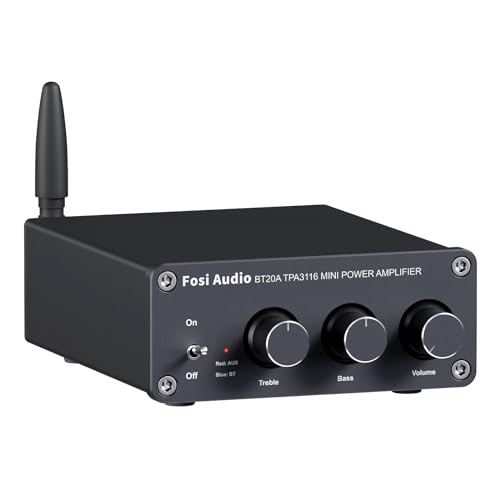
Fosi Audio BT20A Bluetooth Stereo Amplifier

Fosi Audio BT30D Pro 2.1 Subwoofer Amplifier

Fosi Audio MC351 2.1 Channel Integrated Amplifier

Douk Audio K5 PC DAC Headphone Amplifier

Douk Audio T7 7 Band Equalizer Preamp
The Details Behind The Selections
The Micca OriGen G3 sits in the awkward middle ground between a headphone amp and a desktop DAC, which is exactly where most PC listeners live. It pulls a digital audio signal from your computer through USB or optical, converts it through a 24-bit/192kHz DAC (a digital-to-analog converter that rebuilds your music files into the analog waveform your speakers and headphones need), and sends clean analog audio out to either powered speakers or a pair of over-ear cans.
Compared to the more powerful Fosi Audio TB10D you’ll see later, the OriGen makes no attempt to drive passive bookshelf speakers on its own, and that’s the point. Office workers, podcast editors, and late-night gamers who rely mostly on headphones gain a tidy volume knob right on the desk without filling the room with heat or hum. The compact aluminum chassis tucks behind a monitor without dominating the workspace.
Everyday Perks
- Front-panel headphone output means you can plug and unplug without crawling behind the PC tower.
- Optical and 24-bit/192kHz USB inputs give you flexibility for both modern laptops and older sound cards.
- Acts as a preamp, so a single volume knob controls audio going to your powered desktop speakers.
- Compact metal case stays cool during long sessions, which matters when the unit lives inches from your hand.
Things To Consider
- No Bluetooth, so phone streaming requires a wired connection through the computer.
- Headphone output is comfortable but won’t fully satisfy hard-to-drive high-impedance studio cans.
- Owners commonly report the small front knob feels light; you’ll want a gentle hand during volume changes.
Key Specs
Whose Shelf It Belongs On
Anyone whose PC sits on a small desk and whose listening splits between headphones and a pair of powered speakers.
Where Another Pick Suits Better
Reach for the Douk Audio K5 PC DAC Headphone Amplifier if you specifically need DSD playback and a USB-to-optical converter for an external speaker chain.
The TB10D drops a TPA3255 Class D chip (a high-efficiency amplifier chip that runs cooler than traditional amps while delivering serious wattage) into a slim black brick that disappears behind a pair of bookshelf speakers. It targets passive speakers, meaning traditional unpowered bookshelf and tower models that need an external amplifier to produce sound. With claimed output reaching 300W per channel, it has no trouble filling a mid-size room.
Where the Micca OriGen G3 from item one focuses on headphones and powered speakers, the TB10D is built for the listener who already owns (or is about to buy) unpowered bookshelf cabinets. Bass and treble tone controls on the front let you nudge the sound away from a boomy desk or a bright hardwood floor, and the unit stays cool to the touch even during long movie nights.
What Helps Most
- High-output Class D design drives 2-8 ohm passive speakers without breaking a sweat.
- Front-panel bass and treble controls let you tune to your room without opening a software EQ.
- Compact footprint slides onto a desk shelf or speaker stand without rearranging the room.
- Pairs well with bass shakers for gamers who want tactile feedback during cinematic moments.
Honest Caveats
- No built-in DAC, so your computer still needs a USB DAC like the Micca OriGen G3 to feed it a clean signal.
- Banana-plug speaker terminals (the round, spring-loaded connectors many audiophiles prefer) aren’t supported, only bare wire or pin connectors.
- Lacks Bluetooth, which can feel limiting next to the Fosi Audio BT20A covered later in this list.
Feature Rundown
Built With In Mind
Listeners with unpowered bookshelf speakers on a desk or speaker stands who want plenty of clean headroom for music and games.
Skip It When
Pick the Fosi Audio BT20A Bluetooth Stereo Amplifier if wireless streaming from a phone is the priority and your speaker setup stays modest.
The ZA3 is the TB10D’s moodier sibling, the one that reads more amp specs and refuses to settle on a single role. Run it in stereo for a clean 2-channel setup, or flip it into mono mode and pair two units together for a serious mono-block rig feeding a subwoofer or a hungry tower speaker.
Where the TB10D feels like a desk workhorse, the ZA3 leans into flexibility. Home theater hobbyists who want to dedicate one channel to a passive sub will find the mono mode genuinely useful, and the bundled 48V power supply suggests Fosi expects you to push it. Compared to the Micca OriGen G3 from item one, this unit does not output to headphones at all, so plan to keep your powered speakers or amps downstream.
Where It Excels
- Stereo and mono modes adapt to bookshelf speakers one day and subwoofers the next.
- Pairing two ZA3s in mono unlocks higher output for demanding tower speakers.
- TPA3255 chip keeps the chassis compact while delivering serious wattage per side.
- Balanced input option (a professional audio connection that rejects noise over long cable runs) helps in cable-heavy setups.
Practical Considerations
- No headphone output, so a dedicated headphone rig like the Micca OriGen G3 still belongs on the desk.
- Mono mode requires buying two units, which doubles the footprint and the wall outlet count.
- The external 48V power brick takes up real estate behind the desk.
The Right Fit
Listeners mixing stereo music with a passive subwoofer, or anyone planning to scale up to a mono-block configuration later.
Consider Something Else When
Choose the Fosi Audio BT30D Pro 2.1 Subwoofer Amplifier from item six if you want a single box that already handles left, right, and sub channels without buying pairs.
The HT4S stretches the idea of a computer speaker amplifier well past the desk, adding Bluetooth, optical input, and enough speaker terminals to drive a 4.1 or 5.0 setup. Backyard movie nights, garage workouts, and casual living-room theater all fit naturally on its spec list.
Against the more desk-bound Fosi Audio TB10D from item two, this amp trades some pure wattage for connectivity and channel count. A remote control lands in the box, which feels almost luxurious for a budget-friendly Class D unit. You won’t get true Dolby or DTS surround decoding here, but for stereo or matrixed setups that span multiple rooms, the HT4S earns its keep.
Everyday Advantages
- Four- and five-channel switchable output covers indoor theater and outdoor speaker runs.
- Bluetooth, AUX, and optical inputs let a phone, TV, and PC all share the same amp.
- Pre-out for an additional subwoofer or external amp gives you a path to upgrade later.
- Remote control makes day-to-day volume changes painless from the couch.
Points To Keep In Mind
- No Dolby or DTS decoding, so multi-channel sources must come in already decoded or as stereo.
- Bluetooth audio adds compression (a slight loss of audio detail during wireless transmission), which audiophiles may notice on careful listening.
- More speaker wires mean more cable planning, especially for outdoor runs.
Best Suited To
Someone running a multi-room or patio speaker system who wants one amp instead of a stack of components.
Another Choice May Suit
The Fosi Audio MC351 2.1 Channel Integrated Amplifier fits better for a single-room living-room hi-fi setup that doesn’t need outdoor coverage.
The BT20A is the amp to grab when you want something that just works. Plug in passive speakers, pair your phone, and the music is in the room before your coffee finishes brewing. The mini Class D chassis barely takes up space, and 100W per channel handles most bookshelf and ceiling speakers without strain.
Where the Fosi Audio TB10D from item two leans into raw wattage and tone controls, the BT20A trims the fat and adds wireless streaming. Bedrooms, dorm rooms, and small home offices get exactly what they need from this kind of plug-and-play simplicity. It is also one of the few models here that feels equally at home driving ceiling speakers in a hallway as it does on a desktop shelf.
Benefits That Matter
- Bluetooth pairing means the same amp handles laptop audio and phone streaming.
- Compact aluminum case fits on a narrow shelf or tucked behind a monitor.
- Runs cool enough to live inside an enclosed AV cabinet.
- Solid choice for first-time amp owners who don’t want to fiddle with gain settings.
Soft Spots
- No tone controls, so sound shaping depends on your source or downstream EQ.
- Bluetooth pairing remembers only a small number of devices and can drop out occasionally.
- Not ideal for subwoofer duty, which is where the BT30D Pro in item six steps in.
Who Should Grab It
Apartment dwellers, students, and casual listeners who want wireless audio for a small set of bookshelf or ceiling speakers.
Look Elsewhere When
Pick the Fosi Audio BT30D Pro 2.1 Subwoofer Amplifier if your room demands a real low-frequency channel for movie night.
The BT30D Pro answers the question every 2.0 listener eventually asks: where does the bass go? Two TPA3255 chips feed the left and right channels at 165W each, while a separate 350W stage drives a passive subwoofer through its own output. Bass and treble tone controls on the front let you dial the curve to your room.
Compared to the simpler BT20A from item five, this unit trades some of that bedside-table charm for genuine 2.1 muscle. Desktop editors, console gamers, and small home theater setups benefit most, especially when paired with a passive sub that would otherwise sit silent. Owners commonly report the sub output takes real effort to clip, which is reassuring when action movies shake the desk.
What It Does Well
- Dedicated passive subwoofer output turns a basic bookshelf pair into a real 2.1 system.
- Dual TPA3255 chips deliver clean stereo power plus a hefty sub channel.
- Bluetooth input lets a phone or laptop join without a separate DAC.
- Bass and treble controls handle basic room correction without an external EQ unit.
Points To Note
- The sub output is passive only, so a self-powered sub won’t plug straight in.
- Bluetooth range is shorter than dedicated outdoor amps like the Fosi Audio HT4S.
- Front-panel controls feel small and close together, depending on the unit you receive.
Quick Facts
Made For
Anyone upgrading from 2.0 desktop audio to a fuller 2.1 setup with a real passive subwoofer in the mix.
Where A Sibling Pick Shines
The Fosi Audio MC351 2.1 Channel Integrated Amplifier adds a built-in DAC and vintage VU meters when a living-room centerpiece matters more than pure output.
The MC351 is the most visually distinctive amp on this list. Vintage-style VU meters (analog needle gauges that dance with the music, a look borrowed from classic hi-fi gear) sit front and center, glowing softly as the music plays, while modern inputs hide around back. Bluetooth, USB, optical, and coaxial digital inputs feed dual TPA3255 chips that drive both stereo speakers and a passive sub channel.
Compared to the stripped-down BT20A from item five, the MC351 is more of a complete hi-fi hub. Living rooms and home offices that double as listening spaces appreciate the all-in-one approach, where the only extra box you might add is the Douk Audio T7 equalizer covered later. The 2.1 architecture handles music and home theater without forcing you to commit to a full AV receiver.
What Earns Its Place
- Built-in DAC accepts USB, optical, and coaxial, so no separate converter is required for PC or TV hookup.
- Vintage VU meters add personality to a listening room without going full retro.
- Bluetooth input covers casual streaming without breaking the digital chain for serious listening.
- 2.1 channel layout supports a passive sub alongside bookshelf speakers.
Worth Bearing In Mind
- VU meters look gorgeous but add width to the chassis, so the unit needs real shelf space.
- No tone controls, which is where an external preamp like the Douk Audio T7 can help.
- Bluetooth audio still compresses compared to a wired USB connection from the PC.
Perfect Match For
Listeners who want a living-room centerpiece that streams music, plays TV audio, and powers bookshelf-plus-sub setups from a single box.
Reach For A Different Pick When
The Fosi Audio TB10D is a better fit if your speakers live on a workbench and you care more about bass and treble knobs than aesthetics.
The Douk Audio K5 is a DAC and headphone amp wrapped into one compact box, with USB and optical inputs feeding a DSD256-capable converter (DSD is a high-resolution audio format favored by audiophiles, and DSD256 is among its highest tier). It also doubles as a USB-to-optical converter, sending clean digital audio to amps and active speakers that only accept SPDIF (a standard digital audio connection format).
Where the Micca OriGen G3 from item one covers the basics, the K5 stretches further for headphone-focused listeners who own DSD files or run optical-only downstream gear. The 6.35mm and 3.5mm headphone jacks on the front cover both studio and consumer headphones, and the small footprint suits crowded desks.
Strengths Worth Knowing
- DSD256 playback supports high-resolution audio libraries that lesser DACs cannot decode.
- USB-to-optical converter role lets the K5 feed external amps and active speakers cleanly.
- Front jacks cover both 6.35mm studio and 3.5mm consumer headphones without adapters.
- RCA line output routes audio to powered speakers when headphones aren’t in use.
Trade Offs
- Headphone output is clean but not designed for very high-impedance cans.
- Front panel knobs are small and close together, which can feel cramped near a mouse hand.
- Doesn’t power passive speakers, so the Fosi Audio TB10D or BT20A still belongs in a full setup.
Spec Overview
Who It Suits Best
Audiophile PC listeners who collect DSD and FLAC files and want one box that feeds both headphones and powered desktop speakers.
A Better Fit Elsewhere
The Micca OriGen G3 is a friendlier pick for casual listeners who don’t need DSD and prefer a slightly larger, sturdier volume knob.
The Douk Audio T7 is not an amplifier at all, but it earns its spot here because so many of the amps on this list benefit from external tone shaping. Seven EQ bands at 64Hz, 125Hz, 250Hz, 500Hz, 2kHz, 4kHz, and 8kHz let you cut room problems or lift vocals that get lost in a busy mix. XLR (a balanced professional audio connector) and RCA inputs and outputs mean it slots between any source and any of the amps above.
Compared to the simple tone controls on the Fosi Audio TB10D or BT30D Pro, the T7 offers finer control. Mixing enthusiasts, podcast editors, and anyone whose room introduces boomy low-end or harsh treble will appreciate the precision. Owners commonly report that adding the T7 to a flat-sounding amp reveals details that were always there, just buried.
A Favorable Mix
- Seven frequency bands cover the full audible range with real precision.
- Balanced XLR inputs and outputs help in pro-style or longer-cable setups.
- Compact half-rack footprint sits neatly beside a desktop amp.
- Helps tame room issues that software EQ cannot fully fix.
Some Limits To Know
- Doesn’t amplify, so a power amp is still required to drive passive speakers.
- Manual EQ sliders require patience to dial in correctly the first time.
- Front-panel layout is dense, especially in low light.
Right Fit For
Anyone whose room or speaker placement creates uneven bass or harsh treble that basic tone controls can’t reach.
Not Your Match When
The Fosi Audio MC351 is a simpler choice for living-room listeners who want a single box without stacking additional components.
What Matters Most Before Choosing Computer Speaker Amplifiers
Match The Amp To Your Speakers. The first fork in the road is whether your speakers are powered (with built-in amplification) or passive (needing an external amp). The Micca OriGen G3, Douk Audio K5, and Douk Audio T7 serve powered setups and headphone rigs, and the TB10D, ZA3, BT20A, BT30D Pro, MC351, and HT4S drive passive speakers with proper wattage.
Look At Wattage And Impedance Together. Impedance (measured in ohms) describes how much resistance a speaker offers to the amp’s signal, and pairing matters. The TB10D handles 2 to 8 ohm loads comfortably, which covers most bookshelf cabinets. Mismatched pairs produce weak dynamics or, in extreme cases, damage, so double-check your speaker’s rating.
Decide How Many Channels You Need. Stereo (2.0) suits music and casual gaming. A 2.1 setup with a dedicated sub, like the BT30D Pro or MC351, adds real low-end weight. The HT4S stretches to 4.1 or 5.0 for outdoor and home theater runs, though without Dolby or HDR decoding.
Count Your Inputs. PCs, TVs, game consoles, and phones all use different cables. Optical inputs handle TVs and game consoles cleanly, USB inputs feed PCs as a DAC, and Bluetooth covers casual streaming. The more inputs an amp accepts, the fewer adapters you’ll juggle on the desk.
Key Considerations Across These Picks
Pitfalls Shoppers Hit
Overlooking speaker impedance is the fastest way to underpower or damage a setup. Many casual shoppers buy a stereo amp expecting it to drive a passive sub, then realize the amp has no sub output at all. Plan your speaker layout first, then match the amp to it.
Where The Extra Money Goes
Higher-tier models like the Fosi Audio MC351 add a built-in DAC, multiple digital inputs, and visual flourishes like VU meters that cheaper amps skip. The upgrade pays off when you want fewer boxes on the shelf and cleaner digital audio straight from a PC, but budget-focused listeners often get the sound they need from the BT20A or TB10D.
Frequently Asked Questions
Do computer speaker amplifiers work with laptops? Yes, most connect through USB, optical, or a 3.5mm jack. Models like the Micca OriGen G3 and Douk Audio K5 are built specifically for laptop and desktop computer audio.
Can I use a computer speaker amplifier with passive bookshelf speakers? You can, as long as the amp’s wattage and impedance range match your speakers. The Fosi Audio TB10D, ZA3, BT20A, BT30D Pro, MC351, and HT4S all support passive bookshelf and tower speakers.
What’s the difference between a DAC and a headphone amplifier? A DAC converts digital audio from USB or optical into an analog signal your headphones or speakers can use. A headphone amplifier boosts that analog signal specifically for headphone listening. Some units, like the Micca OriGen G3 and Douk Audio K5, combine both functions in one box.
Do I need a subwoofer output on my amp? Only if you plan to add a passive subwoofer to your setup. Stereo listeners can skip the 2.1 amps and stay with simpler 2-channel models like the Fosi Audio BT20A or TB10D.
Is Bluetooth audio quality good enough for serious listening? Bluetooth is convenient and perfectly fine for casual background music, but it compresses audio in ways that careful listeners notice. For critical listening sessions, a wired USB or optical connection into a DAC like the Douk Audio K5 keeps more detail intact.
Closing Remarks
The right amplifier turns a quiet desktop into a place where music, films, and games actually feel alive. Match the amp to your speakers, your room, and the way you actually listen, and the rest falls into place. Browse the picks above, pick the one that fits your setup, and enjoy the upgrade.


