

There’s a specific kind of frustration that hits when your phone dies on a long commute, your laptop dies mid-flight, or a weekend camping trip starts draining every device you brought along. External power chargers solve that problem in a few different ways: pocket-sized magnetic pads, high-capacity laptop bricks, even deep-cycle batteries for off-grid setups. This roundup focuses on what each charger actually does well, where it falls short, and which use cases each one fits best.
The Lineup, Simplified
Ntaanoo Slim 5000mAh Magnetic Power Bank

Ntaanoo Compact 10000mAh Magnetic Power Bank

GrnOas.E 20000mAh 100W Laptop Power Bank (Silver Gray)

GrnOas.E 20000mAh 100W Laptop Power Bank (Dark Gray)

GrnOas.E 12V 100Ah LiFePO4 Deep Cycle Battery

GrnOas.E 27000mAh 140W Laptop Power Bank (Dark Gray)
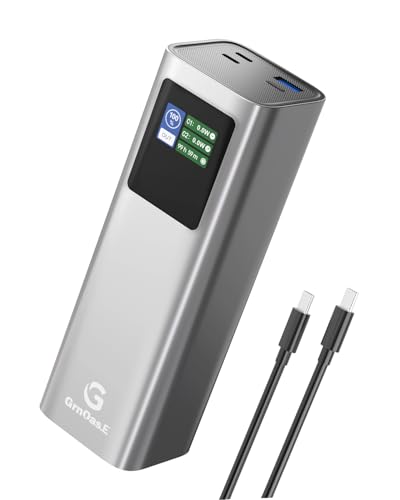
GrnOas.E 27000mAh 140W Laptop Power Bank (Silver Gray)
Why These Options Stand Out
The Ntaanoo Slim 5000mAh magnetic power bank targets a very specific daily scenario: a commuter who needs their phone topped up between meetings without hauling a brick. At roughly 0.38 inches thick and around 119 grams, it disappears into a pocket or small bag, and the magnetic ring snaps it onto the back of a recent iPhone so you can keep using the phone one-handed while it charges.
For most users who only need a single partial top-up during a workday, the capacity tradeoff feels reasonable. Compared to the larger 10000mAh Ntaanoo covered next, this one is meaningfully thinner but won’t fully recharge a depleted phone.
Why It Works Well
- 0.38-inch profile keeps the phone-and-charger combo pocketable during real-world commuting
- Magnetic alignment holds firm on iPhone 12 through 17 series, no cable juggling required
- Built-in USB-C port offers a wired option when wireless is slower than you’d like
- Travel-friendly weight, around 119 grams, which feels closer to a wallet than a gadget
Things To Consider
- 5000mAh delivers a partial phone top-up rather than a full recharge
- Magnetic attachment only works with cases designed for magnetic alignment or a bare phone
Who It Suits Best
Daily iPhone commuters who want a grab-and-go top-up between meetings rather than a multi-day power solution.
Consider Something Else When
The Ntaanoo Compact 10000mAh Magnetic Power Bank fits longer days away from outlets where you need more than one recharge per device.
The 10000mAh sibling doubles the capacity of the slim Ntaanoo while keeping the same magnetic-snap design. Its 11N magnetic hold is enough to keep the pack attached during one-handed texting on a crowded train, and the larger cell covers two-to-three phone top-ups depending on the iPhone model.
Travelers carrying a phone plus wireless earbuds benefit most here. It does weigh more than the 5000mAh version, so the pocketability advantage shrinks a little, but the extra capacity tends to justify the bulk.
Notable Upsides
- 11N magnetic grip keeps the pack locked during real movement and one-handed use
- 10000mAh comfortably handles multiple phone charges plus earbuds or a smartwatch
- USB-C wired input/output gives you a backup charging route when wireless feels slow
- Same magnetic alignment as the slimmer model, so swap-in is seamless
Worth Noting
- Noticeably heavier than the 5000mAh model, so pocket carry is less subtle
- Charging the bank itself takes a few hours from a standard USB-C wall adapter
Built With In Mind
Multi-device travelers who want magnetic convenience without giving up enough capacity for a full day away from outlets.
A Better Fit Elsewhere
The GrnOas.E 20000mAh 100W Laptop Power Bank suits remote workers who also need to charge a laptop, not just phones.
This is the jump from phone-only chargers into laptop-grade territory. The GrnOas.E 20000mAh pack delivers up to 100W Power Delivery through USB-C, which is enough to charge a MacBook Air or most 13-inch Windows laptops at near-wall speeds. The integrated USB-C cable is a thoughtful touch for remote workers who already pack too many cords.
Capacity here translates to roughly one full laptop top-up plus a few phone charges, depending on the workload. The silver-gray finish suits a professional bag, and the form factor is closer to a paperback novel than a pocket device.
Where It Helps
- 100W PD output covers most ultrabooks, including MacBook Air and Pro lines
- Built-in USB-C cable removes one item from your travel kit
- 20000mAh covers a laptop plus a phone plus earbuds over a workday
- 100W PD input recharges the bank itself faster than standard USB-C bricks
Room For Improvement
- Larger than phone-focused packs, so backpack carry rather than pocket carry
- Built-in cable length limits positioning when used with bulky laptop stands
Key Specs
Right Fit For
Remote workers and traveling professionals who need laptop-class power without hauling a full wall-charger setup.
Skip It When
The GrnOas.E 27000mAh 140W Laptop Power Bank suits long-haul flyers who need multi-day capacity without recharging.
Functionally identical to the silver-gray sibling above, this dark-gray version exists for shoppers who prefer a less reflective, more discreet finish on a commuter backpack or a work tote. The internals, 100W PD output, built-in USB-C cable, and 20000mAh capacity, all match the previous pick.
For café commuters or anyone who doesn’t love the silver look against dark laptop sleeves, the dark gray option is the same hardware in a different shell. The honest read is that color is the only meaningful difference here.
Features That Help
- Same 100W PD output as the silver version, no performance compromise
- Built-in USB-C cable keeps your kit minimal
- Dark gray finish resists visible fingerprints during daily handling
- 20000mAh covers a laptop and phone through a standard workday
Points To Note
- No real difference beyond color, so choose based on aesthetic preference
- Still larger than pocket-sized phone packs, even with the toned-down finish
Who Will Love This
Café commuters and hybrid workers who want laptop-class charging in a finish that disappears into a professional bag.
Look Elsewhere When
The Ntaanoo Compact 10000mAh Magnetic Power Bank is a better fit when your day only involves phone charging, not laptop top-ups.
This isn’t a phone or laptop charger in the everyday sense. The GrnOas.E 12V 100Ah LiFePO4 is a Group 24 deep-cycle battery designed for off-grid setups: solar storage, RV house systems, marine use, and home backup. The lithium iron phosphate chemistry delivers up to 1280Wh of usable capacity in a fraction of the weight of a lead-acid equivalent.
The built-in 100A BMS handles common protections, and the low-temperature cutoff matters for anyone using it in unheated sheds or winter camping setups. RV owners and solar enthusiasts tend to get the most from this kind of battery.
Bright Spots
- 1280Wh of usable capacity covers multi-day off-grid power for lights and small appliances
- LiFePO4 chemistry supports many more cycles than lead-acid alternatives
- Built-in BMS provides overcharge, over-discharge, and short-circuit protection
- Low-temperature cutoff helps prevent damage in cold-weather use
Honest Caveats
- Group 24 size and roughly 25+ pounds make it a stationary or vehicle-mounted battery, not a portable pack
- Requires a compatible LiFePO4 charger for safe recharging from solar or AC
Feature Snapshot
Made For
RV owners, off-grid solar users, and marine enthusiasts who need a reliable deep-cycle battery for stationary or vehicle-mounted setups.
Another Choice May Suit
The GrnOas.E 27000mAh 140W Laptop Power Bank fits travelers who need portable laptop charging, not stationary energy storage.
The 27000mAh 140W pack pushes capacity into the highest tier covered here. The 99Wh rating is the key spec for frequent flyers: it sits under the 100Wh carry-on limit most airlines enforce, so this bank can ride along in cabin baggage without airline approval.
PD 3.1 support unlocks 140W output, which charges a 16-inch MacBook Pro or a high-end Windows workstation at genuinely useful speeds. The smart display helps you track output wattage and remaining capacity without guessing.
Useful Touches
- 99Wh capacity rides under airline carry-on battery limits
- 140W PD 3.1 covers demanding laptops, not just ultrabooks
- Smart display shows real-time output and remaining capacity
- 27000mAh covers multi-device travel days in a single charge
A Few Limitations
- Heavier and bulkier than the 20000mAh GrnOas.E packs
- Premium PD 3.1 wattage is wasted on phones that draw far less power
Feature Rundown
Perfect Match For
Frequent flyers and mobile professionals who need airport-legal, laptop-class power for international trips.
Reach For A Different Pick When
The Ntaanoo Slim 5000mAh Magnetic Power Bank is a better fit for short daily commutes where laptop-class output is overkill.
The silver-gray twin of the dark gray 27000mAh pack delivers the same 140W PD 3.1 output, the same 99Wh airline-friendly capacity, and the same smart display, only in a lighter finish. For shoppers who want the heavy-duty specs without the stealth look, this is the matching option.
Road-trippers running a phone, tablet, and laptop across multiple days from a single bank tend to get the most from this size class. You may find the extra weight noticeable in a backpack over a long travel day.
Strengths Worth Knowing
- 140W PD 3.1 handles high-wattage laptops at near-wall speeds
- 99Wh rating keeps it under most airline carry-on thresholds
- 27000mAh covers multiple device top-ups across multi-day trips
- Smart display lets you confirm output wattage before plugging in
Factors To Consider
- Bigger and heavier than 20000mAh alternatives, so backpack-only carry
- Premium wattage is wasted if your devices only draw 20-30W
Feature Overview
Best Suited To
Multi-day road trippers and field professionals who need one bank to cover a laptop, tablet, and phone over several days.
Swap It Out When
The GrnOas.E 12V 100Ah LiFePO4 Deep Cycle Battery fits off-grid cabin or RV setups where you need stationary storage rather than portable charging.
What To Weigh Before Choosing External Power Chargers
Capacity Vs. Portability
Capacity, measured in mAh or Wh, is the headline number, but it cuts both ways. Higher capacity means more recharge cycles per fill of the bank, yet it usually brings more weight and bulk. Phone-focused magnetic packs in the 5000-10000mAh range fit a pocket or a small crossbody, while 20000-27000mAh laptop banks belong in a backpack. Match the capacity to your longest realistic day away from outlets, not to a worst-case scenario you’ll rarely hit.
Output Wattage And Device Match
Power Delivery, or PD, is the USB-C standard that lets a bank negotiate higher wattages with laptops and fast-charging phones. A 100W PD bank handles most ultrabooks, while 140W PD 3.1 reaches demanding 15-16 inch laptops at near-wall speeds. Phones rarely draw more than 30W, so paying for 140W output makes sense only when you’re regularly charging a laptop alongside your phone.
Airline And Travel Rules
Airlines generally cap carry-on lithium banks at 100Wh without airline approval, with 100-160Wh allowed only by permission. The 99Wh-rated GrnOas.E 27000mAh packs sit just under that ceiling, which is a meaningful edge for frequent flyers. Deep-cycle LiFePO4 batteries like the 12V 100Ah pack aren’t designed for cabin baggage and have entirely different transport rules.
Build And Connector Details
Integrated cables remove a separate cord from your kit, which helps for travel. Magnetic attachment only works with phones and cases designed for it, and the magnet strength, sometimes called magnetic force in newtons, matters when you’re moving around. A built-in BMS, or battery management system, handles protections for high-capacity banks and is worth checking on any pack above 20000mAh.
Key Considerations Across These Picks
Pitfalls Shoppers Hit
The most common mistake is buying capacity you won’t use. A 27000mAh bank sounds appealing, but if your longest day is a coffee shop and a commute, the extra weight adds nothing. The flip side is buying a 5000mAh pack for a weekend camping trip and running out by Saturday morning. Match capacity to your actual longest off-outlet stretch, and assume real-world output is closer to two-thirds of the rated mAh once conversion losses are accounted for.
Where The Extra Money Goes
Higher-tier models add genuine engineering, not just a bigger label. A 140W PD 3.1 laptop bank costs more because the USB-C controller, thermal management, and battery cells all have to handle sustained high-current output without overheating. Smart displays, premium LiFePO4 cells, low-temperature cutoffs, and integrated cables all add parts and assembly cost. The upgrade pays off when you’re charging demanding laptops or relying on the bank for multi-day travel, but it’s wasted on phone-only daily carry.
Frequently Asked Questions
How many mAh do you really need for a phone?
Most modern phones need roughly 3000-5000mAh for a full charge, so a 10000mAh bank comfortably covers two full top-ups with some left over for earbuds or a smartwatch.
Can external power chargers damage your phone battery?
Modern banks negotiate the correct voltage and current with your device, so there’s no inherent risk. Excessive heat from a poorly ventilated bank can affect long-term battery health, so avoid charging a phone under a pillow.
Are 27000mAh power banks allowed on planes?
Batteries under 100Wh are generally allowed in carry-on baggage without airline approval. The 99Wh-rated 27000mAh packs covered here sit just under that ceiling, which is convenient for flyers.
What’s the difference between USB-C PD and PD 3.1?
USB-C PD covers power delivery up to 100W. PD 3.1 extends the standard to 140W and beyond, using higher voltage steps for laptops that need it. For phones and ultrabooks, regular PD is usually enough.
How long does a deep-cycle LiFePO4 battery last?
LiFePO4 chemistry is rated for thousands of charge cycles, often ten times more than lead-acid equivalents. With moderate use, a 12V 100Ah unit can comfortably serve for many years before meaningful capacity loss.
Closing Remarks
The right external power charger depends almost entirely on the device that runs out first. Phone-only commuters get the most from a slim magnetic pack, remote workers need laptop-grade PD output, and off-grid setups call for deep-cycle storage. Match the bank to the bottleneck in your day, and the rest of the decision tends to take care of itself.


