

Wireless lavalier mics have stopped being a niche accessory. Anyone filming interviews, podcasting on the go, recording YouTube shorts, or streaming on TikTok needs hands-free audio that doesn’t sound like it was captured at the bottom of a backpack. The good news is that the affordable tier has caught up with professional expectations: you can now find tiny clip-on transmitters, multi-mode noise cancellation, and stable long-range wireless at prices that don’t require a spreadsheet.
This roundup focuses on wireless lavalier systems that deliver usable, broadcast-style audio for content creators, mobile journalists, and casual videographers. Every entry below clips onto a collar, pairs quickly with a phone or camera, and offers some form of noise reduction for real-world environments like cafés, streets, or home studios.
A Closer Look At The Lineup

Hollyland Lark A1 Wireless Microphone for iPhone & Android

Hollyland Lark M2 Wireless Microphone (Black, with Camera RX + USB-C RX)
Insta360 Mic Pro Wireless Mini Lavalier Microphone

MAONO Wave T5 Wireless Lavalier Microphone
DJI Mic Wireless Lavalier Microphone with Charging Case

Wireless Mini Lavalier Microphone for iPhone, Android, PC

DJI Mic Mini Wireless Lavalier Microphone

MAONO Wave T5 Wireless Lavalier Microphone for iPhone/Android

MAONO T5 Wireless Lavalier Microphone for Camera (2 TX + 1 RX)

Hollyland Lark MAX 2 Wireless Microphone (Ultimate Combo)
Taking A Closer Look At The Options
The Lark A1 arrives as a complete creator kit with two transmitters and a USB-C receiver, which is the configuration most vloggers actually need for interview-style framing. Audio capture happens at 48kHz/24-bit, a sample rate and bit depth that delivers detailed, broadcast-ready recording on par with pricier studio setups.
The 120dB SPL handling matters in the real world: sudden loud moments like a car horn or a dropped mug won’t distort your recording. Most first-time wireless mic users hit clipping issues within their first month, and headroom like this quietly prevents that.
Everyday Advantages
- Three selectable noise cancellation levels (Weak, Medium, Strong) adapt to cafés, streets, and quiet rooms
- USB-C receiver plugs straight into modern Android phones and iPhone 15/16 series without adapters
- Dual transmitters cover two-person interviews without buying extra units
- Compact clips sit flat against collars without pulling heavier fabrics
Things To Consider
- The USB-C receiver won’t fit older iPhones with Lightning ports without a separate adapter
- Battery life is shorter than higher-end kits during long shooting days
Made For
Mobile creators running solo or two-person interviews who want adjustable noise control without paying for studio-tier features.
Where Another Pick Suits Better
Filmmakers needing wireless in-ear monitoring should step up to the Hollyland Lark MAX 2 reviewed later in this list.
The Lark M2 stands out for sheer portability, with each transmitter tipping the scales at roughly 9 grams. That’s lighter than a stack of three nickels, and it shows: clips barely wrinkle thin fabrics and stay put during long handheld shoots.
Unlike the Lark A1, this version ships with both a camera-mount receiver and a USB-C receiver, so you can swap between a mirrorless body and a phone without buying another kit. The 300-meter wireless range is generous for the price tier, though real-world range shrinks with walls and bodies in between.
What It Does Well
- At about 9g per transmitter, the M2 disappears on a collar or lapel
- 300m rated line-of-sight range covers most outdoor shoots comfortably
- 48kHz/24-bit recording preserves vocal detail for voiceover work
- Noise cancellation handles ambient hum in moderately busy environments
Honest Caveats
- The two receivers add bulk to the charging case compared to single-receiver kits
- Wind performance outdoors typically requires an included deadcat or careful positioning
- Range claims assume open sightlines; dense urban shoots will see meaningful drop-off
Right Fit For
Vloggers and journalists who need a featherlight transmitter and shoot across both cameras and phones in the same session.
Skip It When
You primarily record at long distances where the DJI Mic’s 250m rated stability outperforms most budget kits.
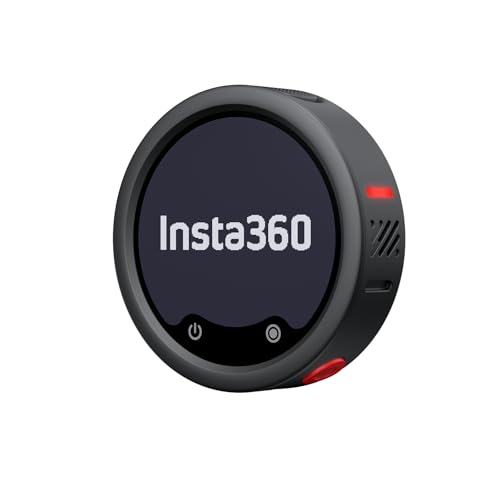
The Mic Pro leans into features you don’t usually see at this price, starting with a customizable E-ink display on the transmitter. You can upload logos or graphics through the Insta360 app, which makes sense for production crews who want branded gear visible on camera.
Three built-in mics with directional pickup modes give you flexibility on the fly. Pair it via Bluetooth for cable-free phone connections, and you’ve got a versatile system that handles run-and-gun work without an adapter chain. The 32-bit float internal recording is a quiet superpower: it preserves audio even if levels spike unexpectedly.
Standout Benefits
- Customizable E-ink screen turns the transmitter into on-camera branding
- 32-bit float recording rescues clipped audio that would otherwise be unusable
- Three-mic array supports different pickup patterns for solo or interview setups
- Bluetooth pairing cuts the cable clutter when filming with phones
Points To Keep In Mind
- Best feature set requires the Insta360 app for E-ink customization
- Multi-mic array adds slight bulk compared to simpler two-mic transmitters
Feature Snapshot
Whose Shelf It Belongs On
Brand-conscious content teams and tech-forward creators who value the E-ink customization and 32-bit float safety net.
Reach For A Different Pick When
You shoot mostly on a mirrorless camera and want a more traditional camera-mount receiver like the MAONO T5 kit later in this list.
The Wave T5 cuts a friendly profile for creators bouncing between devices. At around 9 grams per transmitter, it competes head-to-head with the Hollyland M2 on portability while broadening the supported device list.
Compared to the Lark A1, this MAONO variant opens up compatibility with PCs and laptops alongside phones and cameras, which suits hybrid creators who shoot for YouTube one day and join a remote podcast the next. Intelligent noise cancellation adjusts to the environment without manual tweaking for every clip.
Features That Help
- Works across iPhone, Android, camera, and PC with appropriate receivers
- 9g transmitter weight stays comfortable during long vlog sessions
- Broadcast-grade sound quality for voiceover and podcast work
- Intelligent noise cancellation adapts to varying ambient conditions
Small Caveats
- Maximum device compatibility may require buying separate receivers for some configurations
- Smartphone-first tuning might require manual levels on professional camera bodies
Who Should Grab It
Multi-device creators who split time between mobile shoots, desktop recording, and camera work without wanting separate mic systems for each.
A Better Fit Elsewhere
If you only shoot on newer iPhones and want simpler phone-native tuning, the MAONO Wave T5 iPhone edition further down handles that with less fuss.
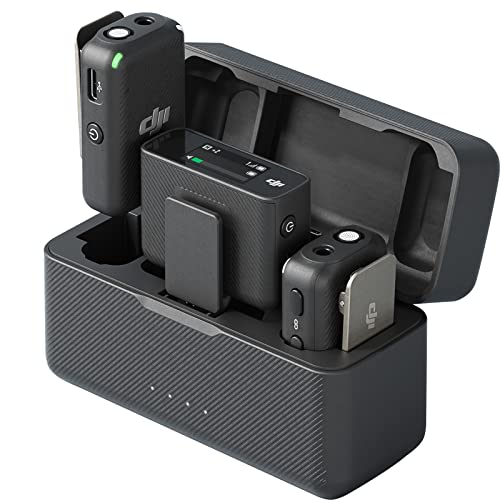
The original DJI Mic holds its place as a workhorse for serious creators. Two transmitters and a receiver arrive pre-paired inside the charging case, so out-of-the-box setup is genuinely zero-fuss for once.
At a 250m rated range and a 15-hour battery claim across the system, this kit covers a long interview day or a multi-location shoot without mid-day charging. The all-in-one storage design also means fewer lost pieces in a busy production bag, an underrated benefit once you’ve fished a tiny windscreen out of a backpack pocket for the fourth time.
Useful Strengths
- 250m line-of-sight range handles large venues and outdoor events
- 15-hour total system battery covers full shooting days
- Pre-paired transmitters cut setup time on arrival
- Charging case doubles as a protective storage unit
Factors To Consider
- Larger transmitters than newer mini-class options like the DJI Mic Mini
- Charging case adds weight to a bag compared to bare-bones kits
Feature Snapshot
Best Suited To
Two-person interview shooters and event videographers who prioritize long battery life and stable long-range wireless over ultra-compact form factors.
Look Elsewhere When
Discretion on camera matters more than range, in which case the DJI Mic Mini later in this list keeps a lower profile on talent.
This Rackwaylo unit earns its place by removing every possible setup barrier. Plug the receiver into your phone, power on the transmitter, and the two pair automatically with no app, no Bluetooth menu, and no manual channel selection.
For absolute beginners, that “it just works” experience matters more than advanced features. The tradeoff shows up in customization: you get fewer noise cancellation modes and less granular control than the Hollyland or DJI alternatives offer.
Real Benefits
- True plug-and-play pairing with no app or menu diving
- Works across iPhone, iPad, Android, PC, and laptop devices
- Built-in noise reduction tames moderate ambient hum
- Compact lapel form factor stays low-profile on shirts and jackets
Where It May Fall Short
- Noise reduction is on or off without selectable strength levels
- Fewer tuning controls than feature-rich alternatives like the Lark MAX 2
Perfect Match For
First-time wireless mic shoppers who want zero setup friction and primarily record interviews, video podcasts, or casual vlogs.
Consider Something Else When
You record in noisier outdoor environments where the Hollyland Lark A1’s three-tier noise cancellation makes a meaningful difference.
The Mic Mini is DJI’s answer to creators who want the brand’s ecosystem without the bulk of the original DJI Mic. At roughly 10 grams per transmitter, the Mini keeps a low profile on lighter fabrics and stays comfortable during marathon podcast sessions.
Active noise cancelling targets the same environmental hum and HVAC drone that plagues indoor interview setups. Compare that to the heavier DJI Mic earlier in this list, and the Mini trades a bit of battery life for a much friendlier on-camera presence.
Practical Advantages
- 10g transmitter weight is comfortable for long-form wear
- 300m rated range rivals the original DJI Mic’s wireless stability
- Active noise cancelling reduces consistent low-frequency hum indoors
- Mobile-native receiver suits smartphone-first creators
Trade-Offs To Consider
- Mobile RX configuration may need an upgrade for dedicated camera workflows
- Battery life is shorter than the original DJI Mic’s 15-hour system
Quick Technical Notes
Who Will Love This
Mobile-first creators who want DJI’s wireless stability but prefer a near-invisible transmitter on camera over maximum battery life.
Swap It Out When
You shoot mostly on dedicated camera bodies and want the longer battery system of the original DJI Mic reviewed above.
This Wave T5 variant tunes specifically for newer iPhones (15/16/17 series) and modern Android handsets, skipping the camera receiver entirely. The result is a lighter, phone-native kit that’s well suited to vertical video, TikTok, and Instagram Reels creators.
Compared to the multi-device Wave T5 earlier in this list, you trade camera-mount flexibility for a more focused, plug-and-go phone experience. The 9g transmitter weight matches the standard MAONO kit, so on-camera comfort stays identical.
Notable Gains
- Tuned for current iPhone and Android USB-C ports
- Phone-focused design reduces accessory clutter in a mobile kit
- 9g transmitter weight stays light on thin fabrics
- Noise cancellation adapts to typical phone-vlog environments
Some Limits To Know
- Won’t mount directly to cameras without an extra adapter
- Limited appeal for users still running Lightning-only iPhones
Built With In Mind
Vertical video creators on TikTok, Reels, and Shorts who shoot exclusively on phones and want a tuned, no-fuss wireless setup.
Not Your Match When
Your workflow bounces between a phone and a mirrorless body; the multi-device MAONO Wave T5 above covers both more cleanly.
The camera-focused T5 kit arrives with two transmitters, a dedicated camera receiver, and a charging case. That configuration slots neatly onto a mirrorless or DSLR hot shoe without the adapter juggling that phone-first kits sometimes demand.
Audio quality leans on the same 9g transmitter platform as the phone variants, with a quoted 80dB signal-to-noise ratio, a 120dB max SPL rating, and 48kHz/24-bit capture. For documentary and event shooters, that translates to clean dialogue in unpredictable environments.
Notable Upsides
- Dedicated camera receiver mounts cleanly to hot shoes
- 80dB signal-to-noise ratio supports clean dialogue capture
- 120dB max SPL handles sudden loud moments without clipping
- Charging case keeps all pieces organized between shoots
Practical Considerations
- Camera RX won’t plug straight into phones without a separate adapter
- Charging case adds bulk compared to simpler two-piece kits
Feature Card
Best Suited To
Mirrorless and DSLR shooters running event, documentary, or wedding-style coverage who need a hot-shoe-friendly receiver kit.
Another Choice May Suit
Creators split between camera and phone should consider the multi-device MAONO Wave T5 earlier in this list for fewer adapters.
The Lark MAX 2 Ultimate Combo packs features you rarely see together: wireless in-ear monitoring, AI-driven noise cancellation, 32-bit full-chain audio, and onboard timecode. For solo creators directing themselves on camera, the open-ear OWS earphones mean you can hear your own audio live without a wired headset trailing to your camera.
The 100m rated monitoring range and 25ms latency make that wireless monitoring genuinely usable, not just a spec-sheet bullet point. Compared to the Lark A1 reviewed first, this is the upgrade path for anyone who needs professional monitoring and timecode sync for multi-camera work.
Key Advantages
- Wireless OWS earphones enable real-time monitoring without cables
- AI noise cancellation adapts to changing environments mid-recording
- 32-bit full-chain audio preserves quality from capture to file
- Timecode support simplifies multi-camera post-production sync
Things To Weigh
- Larger combo kit weighs more in a bag than single-purpose alternatives
- Premium features carry a meaningful price step over simpler kits
Key Attributes
The Right Fit
Solo creators running self-directed shoots who need real-time monitoring, timecode, and AI noise cancellation in a single combo.
Look Elsewhere When
You only need a simple two-person interview setup, in which case the DJI Mic earlier in this roundup keeps things leaner and more affordable.
What Matters When Shopping For Affordable Lavalier Mics
Match The Receiver To Your Primary Device
The single biggest decision is where the receiver plugs in. USB-C receivers cover most modern Android phones and current iPhones (15/16/17 series), while camera kits ship with dedicated hot-shoe receivers that mount cleanly onto mirrorless and DSLR bodies. Buying a kit that doesn’t match your main shooting device usually means buying an adapter, which adds bulk and a future failure point.
For creators split between phones and cameras, dual-receiver kits like the Hollyland Lark M2 or multi-device MAONO Wave T5 save the adapter hassle. Vertical-only creators on TikTok or Reels can stick with phone-native kits and skip camera mounts entirely.
Understand Noise Cancellation Modes
Active noise cancellation (ANC) on lavalier mics isn’t the same as ANC on headphones. It typically uses DSP (digital signal processing) to identify and reduce constant background noise such as HVAC hum, traffic drone, or café chatter. Some kits offer fixed on/off modes; others provide selectable levels for weak, medium, and strong environments.
Three selectable levels earn their keep if you record in mixed locations. If you mainly shoot in one quiet space, a single on/off mode is enough, and you can save money by choosing a simpler kit.
Pay Attention To Transmitter Weight And Clipping
Transmitter weight determines how the mic wears on clothing. Anything under 12 grams stays comfortable on thin collars and lighter fabrics. Heavier transmitters tend to pull on shirt fabric, which shows up on camera and feels awkward during long interviews. Weight specs matter more than they sound, especially for talent who isn’t used to wearing a clip-on.
Check Wireless Range For Your Real-World Setup
Manufacturer range claims assume open line-of-sight. Walls, people, and reflective surfaces all reduce real-world range. For indoor studios, even budget wireless works fine. Outdoor shoots with talent walking away from the camera benefit from 250m+ rated systems like the DJI Mic.
Battery Life Across The Whole System
Look beyond per-transmitter battery hours. A charging case that tops up transmitters between takes effectively multiplies runtime during a long shoot day. Kits with 15-hour system totals handle back-to-back interviews without hunting for an outlet.
Key Considerations Across These Picks
Common Buying Slip Ups To Avoid
The first trap is buying a kit with the wrong connector for your main device. Lightning-only iPhones need adapters with most modern USB-C receivers, and adapters introduce a point of failure right before a shoot. Verify your phone’s port before ordering.
Another common mistake is underestimating how much weight matters on camera. A 30-gram transmitter might sound light until it’s pulling a silk collar during a three-hour interview. Specs rarely convey how a mic actually wears in real life.
Why Premium Picks Cost More
Higher-tier kits earn their price through monitoring, timecode, and audio headroom. Wireless in-ear monitoring on the Hollyland Lark MAX 2 means you can hear audio issues during recording, not after. 32-bit float or 32-bit full-chain pipelines recover audio from sudden loud peaks that would otherwise ruin a take.
For solo creators running self-directed shoots, those features replace a sound operator. For two-person interviews in controlled spaces, you don’t need them, and a simpler kit handles the job at a friendlier cost.
Frequently Asked Questions
Do affordable lavalier mics work with both iPhone and Android?
Most modern kits ship with USB-C receivers that fit current iPhones (15/16/17 series) and Android phones. Older Lightning-only iPhones need a separate adapter or a kit with a Lightning receiver. Always confirm the receiver type matches your specific phone before buying.
How far can wireless lavalier mics transmit reliably?
Manufacturer range ratings assume open line-of-sight. Indoor range typically lands well below the rated maximum because of walls and interference. For most indoor shoots, even budget wireless works fine; long-range outdoor coverage benefits from 250m+ rated systems.
Is noise cancellation necessary for indoor recording?
Active noise cancellation helps most in environments with consistent background hum, like HVAC systems, busy cafés, or street traffic. For quiet home studios, basic lavalier mics without ANC can produce clean recordings, and you can save money by skipping the feature.
How long do transmitter batteries last on average?
Per-transmitter runtime typically lands between 6 and 10 hours depending on the model and features used. Charging cases extend total system runtime significantly, and kits with 15-hour total system ratings handle full shoot days comfortably.
Can I use two transmitters at once for interviews?
Most dual-transmitter kits ship with two transmitters and one receiver out of the box, supporting two-person interviews without extra purchases. Verify the configuration includes two transmitters before assuming interview-ready out-of-the-box usability.
The Takeaway
The affordable lavalier tier has grown up. From featherlight 9g transmitters to AI-driven noise cancellation and wireless in-ear monitoring, today’s budget kits cover creator workflows that used to demand professional budgets. Match the receiver to your primary device, weight the noise cancellation modes against your typical recording environments, and pick a transmitter weight that won’t fight your clothing. The right kit will quietly disappear into your shoot, which is exactly what good audio gear should do.


