

Analog battery chargers hold a quiet corner of the garage that smart chargers don’t always reach. They handle deeply discharged batteries without giving up, give you tactile control over amperage, and keep working on vehicles that confuse microprocessors. From weekend tractors to classic trucks, plenty of drivers still reach for a dial-and-clamp setup first.
This shortlist focuses on analog chargers and maintainers that pair simple controls with the kind of build that shrugs off shop dust. You’ll see wheeled workhorses for the driveway, compact trickle units for stored motorcycles, and a dedicated option for AstroAI’s cordless tool ecosystem. Each pick below earned its slot by solving a real ownership problem, not by looking flash on a spec sheet.
How The Shortlist Stacks Up

FOXWELL BC521 2-in-1 Battery Charger & Tester

AstroAI 20V MAX Battery Charger for Li-ion Battery
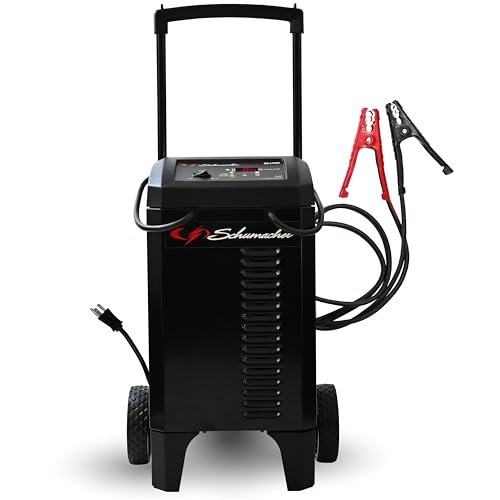
Schumacher Electric Wheeled 6A Charger & Maintainer SC1400

Schumacher SC1280 12V/6V Trickle Charger & Maintainer

Schumacher SC1355 1.5A 6V/12V Charger & Maintainer

Associated Equipment US20 6/12V Value Battery Charger

CRAFTSMAN Wheeled 10A Charger & Maintainer CMXCESM233

Banshee 12V Charger with 75A Engine Start

Schumacher SC1445 6/12V 250A Starter/Charger

Schumacher SC1446 Wheeled 10A Charger & Maintainer
A Closer Look At Each Pick
The FOXWELL BC521 splits its identity cleanly. It reads battery health, cranking strength, and alternator output before it pushes a single amp, which matters when the car has been sitting through a cold snap and you don’t yet know whether the battery is tired or the alternator is failing. For drivers who like a clear yes-or-no answer before committing to a charge cycle, that diagnostic-first approach removes a lot of guesswork.
Once it knows what it’s working with, the unit switches into an 8-stage charging routine that handles 12V lead-acid batteries across AGM (absorbed glass mat, a sealed design where acid is held in fiberglass plates), GEL, EFB (enhanced flooded battery, a higher-end flooded type with improved cycling), and standard flooded chemistries. A pulse repair mode (brief high-frequency pulses that help break down sulfate buildup on battery plates) is built in for batteries that have sat too long, and a maintenance mode keeps things topped off without overcooking them. The combination feels closer to a small diagnostic station than a basic charger, which is exactly why it opens this list.
A Few Strong Suits
- Reads battery condition before applying current, reducing wasted charge cycles on truly dead packs
- Compatible with the four most common 12V lead-acid chemistries, so it covers most cars, SUVs, and motorcycles
- Pulse repair can coax marginally sulfated batteries back into useful service
- Maintenance mode lets you leave it connected for weeks without overcharging
Things To Consider
- 5A output means slower recovery on large batteries than the wheeled units further down the list
- Pulse repair is a recovery aid, not a miracle worker; deeply damaged cells still need replacement
- Owners commonly rely on the tester screen, so getting familiar with the menu takes a first session of practice
Who It Suits Best
Daily drivers and weekend tinkerers who want a clear read on battery health before committing to a charge cycle, especially those juggling multiple 12V vehicles.
Where Another Pick Suits Better
For a no-frills, plug-in trickle maintainer on a stored motorcycle, the Schumacher SC1355 handles that job with less menu navigation.
The AstroAI 20V MAX charger is a category of its own in this roundup. Rather than topping off a car battery, it refills the lithium-ion packs that power AstroAI’s handheld tire inflators and multifunction air pumps. For owners already living inside that ecosystem, a dedicated charger that matches the brand’s voltage and current profile keeps the batteries healthy and the inflators ready for the next road trip.
The trade-off is that this unit is brand-specific by design. It is built to pair with AstroAI battery packs, the brand’s handheld air compressor, and the multifunctional air pump, which is exactly the use case it serves best. Anyone outside that ecosystem should skip it, but for committed AstroAI users, it slots neatly into a corner of the garage or trunk where the inflator already lives.
What Makes Sense
- Tailored specifically to AstroAI battery packs, inflators, and air pumps, so voltage and current stay matched
- Compact form factor travels well in a trunk or RV storage bin
- Keeps lithium-ion packs topped off between uses, extending overall service life
Worth Noting
- Not compatible with the C1 model or any non-AstroAI battery platform
- Outside the AstroAI ecosystem, it has no real-world use, so it earns its place only for existing owners
Made For
Existing AstroAI inflator and air pump owners who want a matched charger that keeps their 20V MAX batteries ready without third-party guesswork.
Not Your Match When
Drivers needing any 12V automotive charging should look at the FOXWELL BC521 or any Schumacher option further down the list instead.
Schumacher has been in the battery business long enough that the SC1400 feels familiar the moment you walk it out of the box. The wheeled frame and tall handle are made for shop floors, where you’d rather roll a unit to the car than drag it across the concrete. A 6A output sits in a useful middle ground, fast enough to wake a sluggish battery overnight, gentle enough to leave connected as a maintainer.
The unit is fully automatic, so once the clamps are on, the charger manages its own stages. That hands-off behavior matters for anyone who plugs in before bed and unhooks the next morning. Compared to the smaller 1.5A Schumacher SC1355, the SC1400 trades portability for genuine recovery speed, which makes it the more practical choice when a vehicle has sat for weeks rather than months.
Practical Advantages
- Wheels and tall handle make shop positioning painless, especially on uneven garage floors
- 6A output recovers tired batteries faster than typical 1.5A to 3A trickle units
- Fully automatic operation means no babysitting the charge curve overnight
- Sturdy clamp-and-cable setup handles repeated weekly use without complaint
Trade Offs
- Wheeled frame takes up more floor space than a shelf-friendly trickle unit
- 6A is overkill for a single motorcycle battery, so smaller jobs feel oversized
Quick Facts
Right Fit For
Home mechanics and small-shop owners who want a single wheeled unit that can charge and maintain a range of 12V vehicles without manual intervention.
Skip It When
Drivers needing emergency engine-start cranking should move up to the Schumacher SC1445, which pairs charging with a serious boost output.
The SC1280 stretches across two worlds that most chargers handle awkwardly. It works on both 6V and 12V systems, so the same unit that wakes a classic coupe also tops off a marine deep-cycle on the trailer. The 3A trickle is gentle enough to live on a battery indefinitely, yet the microprocessor-controlled charging routine also tackles recovery work on neglected packs.
For households that bounce between a daily driver, a weekend boat, and a seasonal lawn tractor, that flexibility removes the need to buy a separate charger for each. Schumacher also supports AGM, GEL, and deep-cycle variants, which covers nearly every lead-acid battery on a typical property. The trade-off is raw charging speed, where the 3A output is slower than the wheeled 6A and 10A models in this same line.
What Pays Off
- Handles both 6V and 12V systems, covering everything from vintage cars to modern marine batteries
- Microprocessor-controlled charging adapts to AGM, GEL, and deep-cycle chemistries
- Trickle output (a low, steady current that keeps a battery topped off without overcharging) and maintainer modes work well for stored seasonal vehicles
- Restoration function helps recover sulfated batteries that have lost capacity
Points To Note
- 3A trickle output means longer recovery times on deeply discharged batteries
- The wide chemistry support comes with a learning curve if you’ve never used a multi-mode charger before
Feature Snapshot
Best Suited To
Multi-vehicle households that need one charger to cover automotive, marine, and power-sport batteries without juggling separate units.
Look Elsewhere When
For faster recovery on a car that won’t start in the morning, the Banshee 12V Charger with engine start gives you cranking assist in the same garage footprint.
Small batteries don’t need a lot of current, and the SC1355 leans into that idea. The 1.5A output is purpose-built for the slow, patient work of keeping a stored vehicle topped off through winter. Plug it in, leave it for a month, and the battery is still healthy when spring rolls around. That’s the whole job description, and the unit does it without overcomplicating the experience.
Coverage spans 6V and 12V systems across standard, AGM, and deep-cycle batteries, which makes the SC1355 a quiet workhorse for motorcycles, ATVs, classic trucks, and boats. The reconditioning function adds recovery capability, though 1.5A is too gentle to bring a truly dead battery back from the brink. Treat it as a maintainer first and a charger second, and the value becomes obvious.
Notable Upsides
- Compact and lightweight enough to live in a trunk or on a shelf
- Compatible with standard, AGM, and deep-cycle batteries at both 6V and 12V
- Reconditioning mode helps maintain batteries that have sat through long storage
- Sticker price tends to be friendly compared to the larger wheeled units
Honest Caveats
- 1.5A is too slow to recover a deeply discharged car battery in any reasonable window
- Reconditioning at this amperage is more of a maintenance nudge than a true recovery
Whose Shelf It Belongs On
Owners of motorcycles, ATVs, classic cars, and boats who park the vehicle for months and want a set-and-forget maintainer that won’t overcook the battery.
Swap It Out When
If your daily driver is the one struggling to turn over, step up to the Schumacher SC1400 for the extra current needed to wake a larger battery.
The Associated Equipment US20 looks the part of a shop tool, with a heavy steel case, a 24-inch reach, and a 90-minute timer that prevents accidental overcharge. A built-in fan keeps the internals cool during long sessions, which matters more than it sounds on a charger designed to sit on a workbench and earn its keep. This is the analog charger for someone who appreciates straightforward hardware.
Output is rated at 40A continuous with 200A cranking assist and a 330A manufacturer boost, which is well beyond what trickle units offer. That makes the US20 a recovery tool first, a maintenance tool second. For a small shop or a serious DIY garage that sees a parade of dead batteries, the manual controls and mechanical timer offer a level of transparency that automatic units often hide behind screens.
Key Advantages
- Heavy-duty output handles engine starting assistance in addition to charging
- 90-minute mechanical timer prevents overcharge on batteries that don’t need a full top-off
- Internal fan cooling extends the charger’s life during long, repeated sessions
- Steel cabinet and simple analog controls suit a working shop environment
Some Limits To Know
- Manual operation requires more user attention than automatic chargers like the SC1400
- Form factor and weight make it a stationary bench unit rather than a portable option
Built With In Mind
Small shops and serious DIYers who service a variety of vehicles and prefer manual controls with visible output ratings over sealed automatic units.
Another Choice May Suit
For at-home use where simplicity and automatic behavior matter more than cranking amps, the Schumacher SC1280 is easier to live with day to day.
The CRAFTSMAN CMXCESM233 earns its spot because it brings manual, dial-driven control to a category that has tilted heavily toward automatic screens. For drivers who like to see what the charger is doing and adjust accordingly, the front-panel layout feels familiar in the best way. The wheeled frame is built to move around a garage or a farm shop without complaint.
10A output splits the difference between the gentler trickle units and the high-amperage recovery tools earlier in this roundup. It’s strong enough to wake a dead battery in a reasonable window yet still light-duty enough for everyday maintenance. CRAFTSMAN’s reputation for tool durability shows in the construction, so the unit holds up to repeated wheeling across uneven concrete.
Strong Points
- Manual controls let experienced users tune the charge to the battery and the situation
- 10A output is a versatile middle ground between trickle and cranking assist
- Wheeled design fits the way real garages get used, not just how spec sheets look
Potential Drawbacks
- Manual operation is less convenient than the fully automatic behavior of the Schumacher SC1400
- Lacks the diagnostic screen of the FOXWELL BC521 for users who want a test-first workflow
Perfect Match For
Hands-on home mechanics who want a reliable, manually controlled charger they can read at a glance without scrolling through menus.
Reach For A Different Pick When
For a fully automatic experience that handles decision-making on its own, the Schumacher SC1400 covers a similar amp range with less user input required.
The Banshee 12V Charger earns its place by bundling three distinct jobs into a single bench-friendly box. Slow charge at 2A handles small batteries without stress, fast charge at 12A wakes a neglected pack overnight, and the 75A engine start delivers cranking assist when a vehicle is too dead to turn over on its own. A 6-foot cable reaches the battery from a wall outlet, and a built-in handle keeps the unit portable.
Once the battery is full, the unit switches automatically into maintainer mode, so you can leave it connected without worry. LED indicators give a quick status read at a glance. For households that want a single charger capable of both routine maintenance and emergency jump-style starts, the Banshee’s three-mode design is hard to beat. The 75A mode is the real headline feature, and it works on standard 12V lead-acid batteries across SLI (starting, lighting, ignition) and deep-cycle applications.
What Helps Most
- Three charging modes cover small maintenance, fast recovery, and emergency engine starting
- Automatic transition into maintainer mode prevents overcharge after a full recovery
- 6-foot cable and integrated handle make positioning around the vehicle easy
- LED indicators provide a quick visual status without screen diving
Soft Spots
- 75A engine start is helpful for cars but may fall short of large diesel demands, where the Schumacher SC1445’s higher cranking output is more reassuring
- Plastic housing feels less rugged than steel-cased shop units like the Associated Equipment US20
Who Will Love This
Garage owners who want one charger that can maintain a motorcycle, recover a daily driver, and jump-start a stubborn engine without swapping equipment.
A Better Fit Elsewhere
For dedicated farm or fleet use on larger engines, the Schumacher SC1445’s 250A cranking output handles the heaviest starting loads with more headroom.
When a small charger just can’t move enough current to fire a stubborn engine, the SC1445 answers with a serious 250A engine-start output. The wheeled frame and heavy-duty clamps are built for the kind of vehicles that pull real current from the battery, including large V8s and diesel trucks. A 10A charge rate handles routine maintenance on the same unit, so you get shop-grade power in a single piece of equipment.
Schumacher’s heritage shows in the manual controls, which are designed for users who want to see exactly what the charger is doing rather than trust a screen. The 6V/12V switch covers everything from vintage tractors to modern cars, and the unit’s footprint makes more sense in a dedicated garage bay than a small apartment closet. This is the right tool for the right job, and the right job is a big one.
What It Does Well
- 250A engine start handles the largest automotive and diesel cranking demands
- 10A charging covers standard recovery work in the same session
- 6V/12V compatibility supports classic and modern vehicles from a single unit
- Heavy-duty construction suits a permanent spot on a shop floor
Considerations Worth Weighing
- Size and weight make it a stationary shop tool, not a portable option
- Manual control philosophy demands more user awareness than the automatic SC1400
Who Should Grab It
Shop owners and serious gearheads who need engine-start cranking assist alongside a capable charger and have the space for a wheeled unit.
Where A Sibling Pick Shines
For lighter home use without the cranking output, the CRAFTSMAN CMXCESM233 covers similar charging tasks in a friendlier footprint.
The SC1446 closes the list by doing what smart chargers sometimes can’t. Many microprocessor-controlled units refuse to recognize a battery that has dropped below a certain voltage, leaving drivers stranded. This analog unit skips that safety net and pushes current into deeply discharged packs anyway, which is exactly the situation where a manual charger earns its reputation. Older vehicles, seasonal tractors, and farm trucks are the natural fit.
Operation is fully manual, so the user sets the rate and watches the result. That hands-on approach isn’t for everyone, but for anyone who learned battery care before screens took over the process, it feels like coming home. The 10A output is generous without being excessive, and the wheeled format keeps the unit mobile within a garage or barn.
What Works In Its Favor
- Revives deeply discharged batteries that smart chargers may not recognize
- Manual controls give experienced users direct oversight of the charging process
- Wheeled design supports use across larger garages, barns, and shop floors
Things To Watch
- Manual operation demands attention to charging time to avoid overcharging
- Heavier and bulkier than shelf-friendly trickle units like the SC1355
Key Product Details
The Right Fit
Owners of older vehicles, tractors, and farm equipment who prefer hands-on analog controls and need to recover batteries that smart chargers reject.
Not Your Match When
Drivers who want a set-and-forget experience should consider the fully automatic Schumacher SC1400 for similar output without the manual oversight.
What Matters When Choosing an Analog Battery Charger
Selecting the right analog charger comes down to matching the unit to the battery and the situation. A trickle charger that lives on a shelf all winter is a different tool from a wheeled unit that sees weekly shop use, and treating them as interchangeable usually ends in frustration. Thinking through a few core attributes before buying helps narrow the field quickly.
Matching Amperage to Battery Size
Amperage, measured in amps, determines how quickly a charger pushes current into a battery. A 1.5A trickle unit is well-matched to small batteries in motorcycles, ATVs, and lawn equipment, where slow and steady charging protects the cells. A 6A to 10A charger fits most cars, SUVs, and light trucks, where you want recovery speed without overwhelming the battery. Anything above 10A, especially with engine-start output, belongs with larger vehicles, diesels, and shop work. The honest read is that most home owners don’t need more than 6A, and oversizing the charger adds cost and risk without real benefit.
Voltage and Chemistry Compatibility
Voltage has to match the battery: 6V for some classic and industrial applications, 12V for nearly everything modern. Beyond voltage, the battery’s chemistry (flooded, AGM, GEL, EFB, or deep-cycle) affects which charging profile works safely. Chargers like the Schumacher SC1280 that list multiple chemistries offer more flexibility, but always check that the unit supports the specific battery type you’re working with before connecting.
Manual vs. Automatic Operation
Analog chargers split into two camps. Fully automatic units handle voltage detection, stage transitions, and shutoff without user input, which is great for set-and-forget overnight charging. Manual chargers hand those decisions to the user, which gives more control but demands attention to charging time. The right choice depends on how hands-on you want to be. For a plug-it-in-and-leave-it workflow, automatic wins. For learning battery behavior or recovering deeply discharged packs, manual often does the job better.
Real-World Use Scenarios
Consider where the charger will actually live. A heavy wheeled unit makes sense in a dedicated garage bay, where it can roll to whichever car needs attention. A compact trickle unit fits a shelf in an apartment closet, ready to hook up when the motorcycle goes into storage. Engine-start output is worth the extra size for shop owners and farm operators, but overkill for someone who just wants to keep a daily driver topped off. Matching the tool to the workflow prevents the common problem of buying a charger that’s too powerful, too small, or just awkward to store.
Smart Buying Advice for Analog Charger Shoppers
Mistakes Worth Dodging
The most common slip-up is buying a charger that’s too small for the job. A 1.5A trickle unit cannot realistically recover a deeply discharged car battery in a reasonable window, no matter how long you leave it connected. The opposite mistake is buying a high-amp shop unit for occasional home use, where the size and cost go unused. Also, watch for chargers that don’t list the supported battery chemistries. A unit that claims “12V compatibility” but doesn’t specify AGM or GEL support may cook a sealed battery, which is an expensive lesson.
Where The Extra Money Goes
Higher-tier analog chargers earn their price through build quality, output flexibility, and the addition of engine-start cranking. A unit like the Schumacher SC1445 costs more than a basic trickle charger because it delivers 250A of cranking assist, which requires heavier internal components, better cooling, and sturdier clamps. Premium picks also tend to include multi-stage charging, broader chemistry support, and longer cable reaches. The upgrade pays off when you actually need that extra capability. For a single daily driver in a small garage, the extra money often sits unused, but for a multi-vehicle household or a working shop, the upgrade earns its place quickly.
Frequently Asked Questions
What Is an Analog Battery Charger?
An analog battery charger uses traditional transformer-based circuitry and manual or dial-driven controls rather than a digital microprocessor interface. It typically delivers a steady, non-pulsed current to the battery, which makes it well-suited to older vehicles, deeply discharged batteries, and users who prefer hands-on control.
Are Analog Chargers Better Than Smart Chargers for Old Cars?
For older cars with simple electrical systems and batteries that may sit through long storage, analog chargers often work better. They tend to recognize and recover deeply discharged batteries that smart chargers may reject, and they don’t rely on software updates or specific battery chemistries to function.
Can I Leave an Analog Charger Connected for Weeks?
That depends on the unit. Chargers with an automatic maintainer mode, like the Schumacher SC1400 or SC1280, are designed for long-term connection and will cycle to a float charge once the battery is full. Fully manual chargers without a maintainer mode should not be left connected indefinitely, since they will continue pushing current and risk overcharging.
Do I Need Engine Start Capability on My Charger?
Engine-start cranking output is useful for shops, farm operators, and anyone with a large diesel or a fleet of vehicles that need occasional jump assistance. For a single daily driver in a temperate climate, a standard charger without engine start is usually enough.
How Long Does It Take to Charge a Dead Car Battery?
Charge time depends on the charger’s amperage and the battery’s capacity. A 6A charger typically brings a moderately discharged 12V car battery to full in 8 to 12 hours. A 1.5A trickle unit may take 24 hours or more. Deeply discharged batteries can take longer, and some may not recover at all if the cells are damaged.
Final Verdict
Analog battery chargers remain a smart choice for anyone who values control, durability, and the ability to recover batteries that smarter units give up on. The best pick for your garage depends on the vehicles you own, the storage conditions they face, and how hands-on you want to be. Match the amperage to the battery, confirm chemistry compatibility, and you’ll end up with a tool that earns its corner of the garage for years.


