

If the hum of a busy café, a packed subway car, or a snoring seatmate on a long flight pulls you out of your music, you’re not alone. Active noise reduction, sometimes shortened to ANR, uses tiny microphones and opposing sound waves to soften outside noise before it reaches your ears. The picks below cover that full range, from travel-ready over-ears with marathon battery life to true-wireless earbuds that vanish into a pocket. Each one earns its spot for a specific kind of listener, and the write-ups spell out who benefits most.
A Closer Look At The Lineup

Soundcore by Anker Q20i Hybrid Active Noise Cancelling Headphones

Monster Persona SE ANC Active Noise Cancelling Headphones (Blue)

Audio-Technica ATH-M50X Professional Studio Monitor Headphones

Audio-Technica ATH-M20x Professional Studio Monitor Headphones
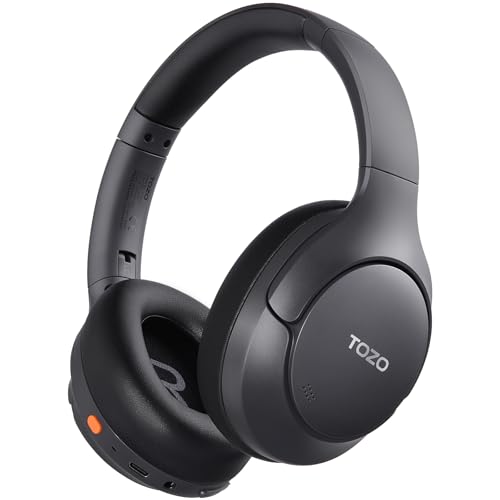
TOZO HT3 Hybrid Noise Cancelling Wireless Headphones
Audio-Technica ATH-M20xBT Wireless Over-Ear Headphones

Soundcore by Anker Q20i Hybrid Active Noise Cancelling Headphones

Google Pixel Buds Pro 2 Wireless Bluetooth Earbuds (Hazel)

Google Pixel Buds Pro 2 Wireless Bluetooth Earbuds (Peony)

Google Pixel Buds Pro 2 Wireless Bluetooth Earbuds (Olive)
Long subway rides and noisy open-plan offices are where the Soundcore Q20i earns its keep. Hybrid active noise cancelling uses both internal and external microphones to detect engine drone and keyboard chatter, then pushes an opposite sound wave into your ears to soften it. The included hard case makes it easy to toss the set into a commuter bag without scratching the earcups, which helps if you travel light every day.
Bluetooth 5.0 multiplies the convenience: you can stay paired to a laptop and a phone at the same time and switch between a video call and music without re-pairing. Compared with the wired Audio-Technica M20x further down this lineup, this pick trades a touch of studio purity for wireless freedom and longer battery life. For most daily listeners who want quiet on the move, the Q20i strikes a sensible balance.
Positive Takeaways
- Hybrid ANC softens consistent low-frequency noise like bus engines and HVAC hum.
- Around 40 hours of battery life with ANC on means a full work week between charges.
- Oversized 40mm drivers with BassUp tuning add punch to podcasts and pop playlists.
- Hi-Res wired playback over the AUX cable gives detail hunters a fallback option.
- Dual-device pairing keeps laptop audio and phone calls flowing without reconnection.
Things To Consider
- The synthetic leather earcups can warm up during long summer walks.
- ANC works best on steady noise rather than sudden nearby voices.
Who It Suits Best
Daily commuters and hybrid workers who split time between home, transit, and a coffee shop will get the most from this set.
Consider Something Else When
Studio-focused musicians should reach for the Audio-Technica ATH-M50X instead, since it offers a flatter monitoring response.
Home office calls and back-to-back meetings drain smaller headsets, but the Monster Persona SE claims a generous 60-hour battery window that swallows a full work week on a single charge. A dedicated ANC button engages the digital noise cancellation algorithm, which is designed to block out a wide slice of ambient noise so you can stay locked on a client call or focus track.
The blue finish gives this set a friendlier look than the studio-black options elsewhere on the list, and the 40mm drivers are tuned with the brand’s Pure Monster Sound profile for stronger bass presence. The built-in microphone handles video meetings without forcing you to lean toward the laptop. For anyone who lives in Zoom and forgets to plug in overnight, this is a forgiving companion.
Points In Its Favor
- 60-hour battery life keeps the charger out of your weekly routine.
- Active noise cancellation engages with a single physical button.
- 40mm drivers with Pure Monster Sound tuning deliver full, punchy audio.
- Built-in mic removes the need for a separate headset during video meetings.
Trade Offs
- The deeper bass profile is less neutral than the Audio-Technica sets for critical listening.
- Plush ear pads may feel warm during long summer calls in a non-air-conditioned room.
Made For
Remote workers and students spending long hours in video meetings and focused study sessions.
A Better Fit Elsewhere
Audio-Technica’s ATH-M50X is the stronger pick for music producers who need an honest, uncolored monitoring signal.
Mixing in a home studio means you need headphones that tell the truth, and the Audio-Technica ATH-M50X has built a long reputation among engineers for exactly that. Its circumaural (fully around-the-ear) cups seal out enough room noise for clean monitoring, while the large aperture drivers keep the low end tight rather than boomy. Detachable cables also let you swap a fresh cord in if one frays after years of use.
Unlike the wireless Soundcore Q20i reviewed above, this set stays wired by design, which avoids compression and keeps latency near zero for tracking live vocals. Studio constructors who already own an audio interface will appreciate the predictable performance, and the closed-back design prevents sound from leaking into an open microphone. If your priority is hearing every detail in a recording, this is a workhorse worth knowing.
Useful Strengths
- Critically acclaimed sonic signature suited for tracking and mixing sessions.
- Detachable cable design extends the headset’s working life.
- Closed-back earcups reduce bleed into nearby microphones.
- Robust construction handles daily studio use and travel between rooms.
Honest Caveats
- Wired only, so you’ll need to stay close to your audio interface or laptop.
- Ear cushions can heat up during long summer mixing sessions.
- Heavier than typical commuter headsets at extended listening stretches.
Best Suited To
Home producers, podcast editors, and anyone building tracks who values an honest frequency response over flashy extras.
Look Elsewhere When
Commuters who need active noise cancellation on noisy trains should pick the Soundcore Q20i instead.
If you’re stepping into a recording hobby or a streaming setup for the first time, the Audio-Technica ATH-M20x gives you a credible studio reference without the price of the M50X. The 40mm drivers use rare earth magnets and copper-clad aluminum wire voice coils, which Audio-Technica tunes for stronger low-frequency performance. That added warmth helps beginners hear bass elements that flatter speakers often hide.
The circumaural design contours around the ears to block a meaningful amount of room sound, and the single-side cable exit keeps the cord out of your way while you adjust a microphone. Compared with the M50X further up this list, the M20x trades some build refinement for a noticeably friendlier price. For a first studio headset or a reliable secondary pair, it’s a sensible entry point.
Where It Helps
- Enhanced low-frequency tuning helps new producers hear bass layers clearly.
- Circumaural fit reduces outside noise during practice sessions.
- Single-side cable keeps the workspace tidy while you record.
Points To Note
- Wired design ties you to your interface or laptop during long sessions.
- Less detail in the highs than the ATH-M50X for fine mixing decisions.
- Construction feels lighter than higher-tier M-Series models.
Who Should Grab It
First-time studio owners, podcasters, and streamers building an honest monitoring setup on a starter budget.
Reach For A Different Pick When
Wireless listeners on the move will get more value from the Audio-Technica ATH-M20xBT, which adds Bluetooth convenience.
Long-haul travelers will appreciate that TOZO quotes up to 90 hours of playtime for the HT3, which outlasts most competing over-ear sets on this list. Four high-sensitivity microphones feed an adaptive noise cancellation system that adjusts as your environment shifts, whether that means stepping from a quiet lounge into a busy terminal or boarding a chatty flight. The trade-off is a slightly larger build, which is fair for the stamina on offer.
A dedicated call microphone sits separate from the ANC array, so your voice stays clear during business calls even when the surrounding noise spikes. For people who count battery cycles as carefully as they count miles, this is a refreshingly low-fuss travel headset. Compared with the Soundcore Q20i, the HT3 leans toward fewer charging stops rather than app-driven EQ tweaking.
Everyday Advantages
- Up to 90 hours of total playtime stretches across long trips.
- Adaptive ANC adjusts as your surroundings shift through airports and cafés.
- Dedicated call microphone prioritizes voice clarity over background noise.
Practical Considerations
- Bulkier travel footprint than compact earbuds like the Pixel Buds Pro 2.
- Adaptive cancellation may need a moment to recalibrate when you move quickly between spaces.
Right Fit For
Frequent flyers and road warriors who pack light and hate hunting for outlets in hotel rooms.
Swap It Out When
Listeners who prefer something pocketable for daily errands should consider the Google Pixel Buds Pro 2 in Hazel.
The wired ATH-M20x has long been a popular entry into the Audio-Technica M-Series, and the M20xBT keeps that sonic signature while cutting the cord. The 40mm drivers deliver full-range, high-fidelity audio with the brand’s familiar emphasis on the low end, so your tracks still feel grounded when you move to a wireless workflow. Adding Bluetooth is a meaningful convenience for anyone editing on a tablet or phone.
Compared with the Soundcore Q20i earlier on this list, the M20xBT is less about canceling the world and more about honest playback, which makes it better suited for casual music production than noisy commutes. You may find yourself reaching for these when you want a clean reference take on a song without plugging into an interface. For students and bedroom producers, it bridges the studio and the coffee table.
What Stands Out
- Carries over the wired M20x tuning into a wireless form factor.
- 40mm drivers maintain full-range audio for both music and editing tasks.
- Familiar M-Series build for anyone upgrading from a wired entry model.
Minor Gripes
- No active noise cancellation, so loud environments still leak in.
- Battery life is shorter than dedicated travel sets like the TOZO HT3.
Perfect Match For
Studio newcomers ready to leave cables behind while preserving a familiar reference sound for mixes.
Not Your Match When
Daily commuters dealing with engine drone will get more silence from the Soundcore Q20i and its ANC system.
The basic Q20i variant trims back to the core feature set without the bundled case, and that lighter package keeps the price within reach of first-time noise-cancelling shoppers. The same hybrid active noise cancelling system handles engine drone and air-conditioning hum, drawing on internal and external microphones to push an opposite sound wave at low-frequency noise. Travel commuters and remote learners get meaningful quiet without the premium tax.
Sound quality stays anchored to the 40mm dynamic drivers and BassUp tuning, so playlists keep their low-end punch during long listening sessions. Hi-Res audio remains available through a wired AUX connection for the moments you want to plug in. Compared with the case-equipped Q20i reviewed earlier, this version simply skips the accessory for shoppers who already own a bag pocket they trust.
Where It Excels
- Hybrid ANC softens consistent noise on buses, trains, and busy offices.
- Around 40 hours of battery life per charge for weekly use without recharging.
- Hi-Res wired mode for detail-focused listening at home.
- Dual Bluetooth pairing for switching between laptop and phone audio.
Where It May Fall Short
- No protective case included, so you’ll want a sleeve for daily bag storage.
- Synthetic leather pads can feel warm during summer commutes.
Whose Shelf It Belongs On
Budget-conscious commuters who want genuine hybrid ANC and don’t mind supplying their own travel case.
Where Another Pick Suits Better
Road warriors chasing maximum battery life should reach for the TOZO HT3 with its 90-hour playtime instead.
If over-ear headphones feel like overkill for a quick walk or a gym session, the Pixel Buds Pro 2 in Hazel shrink the noise-cancelling experience into a true-wireless earbud. A twist-to-adjust stabilizer locks each bud in place during workouts, which is helpful for runners and lifters who never want to fish an earbud out of a squat rack. The Google Tensor chip inside handles the active noise cancellation work, doubling the silencing power compared with the previous generation.
Comfort is the headline here: Google redesigned the fit with a focus on long listening sessions, so a full workday of calls and music shouldn’t leave your ears sore. The charging case slips into a jeans pocket without a fight, which is a noticeable contrast to the bulkier TOZO HT3. For Pixel phone owners especially, the tight integration makes these a natural everyday carry.
Practical Pluses
- Compact true-wireless form factor disappears into a pocket or gym bag.
- Twist-to-adjust stabilizer keeps earbuds secure during workouts.
- Tensor-driven active noise cancellation reduces more noise than the prior generation.
- Tight integration with Pixel phones simplifies setup and controls.
Small Caveats
- Smaller drivers can’t match the bass depth of full-size over-ear sets.
- Battery life per charge is shorter than over-ear competitors like the TOZO HT3.
Built With In Mind
Commuters, gym-goers, and Pixel phone owners who want pocketable noise cancellation without the bulk of an over-ear headset.
Skip It When
Studio editors who need a neutral monitoring response will prefer the wired Audio-Technica ATH-M50X.
The Peony colorway gives the Pixel Buds Pro 2 a softer, more playful look compared with the muted Hazel and Olive options. Functionally, the buds behave exactly like the rest of the lineup: the Tensor chip drives active noise cancellation with twice the reduction of the previous generation, and the twist-to-adjust stabilizer keeps them seated through a morning run or a crowded bus ride. For shoppers who treat their earbuds as part of a personal style, this finish adds a touch of personality.
Comfort is the shared story across all three Pixel Buds Pro 2 colors here, with Google rebuilding the fit for long wear. The compact case still slips into a jacket pocket or a small handbag, which is one of the biggest lifestyle wins over the over-ear sets higher up this list. If you’ve been eyeing true-wireless ANC and want a fresh color option, the Peony set checks that box without changing the underlying performance.
A Few Highlights
- Soft Peony finish adds a distinctive color option to the lineup.
- Tensor-driven ANC delivers meaningful silencing for earbuds this small.
- Stabilizer design supports active use without constant readjustments.
Things To Weigh
- Lighter colorway may show wear more easily than darker options like Olive.
- Single-charge battery is shorter than over-ear alternatives.
Who Will Love This
Style-conscious listeners who want the Pixel Buds Pro 2 experience in a warmer, more expressive finish.
Where A Sibling Pick Shines
Shoppers who prefer a subtler color should consider the Pixel Buds Pro 2 in Olive instead.
The Olive finish rounds out the Pixel Buds Pro 2 trio with the most neutral tone of the three, which suits office dress codes and travel wardrobes equally well. Inside, the Tensor chip drives active noise cancellation that drops twice the noise of the previous generation, while Gemini support adds a smart assistant layer for hands-free queries on the move. Comfort stays consistent across the color range, so picking Olive is purely an aesthetic call.
This set is a quiet everyday carry, pairing easily with Pixel phones and disappearing into a small bag or coat pocket. For someone who likes their tech to blend in rather than stand out, Olive is the calmest of the three finishes. Compared with the over-ear Soundcore Q20i, the trade is obvious: you sacrifice stamina for portability, but you gain a low-profile shape that suits crowded commutes and tight gym lockers.
Strong Points
- Olive finish offers a subtle, professional-friendly color option.
- Tensor-driven ANC cuts twice the noise of the previous Pixel Buds Pro.
- Compact case slips easily into a small bag or jacket pocket.
Soft Spots
- Per-charge battery life is shorter than larger over-ear alternatives.
- Some features lean on Pixel phones for the smoothest experience.
The Right Fit
Office commuters and travelers who want understated earbuds that disappear into a work bag.
Reach For A Different Pick When
Listeners chasing longer play sessions should pick the TOZO HT3 over-ear set instead.
What To Weigh Before Choosing Your Next Pair
Match The Form Factor To Your Routine
Over-ear headsets deliver the longest battery life and the deepest passive seal, which matters for long-haul flights and home office days. True-wireless earbuds like the Pixel Buds Pro 2 shrink the noise-cancelling experience into a pocketable shape, which suits commuters who walk between meetings. Studio-focused picks such as the Audio-Technica M20x and M50X lean wired for stable monitoring and zero latency during recording sessions. The honest read is that no single form factor does everything well, so it helps to anchor your choice on the activity you do most.
ANC Strength Versus Sound Character
Active noise cancelling works by sampling outside sound with microphones and pushing an opposing wave into your ears, but not every set cancels the same amount of noise. Travel-leaning sets like the TOZO HT3 and Monster Persona SE push harder on sustained engine drone, while studio sets prioritize a flat, neutral sound that helps you hear mix problems clearly. Bass-forward tunings such as the Soundcore Q20i with BassUp are friendlier to casual listeners, while flatter signatures like the Audio-Technica M50X reward careful producers. Picking the right balance comes down to whether you want quiet first or accuracy first.
Wired Stability Versus Wireless Freedom
Bluetooth adds convenience, but it also adds a step where the signal compresses slightly and the battery becomes a daily concern. Wired headsets remove both worries and pair cleanly with audio interfaces, which is why the M-Series stays popular with producers. Wireless models answer with features like multipoint pairing, fast charging, and adaptive ANC that recalibrates as you move. Your typical listening environment usually decides the trade-off before your taste does.
Smart Choices Before You Click Buy
Pitfalls Shoppers Hit
The most common slip is chasing the deepest noise cancellation number without considering fit, since a poor seal wastes any ANC system. Another trap is treating every “ANC” label as equal, when hybrid systems with both internal and external mics handle noise more completely than single-mic designs. Buyers also frequently overlook driver size, which directly affects bass depth and overall fullness for music and podcasts.
Where The Extra Money Goes
Stepping up from a budget pair to a mid-tier set typically buys longer battery life, more durable hinges, and stronger ANC algorithms that adapt to changing environments. Premium pricing also tends to unlock app-based EQ customization, multipoint pairing, and better codec support for higher-resolution wireless audio. The upgrade is genuinely worth it for daily commuters and frequent flyers, while casual listeners may find a value-focused set covers their routine without the extras.


