

Smartphone video keeps getting sharper, yet built-in phone mics still struggle in cafes, on windy streets, or across noisy rooms. A small wireless lavalier microphone that plugs into your Android device can turn muffled dialogue into clean, broadcast-ready audio for TikTok, YouTube, podcasts, and live streams. The ten picks below cover beginners starting a first channel, mobile journalists chasing interviews, and creators who want studio-grade sound without hauling a full rig.
A Side-By-Side Look

PowerDeWise 2-Pack Wireless Lavalier Microphone for iPhone & Android
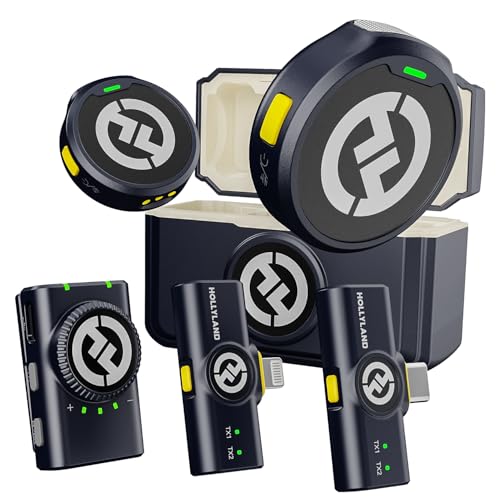
Hollyland Lark M2 Wireless Lavalier Microphone (Combo Version)

Hollyland Lark A1 Wireless Microphone (2TX + USB-C RX)

LIZHUZHONG Wireless Lavalier Microphone with Charging Case

Hollyland Lark M2 Wireless Microphone (Camera + USB-C RX)
Saramonic Air SE Wireless Mini Microphone (2TX + USB-C RX)

NEEWER CM28 PRO Wireless Lavalier Microphone with 4GB Storage

Saramonic Air Wireless Lavalier Microphone (Ultralight)

Rackwaylo Wireless Mini Lavalier Microphone

Hollyland Lark MAX 2 Wireless Microphone (Ultimate Combo)
Inside Each Recommended Option
Most creators starting their first channel juggle phones, tablets, and older laptops at the same time. The PowerDeWise kit addresses that mess with two clip-on transmitters and a receiver that ships with USB-C, Lightning, and USB-A adapters, so the same pair covers nearly every device on your desk.
No app, no Bluetooth pairing screen, just plug the receiver in and the mic wakes up. The onboard AI noise reduction trims the rumble from fans and street traffic, which keeps dialog intelligible in vlogs recorded at a coffee shop or in a busy home. For first-time creators who want clean voice without menu-diving, the learning curve is short.
The Case For It
- Three included adapters (USB-C, Lightning, USB-A) cover phones, tablets, and computers out of the box
- Plug-and-play design skips app installs and Bluetooth pairing
- Two-mic bundle lets a host and guest record together on a single phone
- AI noise reduction lifts voice clarity in cafes, cars, and outdoor settings
- Compact clip-on form factor disappears on a lapel or collar
Things To Consider
- Frequency response and SPL handling are unspecified, so loud concert recording is a gamble
- The transmitter body lacks a detailed IP rating, so treat it gently around rain or sweat
Made For
New creators who own a mix of Android, iPhone, and laptop devices and want one kit that works across them without adapters sitting in a drawer.
Consider Something Else When
Filmmakers chasing broadcast-grade audio should reach for the Hollyland Lark M2, which lists stronger spec detail and longer range.
Compared with the PowerDeWise entry above, the Lark M2 combo leans into pro workflows with a longer wireless reach and hi-fi capture. Hollyland rates it at a 48kHz/24-bit recording chain, which keeps vocal texture intact for podcasts and on-camera narration.
The transmitter weighs roughly 9g, light enough to clip on a thin collar without pulling the fabric. Noise cancellation trims room hum, and the up-to-1000ft line-of-sight range gives documentary crews room to roam without dropouts.
Useful Touches
- 9g transmitter stays comfortable through long interviews
- 48kHz/24-bit recording preserves voice texture for editing
- Up to 1000ft line-of-sight range suits run-and-gun documentary shoots
- Up to 40 hours of battery with the charging case stretches multi-day trips
- Combo receiver bundle adapts to phones, cameras, and computers
Honest Caveats
- Maximum line-of-sight range drops sharply indoors through walls
- Combo version pricing sits well above starter kits, so casual creators may not need it
Feature Snapshot
Who It Suits Best
Filmmakers, journalists, and podcasters who shoot on location and need dependable wireless range plus hi-fi capture.
Not Your Match When
Casual TikTok creators starting a first channel will get more value from the PowerDeWise 2-Pack, which ships with more device adapters.
Wind on a rooftop or chatter in a packed venue can swallow a wireless interview. The Lark A1 answers that with three selectable noise-cancellation levels, weak, medium, and strong, so you tune the algorithm to the room instead of fighting it.
Audio resolution runs at 48kHz/24-bit with up to 120dB SPL handling, which keeps the signal clean when a guest suddenly laughs or a subject raises their voice. The USB-C receiver drops straight into modern Android phones, with no app required.
What It Does Well
- Three-step noise cancellation adapts to wind, traffic, and crowd noise
- 120dB SPL ceiling handles sudden laughter and raised voices without clipping
- Two transmitters capture a host-and-guest conversation from one phone
- 48kHz/24-bit recording preserves detail for editing and podcast production
Points To Note
- USB-C-only receiver means iPhone owners need a separate adapter
- Battery life and transmitter weight are not listed in the source data
Right Fit For
Outdoor interviewers and event videographers who record in changing acoustic environments and want quick controls.
A Better Fit Elsewhere
Multi-device households will find more flexibility in the Hollyland Lark M2 Combo, which includes camera and computer receivers.
The LIZHUZHONG kit targets creators who care more about reliability than spec sheets. The receiver plugs into a phone, the transmitters power on, and the pair links automatically over 2.4GHz wireless, skipping the Bluetooth pairing dance entirely.
The included charging case tops the transmitters back up between takes, handy for a long livestream session or a full day of street interviews. Onboard noise reduction pulls voice forward so dialogue stays clear in a busy market or a noisy household.
What Works In Its Favor
- Plug-and-play setup skips app installs and pairing menus
- 2.4GHz wireless link avoids Bluetooth lag and codec compression
- Charging case extends the working day without hunting for outlets
- Compact clip-on body suits TikTok framing and reaction shots
Small Caveats
- Audio resolution and SPL handling are not specified
- Wireless range is not listed, so long-distance shoots remain uncertain
Best Suited To
Casual streamers and TikTok creators who want a simple, affordable upgrade from the built-in phone mic.
Look Elsewhere When
Podcasters who want hi-fi capture and detailed audio specs will get more confidence from the Hollyland Lark A1 with its published 48kHz/24-bit resolution.
Switching between phone reels and mirrorless camera shoots usually means juggling two wireless kits. The black Lark M2 bundles a camera-mount receiver alongside the USB-C receiver, so the same transmitters feed both rigs without re-pairing.
The chain runs at 48kHz/24-bit with up to 300m of rated wireless range and active noise cancellation. Battery life stretches to about 40 hours with the charging case, covering a weekend of mixed phone and camera work on one top-up cycle.
Key Advantages
- Dual receivers cover phone and camera in one purchase
- 48kHz/24-bit audio suits podcast-level editing
- 300m rated range handles medium outdoor shoots
- 40-hour battery life with the charging case supports long travel days
Practical Considerations
- Black finish shows lint and dust more than lighter shells
- Camera-mount receiver adds bulk to small mirrorless rigs
Who Should Grab It
Hybrid creators who shoot B-roll on a mirrorless camera and daily content on their phone will appreciate the unified setup.
Skip It When
Phone-only streamers should save money and pick the LIZHUZHONG Wireless Lavalier Microphone, which covers phones without camera extras.
For creators who care how a wireless mic reads on camera, the Saramonic Air SE keeps a low profile. Tiny oval transmitters carry a fingerprint-resistant finish and an optional LED-off mode, so the mic visually disappears in tight talking-head framing.
Underneath the design, the audio chain runs at 48kHz/24-bit with AI noise cancellation, and a two-transmitter bundle captures a host plus guest from a single USB-C receiver. Compatibility covers iPhone 15 through 17 and most modern Android phones.
Practical Advantages
- Discreet oval transmitter shape blends into collar framing
- LED-off mode removes visible status lights from interviews
- AI noise cancellation adapts to street and indoor environments
- Two-mic bundle supports host and guest without a second receiver
Worth Bearing In Mind
- USB-C-only receiver leaves older iPhones out of the bundle
- Battery life and SPL handling are not listed in the source data
Feature Rundown
Whose Shelf It Belongs On
Social-first creators who shoot tight framing for Reels, TikTok, and YouTube Shorts will love how the mic disappears on camera.
Swap It Out When
Filmmakers working across cameras and computers should pick the Hollyland Lark M2 Camera Combo, which includes a dedicated camera receiver.
Wireless dropouts on a long interview day can ruin an otherwise clean shoot. The NEEWER CM28 PRO adds a safety net: each transmitter carries 4GB of onboard storage, so the unit records a local backup even when the wireless link glitches.
The set ships with one receiver and two transmitters, with up to nine hours of receiver runtime per charge. Noise cancellation trims room hum, and the included charging case tops the units back up between locations.
The Practical Payoff
- 4GB onboard storage records a backup when wireless drops
- 9-hour receiver battery covers long interview sessions
- Charging case refills the transmitters between locations
- Two-transmitter bundle supports dual-host conversations
Trade-Offs
- Onboard storage adds weight compared with simpler transmitters
- Audio resolution and SPL ratings are not listed in the source data
Technical Sheet
Who Will Love This
Wedding videographers and documentary crews running multi-hour shoots where wireless reliability matters as much as sound quality.
Another Choice May Suit
Casual phone streamers will find the PowerDeWise 2-Pack simpler to set up, with more included device adapters.
After spending hours clipped to a collar, even a small mic can start to drag. The Saramonic Air transmitters weigh roughly 11g, light enough to forget during a long vlog day. The polished finish keeps the units presentable on camera.
The audio chain runs at 48kHz/24-bit with active noise cancellation and a 120dB SPL ceiling. Wireless reach stretches up to 300m on open ground, useful for travel vlogs that move between wide outdoor locations.
The Helpful Details
- 11g transmitter body stays comfortable on long wear days
- 120dB SPL ceiling tolerates loud environments without distortion
- 300m wireless range covers travel and outdoor vlogs
- 48kHz/24-bit capture suits podcast-level post-production
A Few Limitations
- Lightweight shell feels delicate if dropped on hard ground
- Long-range performance drops sharply indoors through walls
Built With In Mind
Travel vloggers and on-the-go creators who shoot for hours and forget they are wearing a mic.
Reach For A Different Pick When
Studio podcasters who need 32-bit float recording for post-production flexibility should step up to the Hollyland Lark MAX 2.
The Rackwaylo keeps the workflow simple. Clip the transmitter, plug the receiver into a phone or laptop, and the pair connects automatically. No app, no menu, and no Bluetooth pairing screen.
Noise reduction trims ambient hum so dialogue stays intelligible in casual interviews and quick vlog takes. Compatibility spans iPhones, iPads, Android phones, and laptops, which covers most casual creators without extra adapters.
Real-World Strengths
- Plug-and-play design skips app installs entirely
- Broad device compatibility covers phones, tablets, and laptops
- Compact clip-on form fits shirt collars and lapels
- Noise reduction improves voice clarity over the built-in phone mic
Potential Drawbacks
- Audio resolution, SPL handling, and range are unspecified
- Less suited to demanding broadcast or podcast workflows
The Right Fit
Casual creators and small-business owners recording quick interviews or social media clips without a learning curve.
Where A Sibling Pick Shines
Creators wanting a published 48kHz/24-bit spec sheet should upgrade to the Saramonic Air SE Wireless Mini Microphone.
Studio-level productions call for more than a clean signal. The Lark MAX 2 Ultimate Combo layers a 32-bit full-chain audio path, AI noise cancellation, and even wireless OWS monitoring earphones, so you can hear the take while you record, without yanking cables.
Two transmitters and two receivers run alongside the open-ear monitor buds, and timecode sync keeps multi-camera shoots aligned. Compared with the simpler Hollyland Lark M2 above, this kit targets crews who treat audio as a primary deliverable.
Notable Upsides
- 32-bit full-chain audio path captures extra headroom for editing
- OWS earphones deliver wireless monitoring while recording
- Timecode support keeps multi-camera productions in sync
- Two transmitters and two receivers cover host and guest on separate rigs
Worth Weighing
- Premium kit pricing exceeds every other entry on this list
- OWS earphones and extra receivers add learning curve for first-time users
Core Details
Perfect Match For
Professional videographers and production crews who need monitoring, timecode, and 32-bit float audio in one bundle.
Skip It When
Solo creators just upgrading from a phone mic will do fine with the Hollyland Lark M2 Combo at a lower cost.
Choosing The Right Wireless Mic For Your Android Workflow
Connector And Compatibility Matter First
Before chasing audio specs, confirm the receiver matches your phone. Modern Android devices use USB-C, while iPhones and iPads use Lightning. Some kits, like the PowerDeWise entry above, ship with multiple adapters so the same set covers phones, tablets, and laptops. Creators who swap between a phone and a mirrorless camera should look for kits with separate camera receivers, like the Hollyland Lark M2 Camera Combo.
Audio Resolution And SPL Handling
Bit depth (24-bit) and sample rate (48kHz) determine how much detail the mic captures. Higher numbers preserve vocal texture, which helps in post-production. The SPL (sound pressure level) ceiling, measured in decibels, tells you how loud a sound the mic can record before distorting. A 120dB ceiling handles loud laughter and live events, while lower ceilings suit quiet studio work. If you only need voice for TikToks, basic specs are enough, but podcasters and musicians benefit from higher numbers.
Battery Life And Charging Cases
A transmitter that dies mid-interview wastes the whole take. Look for at least six to eight hours of runtime per charge, plus a charging case for top-ups between sessions. Long-form documentary crews may prefer kits like the NEEWER CM28 PRO, which adds 4GB of onboard storage as a backup when the wireless link fails.
Noise Cancellation And Range
Active noise cancellation trims hum from fans, traffic, and crowds. Some mics offer adjustable levels, useful when moving between quiet rooms and windy streets. Wireless range, often listed as line-of-sight, drops sharply through walls, so outdoor shoots benefit from longer reach. Indoor creators can prioritize form factor and battery instead.
Key Considerations Across These Picks
Common Shopping Slip Ups
A frequent mistake is buying a wireless mic without checking the connector type. A USB-C-only receiver will not fit an older phone, and adapters sometimes block charging during a shoot. Another slip is trusting maximum wireless range as a real-world number. The 300m or 1000ft figures assume open ground with no walls, so indoor range is always shorter. Owners commonly report dropouts in dense apartments or large venues, so plan extra receivers or backup storage when the shoot cannot be repeated.
What The Higher Tier Buys
Premium kits like the Hollyland Lark MAX 2 add 32-bit float audio, which keeps recording clean even when levels spike, and timecode sync for multi-camera work. Wireless monitoring earphones let you hear the take live, so you catch problems on set instead of in the edit suite. For solo TikTok creators, those extras are overkill, but for studio-level productions, the upgrade saves hours of post-production time.
Frequently Asked Questions
Do wireless lavalier mics work with any Android phone?
Most modern Android phones support USB-C audio input, so plug-and-play wireless mics work without extra apps. Always check the receiver connector before ordering.
How long do wireless mic batteries typically last?
Runtime varies by kit, but most transmitters run six to nine hours per charge. Charging cases extend that to a full day of casual shooting.
Can a single receiver capture two speakers?
Yes, kits with two transmitters, like the Saramonic Air SE and NEEWER CM28 PRO, capture a host and guest on one receiver, which is ideal for interviews.
Is noise cancellation necessary for outdoor recording?
Active noise cancellation trims wind and traffic hum that built-in mics cannot handle. Outdoors, it usually makes the difference between usable and unusable audio.
What is the difference between 24-bit and 32-bit float recording?
24-bit recording suits most podcasts and vlogs with predictable voice levels. 32-bit float captures a wider dynamic range, which protects against sudden loud sounds and gives editors more flexibility.
The Takeaway
A wireless lavalier microphone turns a phone into a flexible recording rig, and the right pick depends on your device mix, shoot length, and audio goals. New creators get the most value from plug-and-play kits with multiple adapters, while serious productions benefit from longer range, onboard backup, and higher audio resolution. Match the kit to your workflow, and the audio upgrade pays for itself in cleaner takes and fewer retakes.


