

You know that hollow, echoey sound your phone’s built-in mic captures when you’re filming in a noisy café or windy park. A dedicated wireless lavalier microphone changes that almost instantly, clipping onto your shirt and pulling your voice forward while the background falls away. Android creators especially benefit because the USB-C connection on most modern phones makes plugging in a wireless receiver simple and cable-free.
The challenge is that dozens of wireless mics look nearly identical on a listing page, so choosing one that actually delivers clean audio takes a bit more than scanning the first photo. This roundup walks through ten solid options across budgets and use cases, from featherweight dual-transmitter kits to premium systems with pro-level monitoring. Each pick has a clear reason to earn its spot.
A Side-By-Side Look

Hollyland Lark A1 Wireless Microphone (2TX + USB-C RX)

Hollyland Lark M2 Wireless Microphone (Camera RX + USB-C RX)
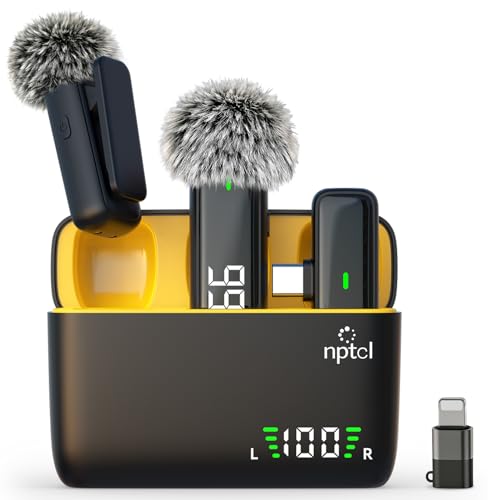
NPTCL Wireless Lavalier Microphone for iPhone iPad Android

Wireless Mini Lavalier Microphone for iPhone Android PC Laptop

NPTCL Wireless Mini Lavalier Microphone for iPhone Android

DJI Mic Mini (2 TX + 1 Mobile RX) Ultralight Wireless Microphone

A41 Wireless Lavalier Microphone for iPhone/Android (2TX + Case)

NPTCL Mini Wireless Microphone USB C for iPhone 17/16/15, Android

MAONO Wave T5 Wireless Lavalier Microphone for iPhone 15/16/17

Hollyland Lark MAX 2 Wireless Microphone Ultimate Combo Kit
Taking A Closer Look At The Options
The Hollyland Lark A1 arrives as a complete creator kit with two transmitters and a USB-C receiver that snaps straight into most modern Android phones. In real-world use, that means a single-person vlogger can hand one mic to a guest, clip the second to their own collar, and walk into a crowded market without scrambling for adapters. The 48kHz/24-bit recording pipeline (a higher sampling rate and bit depth than standard audio, capturing more detail in your voice) gives you broadcast-leaning clarity right out of the box.
Three selectable noise-cancellation levels help you adapt to changing surroundings, from quiet indoor podcasts to windy outdoor interviews. Most owners find Medium handles cafés and street chatter without making voices sound muffled, while Weak stays useful in genuinely quiet rooms.
Practical Advantages
- Three-tier noise cancellation adapts to cafés, parks, and home studios without changing mics.
- Dual transmitters (2TX) let a host and a guest both record clearly on the same phone.
- 48kHz/24-bit capture holds vocal detail that cheaper 16-bit mics tend to blur.
- USB-C receiver plugs straight into modern Android phones with no apps or Bluetooth pairing.
Things To Consider
- The plastic transmitter shells feel light on the collar, which some users find less reassuring than metal builds.
- Charging case longevity depends on storage habits, so leaving it in hot cars can shorten battery life over time.
Key Specs
Who It Suits Best
Solo vloggers and small-channel creators who want clean dialogue on a sensible budget.
Consider Something Else When
Producers running multi-camera shoots should look at the Hollyland Lark MAX 2 for its dedicated monitoring and timecode tools.
At roughly 9 grams per transmitter, the Lark M2 is the kind of mic you forget is clipped to your shirt. That weight matters when you’re filming a wedding toast, a long vlog, or a six-hour interview day. The kit bundles both a camera receiver and a USB-C receiver, so you can run it into a phone one day and a mirrorless camera the next without buying extras.
Range is rated up to 300 meters line-of-sight (meaning nothing between the transmitter and receiver), so walking-and-talking across a park works in most cases. The claimed 40-hour total battery life covers a multi-day shoot between charges, and the included charging case helps you top up between locations.
Reasons It Performs
- 9-gram transmitters disappear on clothing, even on thinner fabrics where heavier mics sag.
- Dual receivers cover phone and camera workflows from one kit.
- 300m line-of-sight range handles outdoor location work without dropouts.
- Total runtime up to 40 hours with charging case keeps multi-day shoots covered.
- High-fidelity 48kHz/24-bit audio matches the quality of pricier dedicated recorders.
Worth Noting
- The titanium-style finish scuffs visibly with rough daily handling, so a small pouch helps.
- Some phones require you to enable OTG mode (a setting that lets your phone talk to USB accessories) before the receiver powers up.
At A Glance
Made For
Daily creators filming on both phone and camera who want featherweight gear they barely notice.
Look Elsewhere When
You need a built-in headphone jack for live monitoring, in which case the DJI Mic Mini offers a clearer monitoring path.
The NPTCL Wireless Lavalier keeps things straightforward: a single USB-C mini receiver and a single clip-on transmitter, no app, no Bluetooth. You plug the receiver into your Android phone, press the power button on the transmitter, and the two pair in seconds. That’s a real perk if you’re recording a quick Instagram reel or a TikTok trend before inspiration fades.
Noise reduction is handled by a DSP chip (a small processor inside the mic that cleans up sound digitally) paired with a foam windscreen, which helps tamp down light wind and HVAC hum. Battery life extends up to 24 hours across recharges from the case, so a weekend trip rarely needs a wall outlet.
Real Benefits
- True plug-and-play setup takes the friction out of quick social posts.
- Up to 24 hours of cumulative runtime covers weekend trips without recharging.
- Built-in DSP chip and foam windscreen quiet HVAC hum and mild wind in casual outdoor settings.
- Compact form factor fits in a jeans pocket between sessions.
Points To Note
- Only one transmitter is included, so two-person interviews need a second kit.
- The clip can feel tight on thicker winter coats, where it tends to slip if you move a lot.
Best Suited To
Casual content creators and hobbyists recording short social clips on the fly.
Not Your Match When
You often record two-person interviews; the A41 kit ships with two transmitters ready to go.
The Rackwaylo mini lavalier prioritizes the kind of simplicity that matters when you’ve never used a wireless mic before. Plug the receiver into your phone or laptop, power on the transmitter, and the two automatically pair. There’s no companion app to install, no EQ curves to learn, no Bluetooth menu to navigate.
For first-time creators, that ease can be the difference between actually filming your first video and abandoning the project. Noise reduction softens background hum from air conditioners and PC fans, which is the most common complaint in home office setups. Wind handling outdoors is fair, not strong, so consider it an indoor-first mic.
Notable Gains
- Zero-setup pairing removes the technical intimidation factor for newcomers.
- Cross-platform support covers iPhone, Android, PC, and laptop workflows.
- Noise reduction calms air-conditioner and PC-fan hum in typical home offices.
- Compact charging case slips into a small camera bag or backpack pocket.
Trade Offs
- Outdoors, the included windscreen only handles light breezes, so gusty days can muddy dialogue.
- Audio resolution is serviceable for social clips but trails behind the 24-bit options in this list.
Perfect Match For
First-time wireless mic users making casual videos or zoom-friendly podcasts at home.
A Better Fit Elsewhere
Frequent outdoor shooters will get more wind rejection from the MAONO Wave T5’s upgraded noise system.
The second NPTCL kit on this list earns its spot by solving the most common household problem: family members using different phone types. The receiver ships with both USB-C and Lightning connectors in one piece, so the same mic can move between an Android and an iPhone without swapping parts. For households that share gear, that alone saves daily frustration.
Noise cancellation chips reduce steady background rumble, and a sponge windscreen keeps plosives (those harsh “p” and “b” sounds) and breath pops in check. Battery life is sufficient for a full day of short-form shooting.
Bright Spots
- 2-in-1 receiver covers both Lightning iPhones and USB-C Android devices.
- Noise cancellation chips soften consistent background noise during interviews.
- Sponge windscreen tames plosives for cleaner spoken-word tracks.
Small Caveats
- The dual-connector receiver is bulkier than single-port options in tight phone grips.
- Audio fidelity is fine for social content, not detailed enough for music recording.
Who Will Love This
Multi-device households where one mic serves both Android and iPhone users.
Swap It Out When
You’re a single-platform creator who wants lighter gear; the NPTCL USB-C mini is more compact.
The DJI Mic Mini continues DJI’s track record of shrinking serious audio gear into genuinely pocketable shapes. Each transmitter weighs around 10 grams, which puts it in the same featherweight class as the Lark M2. Active noise cancellation (a real-time processing system that actively cuts ambient sound, not just a static filter) handles busy streets and HVAC systems with more refinement than passive DSP chips in budget alternatives.
The transmission range stretches to 300 meters in open spaces, so filming across a courtyard or plaza stays reliable. Build quality feels closer to professional camera accessories than consumer phone gear, which is the main reason it sits at a premium price tier.
Key Advantages
- 10-gram transmitters remain discreet even on lightweight fabrics.
- Active noise cancellation cleans up busy streets and HVAC hum more cleanly than passive filters.
- 300m max range supports outdoor location work across open spaces.
- Premium build quality holds up to frequent travel and daily handling.
- Two transmitters handle host-and-guest setups from one kit.
Areas To Watch
- Premium pricing puts it out of reach for casual hobbyists on a tight budget.
- The charging case is a bit larger than competitors’, so pocket storage requires more thought.
Quick Facts
Built With In Mind
Serious mobile filmmakers who shoot on location and want pro-leaning audio quality.
Reach For A Different Pick When
Budget-conscious creators can save significantly with the Hollyland Lark A1, which covers most of the same use cases.
The A41 kit from Linber is built around the idea that two-person content shouldn’t cost twice. Two transmitters, one dual-interface receiver (Lightning plus USB-C), and a charging case arrive in one box, ready for back-to-back interviews or co-hosted podcasts. Setup requires no app, no Bluetooth, and no menu diving.
The 2025 ENC chip (an environmental noise cancellation processor designed to filter out background sound) handles busy cafés and street scenes with respectable clarity, and the included windscreen helps tame outdoor breezes. For Android users running Android 6.0 and up, the USB-C side drops straight in.
Useful Strengths
- Two transmitters cover host-and-guest recordings without buying extras.
- Dual Lightning and USB-C receiver works across both major phone platforms.
- ENC chip and windscreen combination cuts café and light-wind noise effectively.
- Included charging case protects gear between shoots and tops up on the go.
Honest Caveats
- Build is functional plastic rather than premium metal, so heavy use shows wear sooner.
- Audio fidelity sits below higher-bit systems like the Hollyland Lark M2 in detail and warmth.
The Right Fit
Two-person interview creators who want a ready-to-shoot kit without juggling multiple purchases.
Where A Sibling Pick Shines
Solo creators who don’t need a second transmitter will find the NPTCL mini USB-C more streamlined.
The third NPTCL entry focuses on one thing: disappearing on your collar. The mini clip is small enough to tuck behind a button or under a lapel, which helps on-camera work where bulky microphones read as distracting. For street interviews or travel vlogs, that low profile matters more than spec-sheet bragging.
Range reaches about 100 feet line-of-sight, which covers most walking-talking scenarios in cities and parks. A 10-hour working battery handles a full shoot day, and the foam windscreen softens breath pops during close-mic conversation.
A Few Highlights
- Mini clip stays nearly invisible on collar and lapel framing.
- 100-foot line-of-sight range handles walking interviews in urban settings.
- 10-hour battery covers a typical shoot day between charges.
- Foam windscreen tames breath and light wind for cleaner dialogue.
Less Ideal Details
- Single transmitter means no native support for two-person setups.
- No Lightning option, so iPhone 14 and earlier users need a different kit.
Whose Shelf It Belongs On
Travelers and street interviewers who want gear that stays out of the camera frame.
Skip It When
You frequently record two-person interviews; the A41 ships with twin transmitters ready to pair.
MAONO positions the Wave T5 as a creator’s toolkit rather than a single-purpose mic, and the spec list backs that up. Intelligent noise cancellation targets outdoor reporters and voiceover artists specifically, meaning the tuning favors speech over music. At 9 grams per transmitter, it stays comfortable through marathon filming sessions.
For podcasters, the cleaner vocal capture means less post-production cleanup. For vloggers, the broadcast-leaning sound quality lifts YouTube audio noticeably above built-in phone mics. Filmmakers shooting documentaries will appreciate the wind handling in mild outdoor conditions.
Advantages To Know
- Intelligent noise cancellation tuned for spoken-word clarity.
- 9-gram transmitters remain comfortable on long shoots.
- Broadcast-quality sound lifts YouTube and podcast tracks above built-in phone mics.
- Cross-device support covers iPhone 15 and newer plus Android USB-C phones.
Practical Considerations
- USB-C receiver excludes older Lightning-only iPhones from full compatibility.
- Wind rejection is solid for mild weather, but heavy gusts still benefit from a separate deadcat windscreen (a furry cover that blocks wind noise).
Feature Snapshot
Who Should Grab It
Vloggers and podcasters who prioritize clean dialogue over music recording.
Another Choice May Suit
Mobile-first filmmakers who need a second transmitter should look at the Hollyland Lark A1 dual kit.
The Lark MAX 2 sits at the top of Hollyland’s lineup for good reason: it bundles tools that professional crews usually buy separately. Wireless monitoring through included OWS earphones (open-ear style earbuds that don’t block your surroundings) lets the talent hear themselves in real time without cables running across the set. Timecode (a timing signal baked into the audio file that lets editors sync multiple cameras in post) support means editors can align multi-camera footage without clapperboards or manual syncing.
32-bit full-chain audio captures an enormous dynamic range (the gap between the quietest and loudest sound a system can record), so a sudden shout or a soft whisper both come through cleanly. AI noise cancellation adapts to busy environments without sounding artificial. Two transmitters and two receivers come in the Ultimate Combo, alongside the charging case.
Where It Excels
- Wireless monitoring via OWS earphones removes cable clutter on set.
- Built-in timecode simplifies multi-camera editing in post-production.
- 32-bit recording headroom handles sudden loud moments without distortion.
- AI noise cancellation adapts to changing environments with natural results.
- Ultimate Combo includes two transmitters, two receivers, and charging case.
- 25ms monitoring latency keeps real-time audio usable for talent.
Trade-Offs To Consider
- Premium pricing puts it out of reach for casual creators.
- Full feature set rewards users who understand multi-cam workflows; beginners may not use timecode or 32-bit recording.
Best Suited To
Multi-camera production crews and serious content creators who already understand timecode workflows.
Where Another Pick Suits Better
Solo creators running single-camera setups will find the Lark M2 covers their needs without the learning curve.
What Matters Most When Shopping for Wireless Mics
Choosing the right wireless lavalier starts with the connection. Most modern Android phones use USB-C, so a USB-C receiver is the simplest path to plug-and-play recording. If you share the mic between Android and iPhone, a dual-interface receiver saves daily hassle. Older Lightning-only iPhones need different gear entirely, so confirm your phone’s port before buying.
Audio resolution matters more than marketing suggests. 48kHz/24-bit recording (where 48kHz is the sampling rate and 24-bit is the data depth) captures more vocal detail than the 16-bit audio that budget mics default to. The difference shows up clearly when you edit dialogue or push volume in post. For spoken-word content, the jump from 16-bit to 24-bit often matters more than swapping brands entirely.
Range and battery life shape real-world usability. A 100-foot range covers city street interviews; 300 meters line-of-sight handles larger outdoor venues. Battery ratings matter less than cumulative runtime with the charging case, because a 24-hour system that fits in a coat pocket outperforms an 8-hour unit that requires a wall outlet each night.
Noise cancellation falls into two camps: passive DSP chips in budget mics soften steady hum but struggle with sudden loud sounds. Active or AI-driven cancellation in premium picks adapts more cleanly to cafés, traffic, and HVAC systems. Match the cancellation type to your filming environment.
Weight and clip design affect on-camera appearance. Sub-10-gram transmitters disappear on thin fabrics. Heavier units work fine on jackets but look bulky on t-shirts. For vloggers who film in mirror selfies, low-profile clips read more polished on screen.
Build quality and warranty coverage vary widely. Plastic shells cost less and feel lighter, but metal builds survive daily handling better. Some kits include accidental damage protection, which matters if you travel frequently with gear.
What To Weigh Before Hitting Buy
Wrong Turns To Avoid
Picking a mic based on specs alone leads to disappointment in real shoots. A 300-meter range means nothing if your phone doesn’t power the receiver reliably. OTG mode (a setting that lets your phone talk to USB accessories) sometimes needs enabling, and that detail only surfaces in product listings if you look closely. Confirm compatibility with your exact phone model before committing.
Another common slip is ignoring total battery runtime. A 6-hour transmitter sounds fine until you realize it dies mid-interview. Look for cumulative figures that include the charging case, since that number reflects real-world endurance across a day or weekend.
When Paying More Pays Off
Higher-tier mics earn their price through three upgrades: active noise cancellation that handles real-world environments, higher bit-depth recording that survives heavy editing, and pro features like timecode and wireless monitoring. For creators filming in unpredictable locations, those upgrades save hours of post-production cleanup. For casual social clips, a budget option covers the same basics without the extra spend.
Frequently Asked Questions
Do wireless lavalier microphones work with all Android phones?
Most modern Android phones with USB-C ports support plug-and-play wireless receivers directly. Older Micro-USB phones need an adapter or a different mic entirely. Some phones require OTG mode to be enabled in settings before the receiver powers up.
How far can a wireless mic transmit without losing signal?
Line-of-sight range (open air with nothing between transmitter and receiver) varies widely. Budget mics typically reach 50 to 100 feet, mid-range options hit 200 to 300 feet, and premium kits advertise up to 300 meters. Walls, people, and Wi-Fi interference reduce real-world range noticeably.
Can I use two transmitters at once for interviews?
Kits that ship with two transmitters (2TX) support dual-person recording from one receiver. Single-transmitter kits need a second purchase or a different model entirely. The A41, Hollyland Lark A1, DJI Mic Mini, and Lark MAX 2 all include dual transmitters.
What’s the difference between DSP noise reduction and active noise cancellation?
DSP (digital signal processing) noise reduction applies a fixed algorithm to clean up steady background sounds like hum or fan noise. Active noise cancellation monitors incoming sound in real time and adapts dynamically, which handles changing environments like cafés and streets more naturally.
How long do wireless mic batteries really last?
Transmitter runtime typically runs 6 to 10 hours per charge. Cumulative runtime with the included charging case extends that to 24 to 40 hours across multiple top-ups. Heavy users who film daily should prioritize total case runtime over per-charge numbers.
The Takeaway
A wireless lavalier microphone is one of the clearest upgrades you can make to mobile video quality. The right pick depends on how you actually film: budget options cover casual social clips, while dual-transmitter kits handle interviews and premium combos add pro workflows like timecode and wireless monitoring. Match the mic to your environment, not just your wallet, and you’ll hear the difference in every future upload.


