

Tracking your weight at home shouldn’t feel like a guessing game. The best bathroom scales smarts today do far more than flash a number, pairing app connectivity, body composition metrics, and family-friendly features that turn a quick morning step-on into useful long-term data. Whether you’re chasing a fitness goal, watching a health condition, or just want a reliable readout you can trust, there’s a model built for exactly that.
A Fast Comparison Of The Options
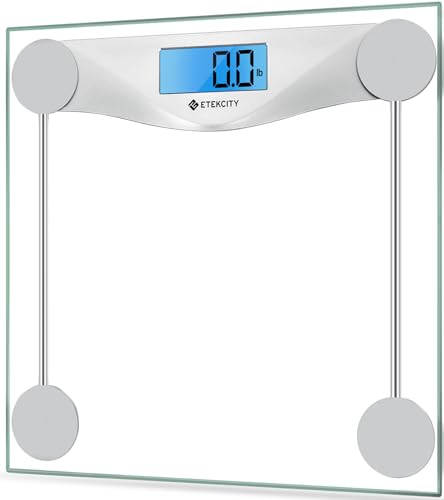
Etekcity Digital Body Weight Bathroom Scale 6mm Tempered Glass

Greater Goods AccuCheck Digital Bathroom Scale (Pearl Gray)

RENPHO Smart Scale BMI & Body Fat Bluetooth (White, Elis 1)

GE Smart Scale for Body Weight BMI Body Fat Muscle Mass

GE Smart Scale for Body Composition 500lb Large 11.8-Inch

GE Smart Scale for Body Weight BMI Body Fat Bluetooth 400lb

A&D Medical UC-356BLE Bluetooth Digital Weight Scale 550lb

INEVIFIT Premium Bathroom Scale Digital 400 lbs Includes Batteries
More Details On Our Top Picks
A no-fuss digital scale works best when it disappears into the routine. Step on, read the number, move on. The Etekcity Digital Body Weight Bathroom Scale leans into that simplicity, with a wide 6mm tempered glass platform and a blue-backlit LCD that stays readable in low morning light. Compared to the smart scales further down this list, it skips body composition entirely, which keeps the experience quiet and the readings consistent for households that just want weight, nothing else.
Capacity tops out at 400 lb / 180 kg, supported by four high-precision sensors that resolve in roughly 0.2 lb increments. The unit switches on automatically when you step on and shuts off shortly after, so battery life tends to stretch across many months of regular use. For most people checking in once a week, this is exactly enough scale for the job.
Reasons It Performs
- Wide 6mm tempered glass platform feels sturdy underfoot and handles everyday foot traffic without flex.
- Blue-backlit LCD stays easy to read in dim bathrooms, which matters for early risers and late-night checkers.
- 400 lb capacity comfortably covers most adults in a shared household.
- Step-on auto power removes any habit of tapping a button before weighing.
Things To Consider
- No body fat, BMI, or muscle mass metrics, so fitness trackers will need a more advanced model.
- Resolution is coarser than the higher-tier picks, which may frustrate athletes chasing half-pound shifts.
- Glass tops can show smudges and water spots; a quick wipe-down after showers keeps the readout crisp.
Key Specs
Right Fit For
People who want a basic, dependable scale for weekly weigh-ins without app pairing or extra metrics.
Consider Something Else When
Step up to the RENPHO Smart Scale if you want body composition breakdowns and Bluetooth syncing for long-term progress charts.
Scales get knocked around. Moved between bathrooms, slid under counters, occasionally dropped during cleaning. The Greater Goods AccuCheck was designed with that reality in mind, layering an automatic recalibration routine onto every weigh-in so readings stay trustworthy even after the unit shifts position. Where the Etekcity offers straightforward weight, this one focuses on delivering repeatable precision.
AccuCheck verifies each reading in the background and outputs in 0.1 lb increments, which is finer than the Etekcity’s resolution and useful for anyone tracking small changes over time. The pearl gray finish reads as a soft, neutral tone that blends into most bathroom palettes rather than dominating them.
The Good Stuff
- Auto-recalibration on every weigh-in keeps numbers stable even after the scale is moved or bumped.
- 0.1 lb resolution catches subtle shifts that coarser scales may smooth over.
- Neutral pearl gray finish suits a wide range of bathroom styles.
Worth Noting
- Still a weight-only unit, so users wanting fat or muscle metrics should look at the RENPHO or GE options.
- The verification routine adds a brief moment before the final number locks in.
- No companion app, which limits long-term trend tracking without manual logging.
Built With In Mind
People who move their unit often or share a bathroom where the scale gets nudged, and want consistent readings without manual recalibration.
Not Your Match When
Pick the RENPHO Smart Scale instead if Bluetooth syncing and body fat percentages matter more than raw weight precision.
Stepping on a scale that talks to your phone turns scattered numbers into a real story. The RENPHO Smart Scale leans into that connection, broadcasting 13 body metrics through Bluetooth to the RENPHO Health App, which plays nicely with Apple Health, MyFitnessPal, and Samsung Health. Bioelectrical impedance analysis (a low electrical signal that estimates fat and muscle) does the work behind the scenes, and the app handles the long-term charting.
Compared to the Etekcity and AccuCheck, this is a clear step up in capability, adding BMI, body fat percentage, muscle mass, and more, while keeping the on-scale display minimal so the app does the heavy lifting. Auto-calibration and auto on/off keep the daily routine friction-free.
Standout Benefits
- Thirteen body composition metrics give a fuller fitness snapshot than weight alone.
- App syncs with major health platforms, so the data lands where you already track meals and workouts.
- Automatic calibration and on/off keep the experience simple each morning.
Trade Offs
- Body composition readings require consistent hydration and timing for accurate trends.
- App dependency means losing access to historical data if you switch phones without backup.
- The smooth white surface shows footprints easily and benefits from a quick wipe between uses.
Feature Snapshot
Made For
Fitness-focused users who want app-driven trend tracking across weight, BMI, and body composition over weeks and months.
A Better Fit Elsewhere
Choose the GE Smart Scale for Body Composition (500 lb capacity) if a wider platform and on-screen color metrics matter more than a particular app ecosystem.
Some mornings you want the data without reaching for your phone. The GE Smart Scale solves that with a 5.3-inch color screen that displays eight core metrics the moment your feet hit the platform. Weight, BMI, body fat, muscle mass, water percentage, visceral fat, bone mass, and body type all show up on the unit itself, which is a refreshing change from app-dependent scales.
The 11 by 11-inch platform keeps foot placement secure, and resolution reads in 0.1 lb / 0.05 kg increments. Capacity hits 400 lb / 180 kg, matching the Etekcity. Versus the RENPHO, which leans on the phone, this GE model puts the dashboard right where you stand.
Where It Delivers
- Color display shows eight metrics at a glance, removing the need to open an app after stepping off.
- Compact 11-inch square footprint fits tighter bathroom layouts.
- Fine 0.1 lb resolution supports close trend tracking.
Points To Note
- Smaller platform may feel cramped for users with larger feet or limited balance.
- Color screen draws more battery than simple LCD scales, so expect more frequent replacements.
- Eight on-screen metrics are fewer than what app-driven models capture, though most users won’t miss the extras.
Key Product Details
Best Suited To
People who want a colorful, glanceable readout each morning without pulling out a phone, and who don’t mind a slightly smaller platform.
Swap It Out When
The GE Smart Scale for Body Composition (11.8-inch, 500 lb) is the better match if a wider platform and higher capacity are priorities.
Big feet, larger bodies, shared households. The GE Smart Scale for Body Composition addresses all three with an 11.8-inch wide platform that feels stable under anyone, plus a 500 lb capacity that covers almost every realistic user. A 5.33-inch color display shows 14 essential metrics right on the scale, from body fat percentage to muscle mass and bone density.
Compared to its smaller sibling (the 400 lb GE model above), this version trades a little floor space for considerably more versatility. Where the RENPHO pushes app integration, this one leans toward on-device richness, which can be helpful in households where multiple people step on without pairing their phones first.
The Upside
- 11.8-inch platform provides confident footing for larger frames or unsteady mornings.
- 500 lb capacity opens the door for higher-weight users and growing families.
- 14 metrics on the color display, including visceral fat and bone mass.
- On-screen data means quick readings without phone dependency.
Honest Caveats
- The wider footprint requires more floor space than compact scales like the GE 11-inch model.
- Battery demand is higher due to the color screen, so spares are worth keeping on hand.
- Larger surface area needs regular wiping to keep the display zone clean and smudge-free.
Whose Shelf It Belongs On
Multi-user households, larger users, and anyone who wants a generous platform with on-device metrics and no app required for a quick glance.
Look Elsewhere When
The A&D Medical UC-356BLE is worth considering if Bluetooth syncing and a 550 lb capacity matter more than a wide platform.
Mornings move fast. Coffee, kids, commute. The GE Smart Scale for Body Weight strips the process to what matters: weight, BMI, and body fat percentage on the LED display the second you step on. No waiting for an app to load, no fishing for a phone in another room.
Bluetooth setup happens once, after which the scale handles daily check-ins independently. Bio-impedance analysis estimates muscle mass, body water, and protein percentages, feeding those numbers into the app for trend tracking when you have time to check. Capacity sits at 400 lb, comfortably covering most adult users.
A Few Highlights
- Instant on-scale readings for weight, BMI, and body fat cut out phone-checking delays.
- Bluetooth pairing happens once, then runs quietly in the background.
- 13 body composition metrics feed the app for thorough trend tracking.
Small Caveats
- Three on-screen metrics are fewer than larger GE displays, so glanceable richness is limited.
- Bio-impedance readings shift with hydration, so consistency in measurement time matters.
Right Fit For
Busy households that want a quick daily readout plus app archiving for when there’s time to dig into trends.
Consider Something Else When
The RENPHO Smart Scale may suit you better if app-first tracking and broader third-party integrations are the priority.
A&D Medical builds clinical-grade monitoring equipment, and the UC-356BLE carries that pedigree into the home. The standout number is the 550 lb capacity, the highest on this list, supported by four precision sensors that read up to that limit without complaint. No calibration is required; the unit recognizes users automatically and even stores readings locally when a phone isn’t around.
Bluetooth syncs with the A&D Heart Track app for ongoing history, though the scale works fine on its own. Compared to the GE 500 lb model, the A&D trades on-device color metrics for a more clinical feel and higher capacity, which suits users who prioritize accuracy and durability over visual flair.
The Helpful Details
- 550 lb capacity leads the list, with room for higher-weight users and shared households.
- Automatic user recognition means stepping on is the only step required.
- Local data storage keeps recent readings available even without phone pairing.
- Clinical A&D pedigree suggests long-term durability and accuracy.
A Few Limitations
- Plain display lacks the on-screen body composition breakdowns of GE’s color models.
- App experience is more clinical than fitness-flashy, which may not appeal to casual users.
Quick Facts
Perfect Match For
Higher-weight users and households where clinical-grade accuracy and a generous capacity ceiling matter most.
Another Choice May Suit
The GE Smart Scale for Body Composition (500 lb) fits better if a wider platform and on-screen color metrics are priorities.
Batteries in the box is a small touch that lands well on day one. The INEVIFIT Premium Bathroom Scale ships ready to use, sitting on a wide 11.8 by 11.8-inch tempered glass platform that comfortably fits two adult footprints side by side. Auto-calibrating sensors handle the precision work, and 400 lb capacity covers most users without strain.
Where the GE 11.8-inch model piles on metrics and color screens, this INEVIFIT keeps things refreshingly simple. Weight-only readouts, large enough for older eyes, no app required. For shared family bathrooms where multiple people step on without pairing, that simplicity can be a feature, not a limitation.
Noteworthy Benefits
- Wide 11.8-inch tempered glass platform feels stable for users of all sizes.
- Batteries included means zero setup time after unboxing.
- Auto-calibrating sensors handle precision without manual resets.
Trade-Offs To Consider
- No body composition data, so users wanting fat or muscle metrics should look at the RENPHO or GE models.
- Larger footprint may not suit very compact bathroom floors.
- Glass surface benefits from regular wiping to keep water spots and footprints under control.
Feature Snapshot
Best Suited To
Families and shared households that want a straightforward weight scale with a wide, sturdy platform and no app learning curve.
Where Another Pick Suits Better
Step up to the RENPHO Smart Scale if body composition metrics and Bluetooth syncing are more useful than raw weight alone.
What To Weigh Before Picking a Smart Bathroom Scale
Smart bathroom scales vary more than the basic models most people grew up with, so knowing what you actually need saves money and frustration. Start by thinking about how you’ll use the data, because that decision shapes nearly every spec that follows.
Capacity and Platform Size
Capacity matters more than most shoppers realize. The difference between 400 lb and 550 lb covers higher-weight users, growing teens, and shared households without forcing anyone to step off mid-weigh-in. Platform size plays a parallel role: an 11-inch square footprint feels fine for average adult feet, while an 11.8-inch wide platform adds comfort for larger frames, balance concerns, and shared family use.
Metrics That Actually Match Your Goals
Weight tells one story. Body fat, muscle mass, BMI, water percentage, visceral fat, and bone mass tell a deeper one, especially for anyone tracking fitness progress or working with a clinician. Bioelectrical impedance analysis (a low electrical signal sent through the feet) is how most scales estimate these values, and its accuracy depends on consistent hydration, timing, and bare feet. Decide whether the extras matter before paying for them.
Connectivity and App Ecosystem
Bluetooth scales pair with companion apps that archive trends over weeks and months, which is where real insight lives. Some apps sync with Apple Health, MyFitnessPal, or Samsung Health, expanding the data picture. Others keep things on-device with a color screen, skipping the phone entirely. For most people, the right answer is the model that fits how they already track their health.
Display, Power, and Daily Use
Backlit LCDs work in dim bathrooms. Color screens show more metrics at a glance but drain batteries faster. Auto on/off preserves battery life. Glass platforms look sleek but show smudges. None of these details break a scale, but together they shape whether the unit feels effortless or annoying after the first month.
Key Considerations Across These Picks
Pitfalls Shoppers Hit
The most common mistake is paying for body composition metrics you’ll never use. Smart scales with 13 or 14 metrics sound impressive, but the data only helps if you’ll check it consistently. Another trap is ignoring platform size. Compact 11-inch squares feel cramped for larger users and unsteady mornings, and that discomfort quietly leads to skipped weigh-ins. Finally, assuming any scale stays accurate forever overlooks the reality that units drift over time. Models with auto-calibration or recalibration routines handle this quietly in the background.
What The Higher Tier Buys
Moving from a basic scale to a mid-tier smart model typically adds Bluetooth syncing, multiple metrics, and finer resolution. The jump to a premium unit brings wider platforms, higher capacity, color displays with on-device data, and clinical-grade sensor quality. The honest read is that the upgrade pays off most when multiple people use the scale, when trends matter more than single readings, or when a higher weight capacity is genuinely needed.
Frequently Asked Questions
What is bioelectrical impedance analysis on a smart scale?
It’s a method where a low electrical signal passes through your feet to estimate body fat, muscle mass, and water percentage. Results shift with hydration levels, so consistent timing improves accuracy over time.
Do smart bathroom scales work without a phone?
Yes, most display weight immediately on the unit itself. Phone pairing unlocks long-term trend storage and syncing with health apps, but isn’t required for daily weigh-ins.
How often should I weigh myself?
Most health guidance suggests once a week or daily at the same time of day, since daily weight fluctuates with hydration and meals. Pick a routine you can actually maintain.
Are body composition metrics accurate?
They give useful trend data rather than lab-grade precision. Consistency in hydration, timing, and bare-foot contact matters more than the exact number on any given day.
How long do batteries last in a smart scale?
Basic LCD models often run a year or more on a set. Color-display scales drain faster, sometimes a few months, so keeping spares on hand is a small but worthwhile habit.
The Takeaway
The right smart scale matches how you actually track your health, not how the spec sheet looks on paper. For pure simplicity, the Etekcity and INEVIFIT deliver. For deeper data, the RENPHO and GE models lead the pack. And for higher-capacity needs, the A&D Medical UC-356BLE stands ready. Whichever you pick, stepping on the same scale at the same time each day is what turns any of these into a genuinely useful long-term tool.


