

Phone storage fills up at the worst moments. So does laptop space, especially when you’re juggling work files, photos, and a few side projects. Bluetooth flash drives take that pressure off, letting you push content between devices without cables, cloud accounts, or a reliable Wi-Fi signal. This roundup covers ten picks spanning dual-connector convenience, high-capacity libraries, and budget-friendly multi-packs. Each option handles a slightly different pain point, so match the drive to the gear you actually carry, not the spec sheet that looks nicest.
The Shortlist At A Glance

Lexar D40E 64GB Dual USB-C Jump Drive (Champagne Silver)

SanDisk 1TB Ultra USB 3.0 Flash Drive (Black)

Lexar D40E 128GB Dual USB-C Jump Drive (Champagne Silver)

Lexar D40E 256GB Dual USB-C Jump Drive (Champagne Silver)
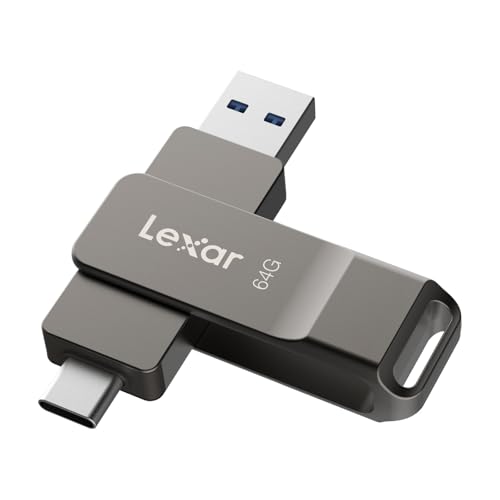
Lexar D40E 64GB Dual USB-C Jump Drive (Titanium Grey)

Lexar D40E 128GB Dual USB-C Jump Drive (Titanium Grey)

Lexar D40E 256GB Dual USB-C Jump Drive (Titanium Grey)

Bosexy 32GB Thumb Drive 5-Pack Swivel

Lexar E32C 128GB Type-C USB Flash Drive
Lexar E32C 64GB Type-C USB Flash Drive
The Details Behind The Selections
The 64GB D40E in champagne silver sits at the entry point of Lexar’s dual-connector line, and for most people that capacity is plenty. USB-C and USB-A share a slim body, so a single drive moves files between a phone, a tablet, and an older laptop without dongles. The OTG design (On-The-Go, meaning the drive can plug directly into a phone and act like external storage) handles the everyday shuffle of documents and photos well.
Where this drive earns its place is in a pocket or a keychain sleeve. It feels light, looks discreet next to a silver laptop, and doesn’t demand a second cable. You may find 64GB tight for sustained 4K video work, but for class notes, music libraries, and travel backups, the size hits a sweet spot.
What It Does Well
- True plug-and-play across USB-C phones, tablets, and USB-A laptops without extra software.
- Slim profile disappears into a wallet pocket or laptop sleeve.
- USB 3.2 Gen 1 interface delivers transfer speeds up to 100MB/s for quick file shuffles.
- Backwards compatibility with USB 2.0 ports keeps older machines in the mix.
Honest Caveats
- 64GB fills up quickly if you’re moving RAW photos or long video clips.
- The metal shell scratches against keys in a pocket over months of carry.
- No built-in cap, so the exposed USB-C tip benefits from a small sleeve when tossed in a bag.
Key Product Details
Right Fit For
Students, casual photographers, and commuters who move documents and photos between a USB-C phone and a laptop every week.
Skip It When
You’re editing video daily and need more headroom; the Lexar D40E 256GB Dual USB-C Jump Drive (Champagne Silver) gives you four times the room for similar workflows.
Where the Lexar picks above handle everyday shuffles, this SanDisk Ultra takes a different approach: pure, oversized capacity in a single USB-A stick. One terabyte is roughly enough to hold a decade of family photos or a working library of RAW images, which puts this drive in a category of its own on the list. It’s the right pick when you’re tired of juggling multiple smaller sticks.
The black plastic shell feels sturdy, and a retractable connector keeps the USB-A tip safe inside a bag. Read speeds up to 130MB/s put it ahead of most older drives in this capacity tier, especially when moving large folders. You trade the dual-connector flexibility of the Lexar models for sheer volume, so it’s the better match for laptop-and-desktop workflows.
Notable Upsides
- 1TB capacity swallows entire project archives without splitting across drives.
- Up to 130MB/s read speed noticeably outpaces older USB 3.0 drives.
- Retractable design protects the USB-A connector when you’re traveling.
- Backward compatibility with USB 2.0 keeps it useful on older systems.
Practical Considerations
- USB-A only, so you’ll need an adapter for phones and tablets without a full-size port.
- Larger physical size than the Lexar dual-connector picks, harder to lose but harder to misplace in a pocket.
- Higher capacity commands a meaningful price premium over the 256GB options on this list.
Made For
Photographers, videographers, and home-office users who need a single drive that holds everything from one project to the next.
Reach For A Different Pick When
Your primary device is a USB-C phone; the Lexar E32C 128GB Type-C USB Flash Drive handles that mobile workflow with a swiveling dual-connector body.
The 128GB D40E doubles the storage of the 64GB version without changing the body or the connectors, which is exactly the right move for many shoppers. You get the same champagne-silver finish, the same dual USB-C and USB-A ends, and enough room for a serious photo library or a season of working files. Compared to the entry-level D40E above, this one stretches into project territory without inflating the footprint.
Travelers and content creators who run into the 64GB wall tend to land here. Plug it into a phone for an instant dump of camera-roll photos, then flip it into a laptop for editing. The OTG design keeps the whole flow driver-only, with no cables to forget in a hotel room.
The Value In It
- 128GB is the practical sweet spot for phone backups before long trips.
- Identical slim body to the 64GB sibling, so carry size doesn’t grow with capacity.
- USB 3.2 Gen 1 read speeds up to 100MB/s keep large photo transfers quick.
- Dual connector design works with both newer tablets and older work laptops.
Points To Keep In Mind
- Same exposed-tip design as the smaller D40E, so a small sleeve helps with pocket carry.
- 128GB is generous for photos but light for sustained 4K video projects.
Best Suited To
Creators, remote workers, and frequent travelers who want one drive that handles both phone and laptop without juggling two sticks.
A Better Fit Elsewhere
Budget-focused shoppers who only need light storage; the Bosexy 32GB Thumb Drive 5-Pack Swivel offers multiple sticks for color-coded organization.
The 256GB D40E pushes the champagne-silver line into genuinely spacious territory while keeping the same compact body. That’s the trick: you can carry a working library in your pocket and still have room for travel video, project archives, and a phone backup all in one place. For photographers shooting RAW or anyone transferring full-length video, this size starts to feel comfortable rather than cramped.
Build quality matches the smaller siblings, which means the metal shell handles daily carry reasonably well. The dual USB-C and USB-A setup works across modern phones, tablets, and older work computers. In most editing setups, you’ll find the 256GB tier hits a comfortable middle ground before stepping up to the SanDisk 1TB above.
Real-World Strengths
- 256GB capacity covers a full wedding shoot or several months of 4K footage.
- Same slim dual-connector body as smaller D40E models, so pocket feel stays light.
- USB 3.2 Gen 1 reads up to 100MB/s, fast enough for quick project handoffs.
- Backward compatible with USB 2.0 ports on legacy machines.
Less Ideal Details
- Pricing climbs noticeably from the 128GB version, so this tier is only worth it when you’ll actually use the space.
- Metal finish shows fingerprints and minor scratches over months of pocket carry.
Feature Snapshot
Perfect Match For
Photographers, videographers, and project-heavy professionals who need one drive that handles serious files without splitting content.
Not Your Match When
You rarely fill more than 64GB; the Lexar D40E 64GB Dual USB-C Jump Drive (Champagne Silver) saves money and does the same job.
The titanium-grey version of the 64GB D40E offers the same dual-connector design as its champagne-silver sibling above, just in a cooler finish. The darker tone tends to blend into office gear and minimal setups rather than standing out on a desk. Functionally, you get the same USB-A and USB-C ends and the same compact body.
Where the color swap matters most is aesthetics. Office workers, designers, and anyone curating a low-glare workspace will appreciate how the grey shell disappears next to a darker laptop. For pure capacity and speed, it behaves identically to the silver 64GB reviewed first on this list.
Where It Delivers
- Titanium grey finish complements modern dark laptops and minimal desk setups.
- Same compact D40E footprint as the champagne-silver version for consistent pocket feel.
- USB 3.2 Gen 1 read speeds up to 100MB/s for fast everyday transfers.
- Plug-and-play with USB-C phones, tablets, and USB-A laptops alike.
Things To Consider
- Color is the only differentiator from the champagne-silver 64GB D40E, so the price premium is purely aesthetic.
- 64GB fills up quickly with video, making it best for documents and photo backups.
Who Will Love This
Office-based professionals and design-conscious shoppers who want a discreet drive that disappears into a minimal workspace.
Where A Sibling Pick Shines
You need more space; the Lexar D40E 128GB Dual USB-C Jump Drive (Titanium Grey) keeps the same color story with double the room.
Take the silver 128GB reviewed earlier and swap the finish: that’s this drive. The titanium-grey 128GB D40E is the same body, same connectors, same read speeds, just with a cooler coat of paint. For hybrid workers who bounce between home and office, this tier offers a meaningful bump over 64GB without stepping into 256GB territory.
Capacity-wise, 128GB carries a respectable photo library plus several project folders. The dual USB-A and USB-C ends let you pull content from a work laptop and push it onto a personal phone without adapters. The grey finish hides smudges a bit better than silver, depending on your view.
What Stands Out
- 128GB capacity handles phone backups plus a project folder comfortably.
- Titanium grey finish resists fingerprints better than lighter metal finishes.
- USB 3.2 Gen 1 interface reads up to 100MB/s for quick large file moves.
- Works with USB-C phones, tablets, and legacy USB-A laptops without dongles.
Worth Bearing In Mind
- Same exposed USB-C connector as the rest of the D40E line, so a sleeve is wise for pocket carry.
- Pricing tracks the champagne-silver 128GB closely, so the choice is mostly aesthetic.
Who Should Grab It
Hybrid workers and frequent commuters who split time between home and office and want a single drive that covers phone and laptop.
Consider Something Else When
Color coordination matters less than sheer capacity; the SanDisk 1TB Ultra USB 3.0 Flash Drive (Black) opens up library-sized space.
The grey 256GB D40E rounds out the high-capacity end of the dual-connector line, matching the champagne-silver version’s storage in a darker finish. For creators who already lean toward titanium-grey or space-grey gear, the color match makes this stick feel like part of the kit rather than an accessory. Same dual USB-C and USB-A ends, same slim body, same 100MB/s read ceiling.
What sets this tier apart from the smaller siblings is breathing room. 256GB carries a season of travel video, a serious photo archive, and several working projects at once. You may find it the right balance between the smaller D40E picks and the much larger SanDisk 1TB reviewed earlier.
Useful Highlights
- 256GB capacity handles full project libraries plus phone backups in one stick.
- Titanium grey finish blends with darker laptops and accessories.
- USB 3.2 Gen 1 reads up to 100MB/s, sufficient for quick project handoffs.
- Compact D40E body stays pocket-friendly even at this capacity.
Trade-Offs To Consider
- Color premium is the only meaningful difference from the champagne-silver 256GB D40E.
- Exposed connector design requires a sleeve if you’re carrying it loose in a bag.
Whose Shelf It Belongs On
Content creators and traveling professionals who match their gear to darker finishes and need generous, pocket-friendly storage.
Look Elsewhere When
You’re managing multiple users or projects and need several drives; the Bosexy 32GB Thumb Drive 5-Pack Swivel handles that scenario better.
Where every other pick on this list is a single stick, the Bosexy set delivers five USB-A thumb drives in one box, color-coded black, blue, red, green, and purple. That makes it a fundamentally different proposition: this is multi-user, multi-purpose storage, not a single high-capacity workhorse. Households, classrooms, and small offices tend to get the most from a pack like this.
Each stick is a swivel design with an LED indicator, so the connector tucks away when not in use and the light confirms activity. 32GB per stick is modest compared to the Lexar and SanDisk picks, but that’s plenty for schoolwork, music libraries, and family photo dumps. You’re buying flexibility and quantity, not raw capacity.
The Upside
- Five color-coded drives simplify organization for households or shared workspaces.
- Swivel design protects the USB-A connector without a separate cap to lose.
- LED activity indicator confirms transfers are running at a glance.
- Each 32GB stick handles documents, music, and modest photo libraries comfortably.
Things To Weigh Up
- USB 2.0 speeds are noticeably slower than the USB 3.2 picks above for large transfers.
- USB-A only, so phones and tablets without a full-size port need an adapter.
- Plastic shells feel lighter and less premium than the metal-bodied Lexar picks.
Feature Rundown
The Right Fit
Families, classrooms, and small offices that want simple, color-coded storage for multiple users without overthinking capacity.
Swap It Out When
You need USB-C support and higher speeds for modern phones; the Lexar E32C 64GB Type-C USB Flash Drive handles that workflow in a single stick.
The E32C takes the Lexar dual-connector concept in a more rugged direction with a swiveling metal body. Unlike the D40E series reviewed earlier, the E32C protects both connectors with a rotating shell, which is a meaningful upgrade for anyone who carries a stick loose in a bag. 128GB hits the same practical sweet spot as the D40E 128GB, but with a tougher housing.
The OTG design (the drive plugs directly into a phone, treating it like external storage) is geared toward Android users who want to dump camera-roll content without firing up cloud apps. Plug it into a phone, drag files over, then flip the swivel and use the same stick on a laptop. For travelers and creators, the protective shell earns its place.
A Favorable Mix
- Swivel design protects both USB-A and USB-C tips without a separate cap.
- 128GB capacity handles phone backups plus modest project archives.
- USB 3.2 Gen 1 interface reads up to 100MB/s for quick transfers.
- Dual-connector convenience works with USB-C phones and USB-A laptops.
Some Limits To Know
- Swivel mechanism adds bulk compared to the slim D40E picks above.
- Higher capacity tiers exist in the D40E line for serious video work.
Built With In Mind
Android users and frequent travelers who want a more rugged dual-connector stick that handles daily pocket carry without a separate sleeve.
A Better Fit Elsewhere
You want the slimmest possible profile; the Lexar D40E 128GB Dual USB-C Jump Drive (Champagne Silver) keeps the same capacity in a thinner body.
The 64GB E32C closes out the list as the entry point into Lexar’s swivel-body dual-connector line. You get the same rugged housing as the 128GB sibling above, just with half the storage. For phone-first users who want a stick that lives in a pocket without a cap or sleeve, this is a sensible entry-level option.
The swiveling metal shell protects both connectors when the drive isn’t in use, and the OTG design treats your phone as a host device for quick file dumps. 64GB is on the modest side for video, but for documents, music, and a typical phone backup, it’s enough. The trade-off is bulk for protection; whether that trade pays off depends on how rough your carry gets.
Features That Help
- Swivel body protects both connectors without needing a separate cap.
- USB 3.2 Gen 1 reads up to 100MB/s for fast everyday transfers.
- Compatible with USB-C Android phones, tablets, and laptops.
- Backward compatible with USB 2.0 ports on older computers.
A Few Limitations
- 64GB fills up quickly with video files, making it best for documents and photos.
- Swivel design adds noticeable bulk compared to the slimmer D40E picks.
Who It Suits Best
Phone-first users and travelers who want a rugged dual-connector drive without paying for capacity they won’t fully use.
Where Another Pick Suits Better
You need multiple sticks for organization; the Bosexy 32GB Thumb Drive 5-Pack Swivel offers five color-coded drives for shared or family use.
What To Know Before Picking Your Bluetooth Flash Drive
Capacity Matching Your Real Workload
Bluetooth flash drives range from 32GB multi-packs to 1TB single sticks, and the right size depends on what you’re actually moving. A 64GB drive covers documents, music, and modest photo libraries, while 128GB adds room for working projects and travel videos. 256GB and above start making sense for RAW photo archives, 4K footage, or full project folders. Match capacity to your typical weekly transfer rather than the largest file you might move once.
Connector Compatibility Across Devices
The biggest real-world friction with flash drives comes from mismatched ports. USB-C drives handle modern phones, tablets, and most newer laptops, while USB-A sticks still fit older work computers. Dual-connector drives like the Lexar D40E and E32C lines bridge both worlds with a single body. If you bounce between a USB-C phone and an older USB-A laptop, dual-connector designs save you from carrying adapters.
Speed Standards In Plain Language
USB standards look like alphabet soup but translate to a simple idea: higher numbers move files faster. USB 2.0 is fine for documents but slow for video, USB 3.0 (and the newer 3.2 Gen 1 label) handles large folders in minutes, and higher tiers push further. Read speeds around 100MB/s are a comfortable baseline for everyday transfers, while 130MB/s gives noticeable breathing room on larger project moves.
Build Quality And Daily Carry
A flash drive lives in pockets, bags, and keychains, so the housing matters more than people expect. Swivel bodies protect both connectors without a separate cap, metal shells resist scratches better than plastic, and exposed-tip designs benefit from a small sleeve. If your drive will live loose in a backpack, prioritize protective housing over the thinnest possible profile.
Smart Moves And Slip-Ups When Buying
Pitfalls Shoppers Hit
Buying by capacity alone is the most common mistake: a 1TB stick with USB 2.0 speeds is slower than a 128GB USB 3.2 drive for everyday work. Another trap is ignoring connector type; a USB-A-only drive frustrates anyone with a USB-C phone. Finally, choosing exposed-tip designs without planning for a sleeve leads to scratched connectors and lint buildup over months of pocket carry.
Where The Extra Money Goes
Higher-tier drives cost more because of three things: faster USB standards, better NAND flash chips (the memory components inside the drive that affect speed and lifespan), and more durable housings. The upgrade pays off when you move large files often, work with video, or carry the stick daily in tough conditions. For light document shuffling, the jump from 64GB to 256GB matters more than the jump from USB 3.0 to USB 3.2.
Frequently Asked Questions
What Is A Bluetooth Flash Drive?
A Bluetooth flash drive is a portable storage stick that connects to devices wirelessly, letting you transfer files without plugging into a port or relying on a cloud account.
How Much Storage Do You Actually Need?
Most users find 64GB to 128GB covers daily document and photo transfers, while 256GB and above suits video editors, photographers, and anyone archiving large project folders.
Can You Use A Flash Drive With Both Phones And Laptops?
Dual-connector drives with both USB-A and USB-C ends plug directly into phones, tablets, and laptops without adapters or extra cables.
What’s The Difference Between USB 3.0 And USB 3.2?
USB 3.2 Gen 1 is the modern label for what was previously called USB 3.0, offering similar speeds up to 100MB/s to 130MB/s depending on the drive.
Do Flash Drives Work Without Internet?
Standard flash drives transfer files locally between devices, so no Wi-Fi or data connection is needed for the actual file move.
Closing Remarks
The right Bluetooth flash drive comes down to the devices in your bag and the files you actually move. Dual-connector sticks like the Lexar D40E and E32C lines handle most modern workflows with one body, while the SanDisk Ultra covers library-sized backups and the Bosexy pack sorts shared spaces. Match the capacity to your weekly transfers, check the connector against your phone, and pick a housing that fits your carry style.


