

Great sound doesn’t have to cost a fortune, and it shouldn’t demand a learning curve either. Whether you’re drowning out a noisy commute, settling in for a long study session, or outfitting a classroom with gear that can take some abuse, there are honest options at approachable prices. This shortlist covers ten budget audio headphones built for very different listeners, from wireless ANC over-ears to wired student packs.
How The Shortlist Stacks Up
Wentronic Y03 Bluetooth ANC Over-Ear Headphones (Grey)

TAGRY Hybrid ANC Bluetooth 6.0 Over-Ear Headphones

Barks Classroom Headphones with Microphone 10-Pack

Audio-Technica ATH-M50x with Slappa HardBody Case

Audio-Technica ATH-M40x Professional Studio Monitor
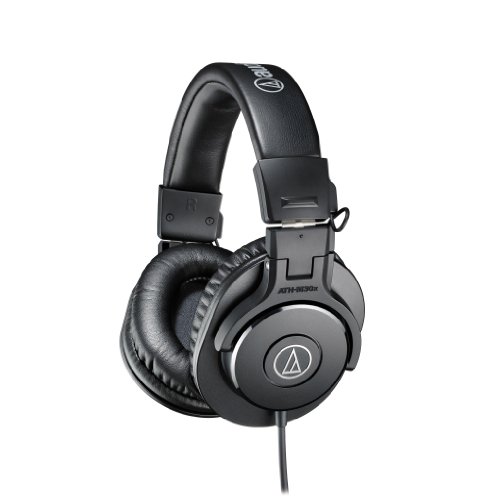
Audio-Technica ATH-M30x Studio Monitor Headphones

Sony MDR7506 Professional Headphones

Barks Classroom Headphones 10-Pack (Mixed Colors)

Barks Classroom Headphones with Microphone 10-Pack (Black)

Barks Classroom Headphones with Microphone 12-Pack (Black)
More Details On Our Top Picks
The Wentronic Y03 lands in the sweet spot where most people actually live: a noisy commute, a shared apartment, or a back-to-back Zoom day. Active Noise Cancellation (ANC) is the headline feature here, and unlike basic passive isolation that just relies on a tight seal, ANC actively listens to the outside world and generates an inverse sound wave to cancel low-frequency rumble before it reaches your ears. The soft ear cushions add passive isolation on top, so the combination works well on buses and in open-plan offices.
The 48-hour battery claim is the part that earns this pick its everyday-driver status. Even if real-world numbers fall short of that ceiling, you can usually stretch a week of mixed use between charges. Bluetooth keeps things cable-free, while the 6 EQ modes let you nudge the sound toward your taste without diving into a phone app. For most commuters and students, the honest read is that this hits the comfort and stamina balance without overreaching on price.
The Helpful Details
- 48-hour rated battery keeps charging anxiety low on long weeks
- Soft ear cushions reduce clamp pressure for all-day comfort
- Six EQ presets add versatility across music, podcasts, and calls
- Over-ear fit naturally seals out more ambient noise
Things To Consider
- Build leans toward plastic, so rough backpack handling can show wear over time
- ANC effectiveness varies with environment, and very high-frequency sounds still slip through
Key Specs
Best Suited To
Commuters, students, and remote workers who want wireless ANC without paying flagship prices.
Skip It When
The TAGRY Hybrid ANC Headphones suit you better when marathon 120-hour battery life matters most for frequent travelers.
The TAGRY A18 takes everything the Wentronic Y03 starts and pushes it further on endurance. The 120-hour battery rating is the standout spec, and for someone who forgets to charge or who flies long-haul regularly, that’s a meaningful upgrade. Hybrid ANC uses both feedforward and feedback microphones (essentially mics on the outside and inside of each earcup) to catch a wider range of frequencies than single-mic systems, which is why the spec sheet claims up to 45dB of noise reduction.
Bluetooth 6.0 brings a more stable wireless connection than older versions, which helps when you’re walking through crowded airports or switching between laptop and phone. The 6 ENC (Environmental Noise Cancellation) mics focus on the caller’s voice during phone calls, filtering out background chatter. Memory foam earcups, a transparency mode that pipes in outside sound for safety, and Hi-Res Audio support round out a thoughtful package for frequent travelers.
Practical Pluses
- 120-hour battery is rare at this tier and ideal for trips without easy charging
- Hybrid ANC tackles a wider range of frequencies than single-mic designs
- Memory foam earcups adapt to head shape for extended comfort
- Transparency mode helps with street awareness without removing the headphones
Worth Noting
- Larger battery capacity adds a touch of weight compared to slimmer models
- Hi-Res Audio playback requires a compatible source device and file format
- More features mean more buttons to learn on first use
Whose Travel Bag It Belongs In
Frequent flyers, digital commuters, and anyone who values battery longevity over compact size will appreciate this one.
Look Elsewhere When
The Wentronic Y03 fits better when you want ANC at a simpler, lighter form factor for daily local use rather than transcontinental trips.
The shift from personal audio to shared audio changes the rules. School headphones need to survive being dropped, yanked by cables, and shared between students with very different head sizes. The Barks 10-pack answers that reality by bundling ten wired headsets with boom microphones in mixed colors, which doubles as a free labeling system. Teachers can assign each student a color and stop hunting for “their” pair at the end of class.
The 3.5mm wired connection plugs straight into Chromebooks, desktops, and tablets without pairing hassles, and the integrated microphone handles reading activities, language learning, and standardized testing. These are on-ear rather than over-ear, meaning they rest against the ear rather than enclosing it, which keeps them cooler for younger students during long days. The mixed color coding is genuinely useful in classrooms where headphones vanish into backpacks and never come back out.
Noteworthy Benefits
- Ten-headphone bundle lowers per-unit cost for tight classroom budgets
- Mixed colors simplify student identification and tracking
- Wired 3.5mm avoids Bluetooth pairing issues with school devices
- Boom microphone supports reading, recording, and testing workflows
Trade Offs
- On-ear design can feel clamp-heavy on smaller heads during long sessions
- Wired setup means cable tangles are a daily reality in shared use
Built With In Mind
K-12 teachers, language instructors, and computer lab coordinators who need to deploy a full class set on a budget.
Swap It Out When
The Barks 12-pack with Microphone in Black suits a single-color uniform look better when you prefer consistency over color sorting.
The Audio-Technica ATH-M50x has been a default recommendation in home recording for over a decade, and bundling it with the Slappa HardBody case turns it into a more travel-ready package. The M50x uses 45mm dynamic drivers (the parts that actually move air to make sound) tuned with a slight bass emphasis that appeals to casual listeners while still revealing enough detail for production work. Where it sits between the M30x and M40x is roughly here: punchy enough to enjoy, accurate enough to mix on for many genres.
What the Slappa case adds is real protection during transport. Studio headphones don’t survive well in backpacks alongside laptops and notebooks, and a crushed ear cup can permanently deform the driver alignment. For bedroom producers, podcasters, and traveling engineers, the bundle solves a problem most people don’t think about until something breaks.
Everyday Perks
- ATH-M50x drivers deliver detailed, slightly warm sound for mixing and pleasure
- Slappa HardBody case shields against backpack pressure and drops
- Swiveling earcups support single-ear monitoring during recording sessions
- Detachable cable design extends the lifespan of the most-worn part
A Few Limitations
- Wired-only design lacks Bluetooth convenience for casual listening
- Slightly bass-forward tuning may color mixing decisions for purists
Key Specs
The Right Fit
Bedroom producers, podcast editors, and creators who need studio-grade sound plus protection from daily transport.
Consider Something Else When
The Audio-Technica ATH-M40x fits better when flat, reference-tuned monitoring matters more than a protective travel case.
The ATH-M40x sits in the middle of Audio-Technica’s M-series lineup, and that middle position has real practical meaning. It uses the same 40mm dynamic drivers as the M30x but with a flat, reference-tuned response designed for accurate monitoring rather than flattering playback. Translation: what you hear during mixing is closer to what the recording actually sounds like, which means fewer surprises when your track plays on other systems.
The 90-degree swiveling earcups are the second-generation design update, useful for one-ear cueing during vocal tracking and DJ work. Pro-grade earpads and headband materials hold up to daily studio use, and detachable cables reduce the chance of a cable failure turning into a full replacement. Compared to the warmer M50x, this is the more honest, less colored option.
Useful Touches
- Flat tuning supports accurate mixing decisions across genres
- Swiveling earcups allow flexible single-ear monitoring
- Detachable cables extend the practical lifespan
- Pro-grade materials handle daily studio wear
Points To Note
- Flat tuning can feel less exciting for casual music listening
- Wired-only format requires an adapter for newer phones without headphone jacks
Made For
Home studio engineers, mixing students, and content creators who value accuracy over color.
Reach For A Different Pick When
The Audio-Technica ATH-M50x bundle suits you better when you want a slightly warmer sound plus a protective travel case for mobile creators.
Stepping into Audio-Technica’s M-series usually starts with the M30x, and that’s not a coincidence. The 40mm drivers with rare earth magnets (a stronger, more compact magnet type than older ceramic designs) deliver clear mid-range definition that helps beginners hear the details of a mix. It’s tuned for enhanced detail rather than flat reference, which makes it more enjoyable for casual listening than pure studio work.
The circumaural design contours around the ears for sound isolation in noisier rooms, which helps when you’re recording in untreated bedrooms or apartments. Single-side cable exit means less cable tangle during long sessions, and the collapsible fold makes storage in a drawer or backpack more practical. For someone buying their first pair of “real” headphones, the M30x covers the basics without overcomplicating things.
Notable Upsides
- 40mm drivers with rare earth magnets deliver strong detail at the entry level
- Circumaural design reduces sound leakage in shared spaces
- Single-side cable exit simplifies setup and storage
- Collapsible build saves space in small rooms
Worth Bearing In Mind
- Non-detachable cable limits long-term repair options
- Enhanced tuning adds slight coloration that won’t suit strict monitoring work
Quick Facts
Perfect Match For
First-time studio buyers, music students, and casual listeners ready to upgrade from bundled earbuds.
A Better Fit Elsewhere
The Audio-Technica ATH-M40x suits better when flat, reference-tuned monitoring matters more than casual musicality.
The Sony MDR7506 has earned a permanent seat in radio stations, recording studios, and field production kits for years. Neodymium magnets paired with 40mm drivers deliver sound that’s detailed without being harsh, which is why engineers reach for them during long editing sessions where fatiguing headphones become a liability. The closed-ear design also provides solid isolation for tracking in shared rooms.
The 9.8-foot non-detachable cable is the trade-off most people notice. It’s long enough to stretch across a studio from a rack-mounted interface, but a fixed cable means the most common failure point can’t be replaced. The gold-plated plug resists corrosion, and the included 1/4-inch adapter covers both consumer and pro gear. Folding hinges help with travel between gigs, though they don’t lock.
Real Benefits
- Neodymium-powered 40mm drivers deliver detailed, fatigue-resistant sound
- Closed-ear design isolates sound in recording and broadcast environments
- 9.8-foot cable reaches rack-mounted gear without an extension
- Gold-plated plug and included 1/4-inch adapter cover most setups
Honest Caveats
- Non-detachable cable reduces long-term repair options
- Folding hinges don’t lock, so they can swing loose during transport
Who It Suits Best
Studio engineers, podcast producers, and field recordists who value reliability over modern conveniences like Bluetooth.
Where Another Pick Suits Better
The Audio-Technica ATH-M50x with Slappa case fits better when you want a detachable cable and a protective travel bundle.
The microphone-less version of the Barks 10-pack makes sense when listening-only activities dominate the day. Listening centers, library stations, and quiet reading apps rarely need voice capture, and dropping the boom mic simplifies the design for younger students who sometimes get tangled in extra parts. The wired 3.5mm plug-and-play approach removes Bluetooth pairing from a teacher’s daily troubleshooting list.
Mixed colors still serve the same organizational role as the mic version, helping teachers sort groups and distribute sets quickly. On-ear fit keeps weight down for smaller heads, though the trade-off is reduced passive isolation compared to over-ear designs. For classrooms where audio is mostly one-directional, this 10-pack covers the essentials without the extra cost of a microphone.
Points In Its Favor
- Ten-pack pricing lowers the per-unit cost for budget-conscious schools
- Color coding simplifies group sorting and inventory management
- Wired 3.5mm design avoids pairing and battery issues
- Lightweight on-ear fit suits younger students better than bulkier options
Things To Weigh
- No microphone means these won’t work for speaking or testing activities
- On-ear design can feel less cushioned during all-day listening sessions
The Right Fit
Listening centers, library stations, and elementary classrooms focused on one-directional audio activities.
Not Your Match When
The Barks 10-pack with Microphone fits better when standardized testing or language recording is part of the daily routine.
Standardized testing days turn a classroom’s audio setup into critical infrastructure. Reading aloud, recording responses, and listening to test prompts all need a working microphone on every student desk. The Barks 10-pack in a uniform finish puts a boom mic on each set, with a rotating design that flips out of the way when not needed, which helps younger students avoid breaking the part that sticks out the most.
The uniform black color scheme suits schools that prefer a consistent, professional look across their equipment. Like the other Barks sets, the 3.5mm wired connection drops into Chromebooks and tablets without setup. For schools administering state tests or running language labs where every student records daily, this set covers the core requirement at a sensible bundle price.
Bright Spots
- Boom microphone supports recording, testing, and language activities
- Uniform black finish suits schools preferring a standard look
- Wired 3.5mm design removes pairing problems from test days
- Rotating mic arm reduces breakage risk during storage
Soft Spots
- On-ear design can feel tight during long test sessions
- Ten-pack sizing may not match smaller class rosters exactly
Who Should Grab It
Schools running standardized testing, language labs, and computer classrooms that need every student to record audio reliably.
Swap It Out When
The Barks 12-pack with Microphone fits better when your classroom size runs larger or you want color-coding instead of uniform black.
Sometimes you need more than ten. The 12-pack version covers larger class sizes, lab rotations, or two classrooms sharing a budget, with all the same features as the smaller black set. The inline microphone design keeps the build simpler than a boom arm, and the tangle-free cable construction (reinforced at stress points where students typically yank) reduces the daily wear that ends most classroom headsets early.
The on-ear fit is consistent with the other Barks sets, meaning younger students may find the clamp pressure noticeable during full school days. Wired 3.5mm keeps things simple across mixed device fleets. For schools stocking up before a semester or replacing aging inventory, the 12-pack pricing often makes more sense per unit than buying smaller bundles twice.
Features That Help
- Twelve-pack size matches larger classrooms or shared school budgets
- Reinforced cable construction helps survive daily student handling
- Inline microphone supports basic recording and voice prompts
- Bulk pricing lowers the long-term replacement cost per seat
Where It Is Less Suited
- Inline microphone picks up more ambient sound than a boom arm
- Larger bundle means more storage space needed when not in use
Feature Snapshot
Right Fit For
Larger K-12 classrooms, computer labs, and schools replacing inventory in bulk at the start of a semester.
Not Your Match When
The Barks 10-pack with Microphone in Mixed Colors fits better when you need fewer units and want color-coded organization for smaller groups.
What To Weigh Before Choosing Budget Audio Headphones
Form Factor Drives Daily Comfort
The difference between over-ear, on-ear, and in-ear designs isn’t cosmetic. Over-ear headphones (also called circumaural) enclose the ear completely, which improves passive noise isolation but adds weight. On-ear designs rest against the ear, lighter for long days but less isolating. For students and shared scenarios, on-ear is often more practical. For studio work or noisy commutes, over-ear is usually worth the extra bulk.
Wired vs. Wireless Changes Daily Habits
Wireless freedom is genuinely convenient, but it adds battery management to your routine. Wired headphones plug in and work indefinitely, which matters in classrooms and recording studios where reliability trumps convenience. For commuters and travelers, Bluetooth cuts cable tangles at the cost of remembering to charge. ANC (active noise cancellation) is only meaningful on wireless pairs in this list, since wired options rely entirely on passive isolation.
Driver Size and Tuning Shape the Sound
Driver size, measured in millimeters, indicates how much air the headphone can push. Larger drivers (40mm and above) tend to deliver fuller bass and broader frequency response. Tuning matters as much as size: a flat or reference-tuned headphone reveals audio honestly for mixing, while enhanced tuning adds flavor for casual listening. Beginners often prefer enhanced tuning; professionals usually reach for flat.
Use Case Should Drive the Pick
A pair of budget audio headphones for a daily commute looks different from one for a recording studio. Match the build to the activity: durable cables and color coding for schools, long battery and ANC for travel, flat tuning and swiveling cups for production. Buying the right tool for the actual scenario saves money long-term and avoids frustration during daily use.
Picking The Right Pair Without Second-Guessing
Mistakes Worth Dodging
The most common slip-up is choosing wireless headphones with ANC and then never charging them, defeating the noise-cancelling feature entirely. Another is buying over-ear headphones for a young child whose ears and head aren’t large enough to support the fit, leading to discomfort and constant removal. The third is grabbing “studio” headphones without checking whether they’re tuned flat, which matters for production but flatters casual music listening. Match the spec sheet to the actual use case rather than the marketing language.
Where The Extra Money Goes
Higher-tier models in this category earn their cost through longer warranties, more durable headbands, replaceable cables, and more accurate driver matching. For studio use, that accuracy matters because mixing decisions made on colored headphones don’t translate to other systems. For casual listeners, the upgrade is more about comfort and longevity than sound quality. Spend up when the use case is daily and professional; save when the headphones will see light or occasional use.


