

A reliable charger keeps your 18650 cells healthy, your flashlights bright, and your vape mods firing when you need them most. The trouble is that the category looks like alphabet soup, with chemistry names, slot counts, and current ratings that can bury a casual shopper. This guide sorts through ten solid chargers that handle 18650 batteries alongside related sizes, so you can match a pick to the way you charge.
The Lineup, Simplified
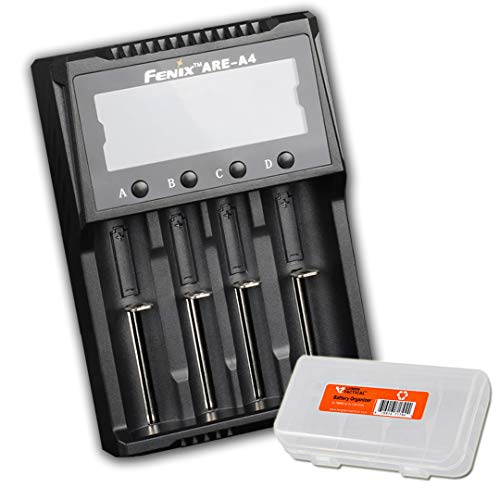
Fenix ARE-A4 Multifunctional Smart Charger (18650, 21700, 16340)

EdisonBright Fenix ARE-A2 Home and In-Car Charger Bundle

EdisonBright Fenix ARE-D1 USB Smart Charger with Carry Case
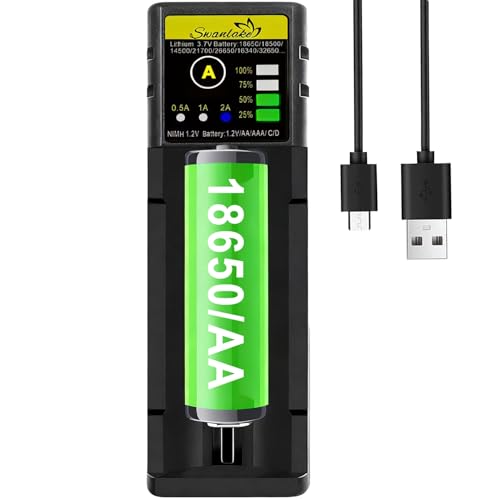
Swanlake Universal 18650 Charger (Fast 2A Mode)

SUNLYTOUR 4-Slot 21700 and 18650 Charger with PCB Board

MC-ELIN 2-Slot Universal Charger with USB-C (White)

EdisonBright Fenix ARE-A2 Smart Charger with BBX5 Case

Nitecore UMS4 4-Port USB Smart Charger with LifeMods Case

Nitecore UMS4 Intelligent Charger with QC3.0 Adapter

Nitecore UI1 Single-Slot USB Charger with Organizer
The Fenix ARE-A4 anchors this list because it handles four cells at once and recognizes each one on its own, which matters when you have a flashlight cell next to a pair of AA rechargeables. Its LCD readout shows charging progress per bay, so a glance tells you which slot is full and which still needs time. For households running several flashlights, headlamps, and a few household cells, the four independent channels save you from playing musical chairs with a single-slot charger.
Setup is dead simple: plug in the AC cable, drop in your cells, and the unit selects the right current for the chemistry. Owners commonly appreciate that the springs accommodate protected 18650s without forcing you to remove button tops.
Well-Handled Touches
- Four independently monitored bays let you mix chemistries and sizes in one session
- Automatic current adjustment protects smaller Ni-MH cells from a too-aggressive feed
- Clear LCD display replaces vague LED guessing with per-bay progress
- Sliding contact rails fit longer protected 18650s and 21700s comfortably
Things To Consider
- The brick is a bit larger than pocketable, so it lives on a desk rather than a bag
- You won’t get blazing fast charging on every slot at once, since total current is shared
Quick Facts
Right Fit For
Households or hobbyists who rotate several cell types and want one dependable hub to keep everything topped up.
Consider Something Else When
The Nitecore UI1 makes more sense if you only carry a single cell at a time and prize pocket-friendly portability.
This bundle stands out because it ships with both an AC adapter and a 12V car cable, so the same charger handles your workbench and your dashboard. The EdisonBright Fenix ARE-A2 core unit recognizes a wide spread of sizes, from 10440 to 26650, plus Ni-MH AAs and AAAs, which keeps the bundle flexible for camping or overlanding trips. Compared with the four-bay ARE-A4, it leans smaller and cheaper, trading slots for mobility.
The included BBX5 carry case gives loose cells a safe home during travel, which is a real benefit if you have tossed 18650s in a backpack before and worried about short circuits against keys or coins.
The Helpful Details
- Two-way power: AC at home, 12V in the car from the same unit
- Broad chemistry support covers Li-ion and Ni-MH in one chassis
- BBX5 carry case keeps cells organized and protected on the road
- LCD feedback per bay removes guesswork during longer drives
Worth Noting
- Only two bays means larger cell rotations take multiple sessions
- The bundle costs more than a standalone unit, so light travelers may not need the extras
Best Suited To
Campers, overlanders, and weekend road-trippers who want one charger that follows them from outlet to cigarette lighter.
Look Elsewhere When
The Swanlake Universal 18650 Charger fits better if you stay plugged into AC and want adjustable current up to 2A.
The ARE-D1 is the friend you toss in a jacket pocket, since it draws power from any USB port and weighs very little. A single 18650 charges through a USB cable, which means a laptop, a power bank, or a car adapter will do the work. That single-bay limitation is the trade-off you accept in exchange for the small footprint, and for daily top-ups of one flashlight cell, the math works out fine.
The EdisonBright BBX5 carry case again shows up here, which is useful if you want a small, tidy kit rather than loose cells floating around.
Reasons It Performs
- USB input removes dependence on a wall outlet, freeing you to charge from a power bank
- Wide chemistry range includes 26650 down to 10440 plus Ni-MH AAs
- Compact body slips into a glove box or laptop sleeve without fuss
- BBX5 carry case gives you a travel-ready storage solution
Trade Offs
- Only one bay means high-volume users rotate cells manually
- Charging speed depends on the USB source you plug it into
Feature Snapshot
Perfect Match For
Minimalists who carry a single flashlight or vape mod and want to charge from any USB source.
Not Your Match When
The SUNLYTOUR 4-Slot Charger makes more sense if your routine involves topping up four or more cells at once.
The Swanlake unit earns a spot here because it lets you choose between 500mA, 1A, and 2A charging currents, which is more flexibility than most chargers in this price bracket offer. Smaller cells such as 14500s prefer a gentle 500mA feed, while a depleted 26650 appreciates the full 2A option. The LCD indicator reporting 25%, 50%, 75%, and 100% capacity gives you a rough estimate without needing a separate multimeter.
Where the ARE-D1 sticks to USB only, this Swanlake leans on a wall adapter, so it’s a better fit for a garage or workbench than a coat pocket.
Real-World Strengths
- Three selectable current modes protect small cells and feed big ones quickly
- LCD percentage readout gives a useful progress snapshot at a glance
- Supports a broad list of Li-ion sizes alongside AA and AAA Ni-MH cells
- Auto shut-off when full reduces worry about leaving cells in overnight
Minor Gripes
- Buttons sit close to the bays, so nudging a cell can accidentally press them
- Not as pocketable as a USB-only unit for travel
Built With In Mind
Mixed chemistry households that want flexible current control without paying for a high-end four-bay unit.
Reach For A Different Pick When
The Fenix ARE-A2 bundle fits better if you want both wall and car charging from the same compact unit.
The SUNLYTOUR focuses on bigger Li-ion cells, including 21700, 22700, and 26700, which makes it a good match for the larger flashlights and high-drain mods that have grown popular. Four bays give you the capacity of the Fenix ARE-A4 with a stronger emphasis on newer cell formats. Owners commonly appreciate the integrated PCB protection board, which acts as an extra safety net against shorts and reverse polarity mistakes.
One important rule applies here, and the manufacturer calls it out clearly: Ni-MH cells more than two or three years old should be retired, and you should unplug the unit once charging finishes, since Ni-MH behavior over time can drift.
What Stands Out
- Four-bay design supports larger 21700, 22700, and 26700 cells comfortably
- PCB protection board adds a defensive layer against reversed or faulty cells
- Wide compatibility includes 20700, 22650, and 16340 RCR123
- Useful for power-station owners who cycle many cells each week
Room For Improvement
- Will not charge CR123, CR123A, or 1.5V Li-ion cells, which catches some newcomers off guard
- Ni-MH cells older than a couple of years should not be charged, limiting use for some households
- Damaged cells with broken wrappers or plates should not be inserted
Who It Suits Best
Workshop users and gear-heavy hobbyists who rotate several modern high-capacity cells and want four bays.
Swap It Out When
The Fenix ARE-A4 makes more sense if you want a clear LCD readout with per-bay voltage instead of basic status lights.
The MC-ELIN keeps things tidy with a two-slot body and a USB-C input, so you can charge from the same cable that feeds your phone or laptop. It supports a healthy list of Li-ion sizes, including 10440, 14500, 16340, RCR123A, and 26650, plus standard AA and AAA cells, making it useful for a household where one person uses a vape and another runs a headlamp.
The unit’s safety circuitry stops the charge when full, which is a comfort feature for anyone who has left a charger running overnight and worried about overcooking a cell.
The Upside
- USB-C input is the modern cable you already own
- Broad Li-ion and Ni-MH compatibility covers most household cells
- Auto stop at full charge protects cells from overcharging
- Slim two-slot form factor fits a desk drawer without dominating it
Softer Spots
- Should never be used with both AC and car power at the same time
- Will not charge primary cells like alkaline or CR123A, so double-check before inserting
- Wet environments should be avoided since the unit is not sealed against moisture
Right Fit For
Laptop-bag commuters and casual users who want modern USB-C convenience and two slots for a partner’s cell too.
A Better Fit Elsewhere
The EdisonBright Fenix ARE-D1 USB Smart Charger fits better if you want a battery carry case included for travel.
Compared with its sibling bundle that adds a 12V cable, this version of the EdisonBright Fenix ARE-A2 keeps the focus tight: the charger, the BBX5 carry case, and a single AC wall adapter. Two bays give you just enough room to charge a pair of 18650s overnight, which covers most flashlight users and many vape owners. Owners commonly appreciate the layered protections, including short-circuit, over-current, over-voltage, and reverse-polarity guards built into the unit.
The LCD screen display takes the mystery away from charging, showing voltage and progress without needing a separate tester.
Real Benefits
- Short-circuit, over-current, over-voltage, and reverse-polarity protections cover common mistakes
- Two bays handle most household needs without becoming a brick on the counter
- BBX5 carry case keeps cells together and prevents contact with loose metal
- LCD readout removes the guessing game from older LED-only chargers
Honest Caveats
- Doesn’t include a 12V car cable, so the road-trip bundle makes more sense for travelers
- Charging two larger 26650 cells at once takes patience, since total current is shared
Spec Overview
Best Suited To
Couples or roommates sharing a charger for one or two cells at a time, with safety as a top priority.
Skip It When
The SUNLYTOUR 4-Slot Charger fits better if you have a deeper rotation of 21700 and 20700 cells.
The Nitecore UMS4 is the speed play in this lineup. With Quick Charge 2.0 support, a single bay can deliver up to 3000mA, which is genuinely fast for a Li-ion cell that can accept that rate. Four bays and a USB input keep the unit portable enough to pack for travel while still handling a chunky cell rotation at home. The LifeMods battery case tucks in alongside, giving you a tidy travel kit.
This is the charger you reach for when four dead 18650s show up at once and you need them back in service before dinner.
Strengths Worth Knowing
- Up to 3000mA per bay delivers quick turnaround for high-capacity Li-ion cells
- Four independent bays let you mix sizes and chemistries in a single session
- USB input means you can pair it with a QC 2.0 wall adapter or power bank
- Automatic voltage and current detection protects smaller cells from overcurrent
Points To Keep In Mind
- Quick charging demands a QC-capable USB source, which may not be in the box
- Older Ni-MH cells over two or three years of age should be retired before charging
- Cells with damaged wrappers or plates should not be inserted, regardless of chemistry
Core Details
Whose Shelf It Belongs On
Power users and flashaholics with multiple torches or mods who want four bays and quick turnaround.
Another Choice May Suit
The Swanlake Universal 18650 Charger fits better if you want selectable current modes without needing QC power.
This version of the Nitecore UMS4 ships with a LumenTac QC3.0 wall adapter, which solves a common gripe with quick-charge chargers: the wall brick isn’t always included. With QC3.0 feeding the unit, a single slot can hit a 3000mA peak, and the four slots reach 2000mA combined using a 2A source. The LCD reports battery health, status, and charging mode, which gives you a window into each cell rather than a single blinking LED.
For daily top-ups, the bundled adapter saves a separate purchase and makes this one of the more turnkey entries on the list.
Useful Touches
- Bundled QC3.0 adapter means you can charge at top speed right out of the box
- LCD readout reports per-cell health and charging mode, not just on or off
- Automatic current and voltage selection protects small and large cells alike
- Compatible with Li-ion, Ni-MH, Ni-Cd, and IMR chemistries
Practical Considerations
- Total draw can hit limits on smaller USB power banks, so check your source
- Bulkier form factor than single-bay chargers, which matters for tight carry setups
Who Should Grab It
Daily users with multiple cells in rotation who want fast charging plus a complete kit from day one.
Not Your Match When
The Nitecore UI1 makes more sense if you only carry a single cell and want the smallest possible charger.
The Nitecore UI1 is the smallest member of this list, and it leans into that role without apology. A single bay, a USB input, and an 800mA peak current make it the kind of charger that disappears into a side pocket of a backpack. The included organizer case keeps the cell and cable tidy, so you are not fishing for a loose 18650 at the bottom of your bag.
It covers 18650, 18350, 20700, 21700, 16340, and 14500, which is enough for the common Li-ion formats most travelers carry. Power indicator lights give you a quick read on charge level without an LCD screen.
What It Does Well
- Single-bay USB design keeps the body tiny enough for EDC kits
- Works with solar panels, adapters, and power banks for off-grid charging
- Multiple safeguards guard against reverse polarity and overcharging
- Organizer case holds the cell and cable in one neat package
A Few Limitations
- 800mA peak current is slower than multi-amp four-bay competitors
- One bay at a time, which won’t help users with larger cell rotations
Technical Highlights
Who Will Love This
Minimalist EDC users and one-cell-at-a-time travelers who value pocket-friendliness above all else.
Where A Sibling Pick Shines
The Fenix ARE-A4 fits better if you stay home and want four bays with detailed LCD feedback per cell.
Matching a Charger to Your Charging Habits
Picking a charger comes down to three honest questions: how many cells do you cycle, where do you charge, and what cell formats matter most. The slot count is the headline number, since a single-bay unit forces you to babysit each cell, while a four-bay unit lets you rotate a working set. The chemistry coverage matters as much, since some chargers refuse Ni-MH AA cells and others will not touch 21700. The power input decides where the charger can live, with USB options opening up laptop bags and car trips while wall-only units stay tethered to a kitchen counter.
Bay Count and Charging Speed
Two bays cover most couples and solo users with two working cells. Four bays unlock faster batch turnarounds and let you keep a “ready” set while another set charges. Charging current, measured in mA, sets how quickly each cell fills, with 2A being a strong setting for large Li-ion cells and 500mA being kinder to small 14500s. A charger that lets you pick the current gives you room to treat small cells gently while still feeding big ones quickly.
Chemistry and Cell Format Coverage
Li-ion covers 18650, 21700, 20700, and similar rechargeable lithium cells, while Ni-MH covers standard household AA and AAA rechargeables. Some chargers also support LiFePO4, a safer lithium chemistry with a lower voltage profile. Before you buy, scan the supported list for every size you actually use, including 16340 RCR123 cells for smaller flashlights or laser sights. Chargers that explicitly mention IMR, ICR, and INR handle the protected and unprotected Li-ion variants that vapers and torch enthusiasts use.
Safety Protections and Build
Look for short-circuit, over-current, over-voltage, and reverse-polarity protections, since any of those conditions can shorten cell life or cause damage. A PCB protection board adds a hardware-level safety net that operates even if the charger’s firmware misreads a cell. Per-bay monitoring, ideally on an LCD, is the next level up from a blinking LED, and it helps when one cell is slow or failing.
Common Pitfalls Worth Sidestepping
Wrong Turns To Avoid
Buying a charger that supports only Li-ion while ignoring Ni-MH leaves your household AAs stranded, while grabbing the wrong voltage range can ruin sensitive LiFePO4 cells. Watch for chargers that advertise Li-ion but balk at protected 18650s, since the longer length can cause contact issues. Skip any unit that does not list over-voltage or reverse-polarity protection; those are the bare minimum safety nets.
What Separates Premium From Basic
A premium four-bay charger earns its keep with independent monitoring, faster peak currents, and intelligent current selection that protects small cells while filling big ones quickly. Bundled accessories like carry cases and QC wall adapters push you past the base configuration and save a second purchase. A clearer LCD with per-cell voltage and capacity data replaces vague LED indicators and helps you spot a tired cell before it strands you.
Frequently Asked Questions
Can a single unit charge both 18650 and AA batteries?
Yes, most chargers on this list support Li-ion sizes including 18650 plus Ni-MH AA and AAA, which is helpful for mixed households. Always check the supported chemistry list before adding cells, since some units refuse certain formats.
What does mA mean on a battery charger?
mA stands for milliamp, the unit that measures charging current. Higher mA numbers mean faster charging, while lower mA numbers are kinder to small or sensitive cells.
Is USB charging safe for 18650 cells?
USB-powered chargers are safe when paired with a stable power source, and many modern units include the same safeguards as wall-powered models. A high-quality USB cable and a reliable power adapter help avoid undervoltage or power dips during charging.
Can I leave 18650 batteries charging overnight?
Most modern chargers cut off when full, but it is wise to confirm auto shut-off before relying on overnight charging. Older or damaged cells can behave unpredictably, so periodic checks remain a sensible habit.
Do protected 18650s need a special charger?
Protected cells add a small circuit board that prevents over-discharge, and most quality chargers accept protected cells without issue. Sliding rails that accommodate longer cells help, since protected 18650s run a few millimeters longer than unprotected versions.
Wrap Up
The right charger comes down to your real routine, whether that is one flashlight cell on a USB cable or a four-bay rotation that needs to keep an entire kit humming. Match the bay count to your cell volume, the power input to your travel style, and the safety features to your peace of mind. Once those three line up, the choice usually makes itself.


