

Anyone who keeps a remote control, a game controller, a wall clock, or a camera flash running on AA and AAA cells eventually runs into the same wall: the batteries always die at the worst time. Disposable alkalines eat into your wallet fast, and they quietly leak when left in a drawer for months. NiMH rechargeables like eneloop solve both headaches, but only when paired with a charger that actually treats the cells right.
This list breaks down ten charger-and-battery kits and bundles built around the eneloop ecosystem. Some lean toward everyday household use, others push higher capacity for gear like camera flashes or handheld ham radios. Each pick gets a candid look at strengths, trade-offs, and the type of household it suits best, so you can match capacity to your real-world draw without overspending on power you will never tap.
The Lineup, Simplified

Eneloop K-KJ55MCA4BA Advanced Individual Battery 3-Hour Quick Charger (4 AA)

Panasonic BK-3MCCA8BA eneloop AA 2100 Cycle Ni-MH 8-Pack with Charger

Panasonic BK-3HCCA8BA eneloop pro AA High Capacity 8-Pack with Charger

Eneloop K-KJ55MC84CZ Power Pack with 8 AA and 4 AAA Cells
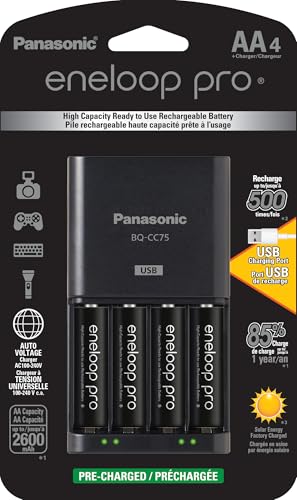
Panasonic K-KJ75KHC4BA USB Charger with 4 eneloop pro AA Cells

Eneloop K-KJ55MBS66A Power Pack with 6 AA and 6 AAA Cells

Panasonic K-KJ55KHC4BA 4-Hour Quick Charger with 4 eneloop pro AA

Eneloop Pro AA 12-Pack and 4-Hour Quick Charger with LED Indicators

Eneloop BQ-CC55 Charger with pro AA and pro AAA Cell Bundle

Panasonic K-KJ75K3A4BA USB Charger with 4 eneloop pro AAA Cells
The Picks, Examined More Closely
This kit has anchored the eneloop line for years, and it remains the gentlest on-ramp for anyone ditching disposables. The charger handles one to four AA or AAA NiMH cells independently, so a partly used cell can top up without dragging its neighbors along. The three-hour recharge window feels reasonable for overnight recovery on a kitchen counter.
You also get four pre-charged AA cells ready to drop straight into a remote or game controller. Setup is about as simple as it gets: plug the wall unit in, drop the cells, and walk away. Compared with the higher-capacity pro bundles later in this list, the regular eneloop AA chemistry trades raw power for more recharge cycles, which suits low-draw household gear.
Bright Spots
- Independent charging channels prevent partially drained cells from holding back fresh ones.
- Pre-charged AA cells ship ready for immediate use in remotes, clocks, and small electronics.
- Long cycle life means you can refill the same cells for years before performance dips.
- Compact plug-in design keeps the kitchen counter from turning into a cable farm.
Things To Consider
- AA cells deliver moderate capacity, so heavy flash and motorized toys may drain them quickly.
- Wall-plug form factor blocks the neighboring outlet on some power strips.
Made For
Households switching from disposables who mostly power remotes, clocks, and small game controllers.
Look Elsewhere When
Camera-flash shooters running high-drain gear should reach for the BK-3HCCA8BA eneloop pro bundle instead, since its cells hold more charge per AA.
This bundle answers a common frustration: you commit to rechargeables, then realize four cells are not nearly enough. You get eight AA cells rated at 2000 mAh typical and a charger that handles each cell on its own channel. The extra cells mean one set can stay in use while the other rotates through the charger.
Charging takes a few hours per cycle, which is fine for nightly top-ups. You keep roughly 70% of charge after a decade of storage, so a drawer stash stays useful long after you forget which remote grabbed them. It is the same chemistry as the first pick here, just doubled up for households with bigger appetite.
Benefits That Matter
- Eight pre-charged AA cells let you rotate two sets without ever hunting for spares.
- Independent charging slots handle one to four cells at a time, no all-or-nothing sessions.
- Long shelf life means backup cells still hold charge after months in a junk drawer.
- Lower cost per cell than smaller starter kits, once you spread the bundle out.
Worth Noting
- AA-only bundle leaves AAA devices like small remotes and styluses waiting.
- 2000 mAh capacity may feel modest for camera flashes and motorized toys that gulp current.
Right Fit For
Families running multiple AA devices at once who want a deep reserve without paying for pro-grade capacity.
Swap It Out When
Hobbyists shooting in bursts with a speedlite should pick the BK-3HCCA8BA eneloop pro bundle for its higher mAh per cell.
High-drain gear punishes ordinary rechargeables. Pro-grade AA cells step in here, rated at roughly 2500 mAh typical and tagged for up to 500 recharge cycles. You also get the K-KJ17KHCA4A four-position charger, which addresses each cell on its own and runs without memory effect, so topping off a half-used cell does not hurt long-term capacity.
Cells ship pre-charged from the factory using solar power, which is a small but nice detail. In a typical photo session, you may find the higher capacity translates to noticeably more flashes per charge than the standard eneloop AA. The trade-off is fewer total recharge cycles, since pro chemistry prioritizes capacity over longevity.
Points In Its Favor
- Higher mAh per AA keeps speedlites, radio transceivers, and motorized toys running longer per charge.
- No memory effect means partial top-ups do not slowly erode capacity over time.
- Pre-charged cells drop straight into gear on day one without a long first-charge pause.
- Operates down to roughly minus 4°F, which helps outdoor photographers in cold weather.
Trade Offs
- Lower cycle count than standard eneloop cells, so heavy daily charging will shorten lifespan sooner.
- Capacity drops to roughly 85% after one year of storage, so spares lose charge faster on the shelf.
Who It Suits Best
Photographers, ham radio operators, and anyone running gear that drains AAs quickly and needs stronger cells.
Where Another Pick Suits Better
Light-duty remote and clock owners get more cycles per dollar from the standard BK-3MCCA8BA eneloop AA bundle reviewed above.
Most households juggle both AA and AAA devices at the same time. This power pack clears that gap by bundling eight AA cells, four AAA cells, and the same three-hour quick charger from the starter kit. AA cells rate at 2000 mAh typical and AAA at 800 mAh typical, both pre-charged for immediate use.
Independent cell channels let you mix sizes in a single session, which is rare at this level. In a busy living room, you may find yourself topping off a TV remote AAA and a couple of game-controller AAs on the same tray. Compared with the AA-only kit reviewed earlier, the trade-off is fewer AA cells per dollar.
Features That Help
- Mixed cell counts cover both AA and AAA households in one purchase.
- Long cycle life keeps the same cells useful for years of regular refills.
- Pre-charged cells work in remote controls and game controllers straight from the box.
- Three-hour quick charger doubles as a backup for any standard NiMH cell you already own.
Minor Gripes
- Wall-plug charger can crowd out adjacent outlets on some power strips.
- Standard AA chemistry may run short in high-drain photo or RC toys.
Best Suited To
Households with both remote-controlled gadgets and game controllers sharing the same drawer.
Consider Something Else When
Speedlight shooters needing maximum mAh per AA should grab the BK-3HCCA8BA eneloop pro bundle for higher-capacity cells.
Travelers and remote workers know the pain of hunting for an open outlet with a bulky wall charger. The K-KJ75KHC4BA solves that with a USB input, so the unit runs off any laptop, power bank, or 12V car adapter with a USB port. The four included AA cells are eneloop pro chemistry rated at roughly 2600 mAh typical, geared toward high-drain gear.
Up to 500 recharge cycles per cell keep the long-term math comfortable. Charging speed depends on the USB source, and you may find that a weak laptop port stretches the cycle longer than the wall unit from the AA bundle reviewed earlier. The compact body also slips into a carry-on without complaint.
Practical Advantages
- USB input removes the need for a bulky wall brick on hotel desks or shared outlets.
- Pro-grade cells deliver stronger capacity per AA for flashes and motorized gadgets.
- Long cycle count means years of routine top-offs before capacity fades.
- Compact form factor fits a backpack pocket for camping or hotel travel.
Things To Weigh
- Charge time stretches when powered from a low-output USB port.
- AA-only kit leaves AAA devices like small remotes uncovered.
Whose Shelf It Belongs On
Travelers, RVers, and laptop-first professionals who top off gear on the road.
Not Your Match When
AAA-heavy households should grab the K-KJ75K3A4BA USB charger bundle reviewed later, since it ships with AAA pro cells instead.
This power pack splits the difference. Six AA and six AAA cells cover most household devices, and the included three-hour quick charger handles both sizes on independent channels. AA cells rate at 2000 mAh typical and AAA at 800 mAh typical, with the same long cycle life eneloop is known for.
For families running streaming remotes, small game controllers, and wireless keyboards, the six AAA cells tend to disappear first. The mixed reserve gives you breathing room during holiday visits when every drawer seems to need a fresh cell. Compared with the larger 8AA/4AAA pack reviewed above, the layout here skews slightly more toward smaller devices.
A Few Strong Suits
- Six of each size keeps small electronics and remotes covered without restocking.
- Independent channels charge mismatched cell types in a single pass.
- Long shelf life keeps spare cells usable after months in a drawer.
- Cells ship pre-charged, so you can skip the initial charge and jump into use.
Points To Note
- Standard chemistry may run short under sustained high-drain devices like RC cars.
- Wall-plug form factor still blocks a nearby outlet on crowded power strips.
Feature Snapshot
Who Should Grab It
Families running a mix of game controllers, streaming remotes, and wireless mice who want both sizes covered.
Reach For A Different Pick When
Photographers who mostly fire flashes should grab the BK-3HCCA8BA pro AA bundle for higher per-cell capacity.
The four-hour charge window on this kit may feel slower than the three-hour chargers reviewed earlier, and that is intentional. Slower charging at a gentler current is widely reported to extend overall cell life, especially for pro-grade chemistry. The four included AA cells are eneloop pro, rated for up to 500 recharge cycles.
The K-KJ55KHC4A charger uses independent channels, so you can top off one or two cells without filling all four bays. Cells ship pre-charged using solar power at the factory, which lines up with the broader eneloop sustainability story. In a household with steady but not frantic battery turnover, the slower pace is a quiet win.
Positive Points
- Gentler charging current tends to preserve long-term cell health compared with faster units.
- Pro-grade AA cells hold roughly 85% charge after one year of storage on the shelf.
- Independent channels charge uneven cell counts without dragging the others down.
- Pre-charged cells arrive ready for first-day use.
Honest Caveats
- Slower four-hour turnaround matters when the whole drawer needs a refill by morning.
- Four-cell reserve runs thin for households rotating multiple AA devices at once.
Built With In Mind
Long-term users who recharge routinely and want cells to last as many cycles as possible.
Skip It When
Larger households running six or more devices on rotation should grab the BQ-CC55 charger bundle reviewed later for a deeper reserve.
Twelve pro-grade AA cells at 2550 mAh typical put this pack near the top of the heap for sheer reserve. The four-hour quick charger includes individual LED indicators over each bay, so you can see at a glance which cell is full and which is still climbing. Cells are pre-charged at the factory and ready for immediate use.
You can also recharge cells whether they are fully drained or only partially used, since the chemistry has no memory effect. In a busy household or hobby workbench, that flexibility keeps rotation painless. The trade-off compared with the smaller 8-pack earlier is mostly bulk: you need somewhere to store twelve cells when not in rotation.
The Helpful Details
- Per-cell LED indicators show charging status at a glance without checking each bay.
- Twelve-cell reserve lets you rotate three sets without ever running dry.
- Pro chemistry handles high-drain flashes and motorized gear without sagging mid-use.
- Cells can be topped off at any state of charge without harming long-term capacity.
Possible Compromises
- Four-hour charge window feels long when refilling the full twelve-cell reserve.
- Bulk storage becomes a real consideration for small-space dwellers.
Feature Snapshot
Made For
Busy households and hobby labs where AA cells rotate constantly through multiple devices.
A Better Fit Elsewhere
AAA-heavy users should grab the BQ-CC55 bundle reviewed next for a mixed-size reserve with color-coded LED status.
The BQ-CC55 charger is the most information-rich unit in this list. Four separate color LEDs read each bay individually: green for roughly 80% or more, orange for 20 to 80%, red for 20% or less. That kind of feedback takes the guesswork out of mixing older and newer cells in the same session.
The bundle also ships with eight pro AA cells at 2500 mAh typical and eight pro AAA cells. You get full coverage for both common sizes from the higher-capacity eneloop pro chemistry, which holds 85% of charge after a year on the shelf. For users who like to know exactly where each cell stands, this is the kit to beat.
Notable Gains
- Color-coded LEDs turn charging status into a quick glance instead of a guess.
- Independent channels let you mix AA and AAA cells in the same session.
- Pro-grade cells in both AA and AAA give you high capacity across sizes.
- Up to 500 recharge cycles per cell supports heavy rotation.
Worth Bearing In Mind
- Premium bundle sits at the upper end of the price ladder in this category.
- Pro chemistry holds slightly less residual charge than standard eneloop after long storage.
Feature Snapshot
Perfect Match For
Detail-oriented users who want clear charging feedback and pro-grade capacity in AA and AAA.
Where A Sibling Pick Shines
Travelers should grab the K-KJ75KHC4BA USB charger bundle reviewed earlier for on-the-go charging from a power bank.
AAA cells often get treated as an afterthought, but streaming remotes, wireless mice, and digital thermometers draw them down surprisingly fast. This USB-powered charger ships with four eneloop pro AAA cells rated at 980 mAh typical, giving you roughly 500 recharge cycles per cell. The USB input means you can run it from any laptop or power bank.
Compared with the AA-focused USB bundle reviewed earlier, the trade-off is smaller cells for smaller devices. You may find this kit slots perfectly into a kitchen drawer next to the TV remotes, since the compact body hides behind a USB hub without complaint. For AAA-only households, the pro chemistry delivers noticeable runtime gains.
The Case For It
- USB input works from any laptop, power bank, or 12V car adapter on the road.
- Pro-grade AAA cells run longer per charge than standard eneloop AAA chemistry.
- Up to 500 recharge cycles per cell support long-term household rotation.
- Pre-charged cells arrive ready for immediate use in small remotes.
A Few Limitations
- Only four AAA cells in the box, so households running many small devices may need extras.
- Charge time stretches on weak USB sources like older laptop ports.
Feature Snapshot
Who Will Love This
Stream-remote and small-electronics households who mostly burn through AAA cells.
Consider Something Else When
Anyone needing both AA and AAA charging in one unit should reach for the BQ-CC55 bundle reviewed above instead.
Picking The Right Charger And Cell Mix For Your Home
Choosing the right setup starts with the devices you actually run. A home loaded with AA-only wall clocks and game controllers has different needs than one running camera flashes and wireless mice. Capacity is measured in mAh, or milliampere-hours: a higher mAh number means the cell can deliver more current over time, which translates directly to longer runtime before a recharge. For most remotes and clocks, 2000 mAh AA cells handle the job. For motorized toys and speedlites, jumping to pro cells around 2500 mAh avoids mid-session dropouts.
Next, weigh cell count and chemistry together. Standard eneloop AA cells offer more recharge cycles, around 2100, while pro cells cap closer to 500 cycles but give you higher capacity per cell. The math swings toward standard cells for low-draw household gear and toward pro cells for high-current demands. AAA cells follow the same pattern but at lower mAh figures, around 800 for standard and 980 for pro.
Charging speed and format matter more than people expect. Slower chargers around three to four hours tend to preserve cell life longer, while faster units shave time off overnight routines. USB-powered chargers free you from outlet crowding on travel days. Independent charging channels, where each cell gets its own slot, prevent a partly drained cell from slowing down the rest of the bay.
Finally, decide whether you need both AA and AAA in the same kit or can run two separate chargers. Mixed packs save drawer space and keep one wall outlet free, but they often split the cell count between sizes. Separate chargers let you tailor each side to your real rotation, which suits heavier users with predictable needs.
Key Considerations Across These Picks
Mistakes Worth Dodging
Buying the highest capacity cell you can find is tempting, but it does not always pay off. Pro chemistry costs you cycle life, so running pro cells in low-draw remotes burns through their lifespan without gaining meaningful runtime. Match chemistry to draw: standard for clocks and remotes, pro for flashes and motorized gear.
Another common slip is ignoring cell count. A four-cell bundle sounds fine until half the family needs AA cells at once. Estimate your peak demand during busy weekends and add a margin for spares stuck in forgotten devices. Charging format matters too. Buying a wall-only charger when your desk only has USB ports means the kit sits in a drawer instead of earning its keep.
Where The Extra Money Goes
The price jump between standard and pro bundles covers three things: higher mAh per cell, color-coded LED indicators on chargers like the BQ-CC55, and USB power inputs on travel-focused kits. For data-driven users who want to see charging progress at a glance, that LED feedback is worth real money.
Higher-tier chargers also tend to manage each cell independently with smarter cutoff circuits. In practice, that means older cells can charge alongside new ones without one bay dragging the others down. For households running a deep rotation of mixed-age cells, the upgrade pays back in longer overall battery health and fewer surprise dropouts during use.
Frequently Asked Questions
Can eneloop chargers charge non-eneloop NiMH batteries?
Most eneloop-branded chargers handle standard NiMH cells from other brands, since they all use the same chemistry. Charging times vary because capacity differs across manufacturers, and the charger simply runs until each cell hits its cutoff voltage.
Do rechargeable batteries lose charge when sitting unused?
Yes. Standard eneloop AA cells hold around 70% of their charge after ten years on the shelf, while pro cells hold around 85% after one year. Both are far better than older NiMH cells, but a quick top-off before long-stored spares is a sensible habit.
How long do eneloop batteries typically last?
Standard eneloop AA cells are rated for up to 2100 recharge cycles, and pro cells for up to 500 cycles. In real-world use, that translates to several years of regular household rotation before you notice a meaningful drop in capacity.
Is it safe to leave eneloop batteries in the charger after they finish charging?
Most modern eneloop chargers include a trickle or cutoff mode that prevents overcharging once cells reach full capacity. Leaving cells in for a few extra hours is generally fine, though unplugging the unit when done is the safer long-term habit.
Which is better for high-drain devices, standard or pro eneloop?
Pro eneloop cells deliver higher mAh per cell, which keeps flashes and motorized toys from dimming mid-use. Standard cells win on cycle count, so they make more sense in low-draw remotes and clocks where longevity matters more than peak capacity.
Closing Remarks
The right charger setup turns batteries from an annoying recurring cost into something you barely think about. Match the chemistry to your highest-drain device, choose a charger format that fits where you actually charge, and keep a sensible reserve of spares in the drawer. Once those pieces line up, the rest of the household runs quietly along on its own.


