

Choosing a charger for a lithium-ion battery isn’t like grabbing a universal wall adapter. The chemistry matters, the amp output matters, and getting either wrong can shorten the life of an expensive battery bank. Whether you’re topping off a powersport toy between weekends, running a solar storage wall at home, or keeping a marine rig ready for launch, the right charger takes the guesswork out of it. This list covers ten solid options across different use cases, from tiny 1A maintainers to heavy 80A workhorses, so you can match the hardware to the way you actually use your gear.
A Fast Comparison Of The Options

LiTime 12V 80A Lithium Battery Charger (AC-DC)
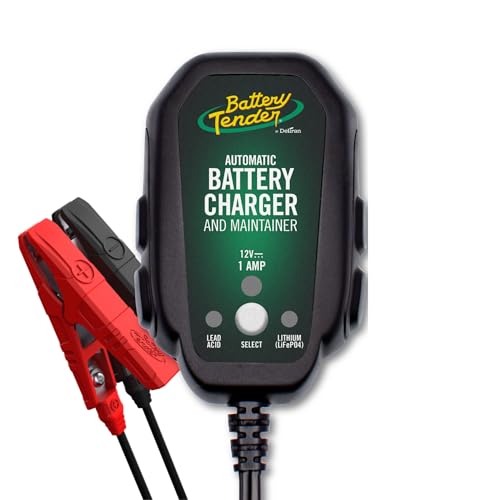
Battery Tender Junior 12V 800mA Charger & Maintainer

LiTime 12V 10A LiFePO4 Charger (0V Activation)

NOCO GENIUS1 1A 6V/12V Smart Charger

NOCO GENIUS10 10A 6V/12V Smart Charger

LiTime 12V 20A LiFePO4 Charger with 0V Activation

NOCO GENIUS5 5A 6V/12V Smart Charger

NOCO GENPRO10X1 12V 10A Marine Onboard Charger

FORM 24V 25A Charger for Lift Equipment

Porsche Battery Maintainer 958-044-901-71
More On The Choices That Made The List
Big battery banks demand serious current, and the LiTime 80A unit steps up to that job without ceremony. It targets 12V LiFePO4 packs specifically, pushing 80 amps into the cells, which translates to dramatically shorter refill times when you’re working with 200Ah or larger house banks. Compared to the much smaller Battery Tender Junior that follows, this is a different class of hardware entirely, more like a bench tool than a trickle maintainer.
You typically see this model in RV service bays, off-grid solar rooms, and backup power cabinets where downtime matters. It draws significant AC input, so the install location needs decent ventilation and a properly rated outlet. For residential solar or workshop use, the payoff shows up the first time you bring a deeply discharged pack back above 90% in a few hours rather than overnight.
Standout Benefits
- 80A output cuts charge times on large LiFePO4 banks
- AC-DC design means it runs off standard wall power
- Tailored charging profile protects LiFePO4 cell health
- Well suited for solar storage walls and RV house banks
- Fast turnaround when grid or generator time is limited
Things To Consider
- Not waterproof, so outdoor or marine mounting needs a protected enclosure
- Pulls meaningful AC current and benefits from a dedicated circuit
- Larger physical footprint than any 1A or 5A maintainer in this list
At A Glance
Made For
Off-grid solar homes, RV owners with large house banks, and anyone running a 200Ah+ LiFePO4 setup who values speed.
Consider Something Else When
The Battery Tender Junior fits better for someone maintaining small powersport batteries rather than fast-charging deep banks.
The Battery Tender Junior has earned its reputation by being almost impossible to misuse. The push-button chemistry switch lets you toggle between lead-acid (flooded, AGM, gel) and LiFePO4 lithium, which is genuinely useful if your garage holds a mix of bikes, lawn equipment, and a small lithium pack. At 800mA, it’s not built for fast charging. It’s built for keeping stored batteries happy.
In the real world, owners commonly leave this plugged in all winter on a motorcycle or classic car and come back to a topped-off battery. The 0.8A trickle is gentle on small packs and the smart circuitry backs off when the battery reaches full. For larger banks, the NOCO GENIUS10 further down this list will fill the role much faster.
Good Reasons To Consider
- Switchable between lead-acid and lithium chemistries with one button
- Long-term float mode protects batteries over months of storage
- Compact size stores easily in a shelf or toolbox
Worth Noting
- 800mA is too slow for banks above roughly 20Ah
- Not designed for fast turnaround, patience is required
Right Fit For
Powersport owners, classic car garages, and anyone topping off a small seasonal battery between uses.
A Better Fit Elsewhere
The NOCO GENIUS1 is a similar maintainer but with a slightly different design and a 1A output, worth a look if you want a comparable alternative in the same low-amp category.
The LiTime 10A charger is a workhorse in the small-to-mid LiFePO4 world. It pushes 10 amps at 14.6V into 12.8V lithium packs and includes 0V activation, which is genuinely useful when a battery has tripped its BMS and reads flat. The Anderson connector and LED indicator keep the install simple, and the profile is purpose-built for LiFePO4 chemistry rather than retrofitted from a lead-acid design.
You see this model most often in compact RV builds, single-battery off-grid cabinets, and home backup rigs where the bank runs 50 to 100Ah. It’s also a strong entry point for someone just converting from lead-acid. If your pack is bigger than 150Ah or you simply want faster refill times, the LiTime 20A in slot 6 doubles the current.
A Strong Showing
- LiFePO4-specific profile protects cycle life
- 0V activation recovers packs that have tripped BMS protection
- Anderson plug makes hookup tool-free on most LiFePO4 banks
- 10A is a sensible middle ground for 50 to 100Ah banks
Trade Offs
- Not waterproof, so it needs a sheltered install spot
- No NOCO-style desulfation mode, it’s chemistry-specific, not universal
Quick Facts
Who Will Love This
Anyone running a small RV, a single off-grid cabinet, or a 50 to 100Ah LiFePO4 home backup bank on a budget.
Look Elsewhere When
The LiTime 12V 20A model in slot 6 makes more sense if your bank is over 150Ah or you need a faster turnaround.
The NOCO GENIUS1 sits in the same general neighborhood as the Battery Tender Junior, but it pulls in a few extra features at a similar size. It handles 6V and 12V packs, works on lead-acid and LiFePO4, and includes a repair mode for sulfated batteries. At 1A, it’s another low-and-slow maintainer rather than a refueler, so the use case is similar to slot 2.
Owners tend to use the GENIUS1 on powersport batteries, classic cars in winter storage, and small standby systems. The NOCO lineup scales up cleanly, so if you outgrow the 1A version, the GENIUS5 and GENIUS10 later in this list cover the same chemistry with more current. The cable reach is on the shorter side, so longer extension leads are a common add-on.
Where It Helps
- Dual 6V/12V support covers older vehicles and modern bikes
- Compatible with lead-acid and LiFePO4 in one unit
- Repair mode targets sulfation in neglected lead-acid packs
- Tiny enough to live in a saddlebag or trunk
Points To Keep In Mind
- 1A output is too slow for batteries above roughly 30Ah
- Clamp and eyelet cables feel short for larger vehicles
Best Suited To
Garage tinkerers, motorcycle owners, and anyone wanting a versatile low-amp maintainer for mixed small batteries.
Swap It Out When
The NOCO GENIUS5 is the natural step up for slightly larger batteries, while the Battery Tender Junior suits a similar role with a different interface.
The GENIUS10 sits in the sweet spot of the NOCO lineup, ten times the power of the GENIUS1 in a still-portable form factor. It supports 6V and 12V batteries across flooded, gel, AGM, and LiFePO4 chemistries, and includes desulfation, temperature compensation, and a force mode for deeply discharged packs. In plain terms, it can both refill a battery and try to rescue one that has been neglected.
It’s the charger most often recommended for a car that’s been sitting, a deep-cycle trolling battery that won’t hold a charge, or a vintage truck with a finicky electrical system. The force mode is genuinely useful for batteries that have dropped below the normal activation threshold, though you should understand what you’re doing before engaging it. For purely lithium work, the LiTime 10A in slot 3 has a LiFePO4-tailored profile that some owners prefer.
What Works In Its Favor
- 10A output fills 50 to 100Ah banks in a few hours
- Desulfation can revive lightly sulfated lead-acid packs
- Temperature compensation adjusts voltage for hot or cold shops
- Force mode helps with deeply discharged batteries
- Works on both 6V and 12V systems
Honest Caveats
- Force mode is powerful and needs a basic understanding of battery state
- Some owners note the fan runs more often than smaller NOCO units
Feature Snapshot
Perfect Match For
Home mechanics and anyone who wants one charger that can refill, maintain, and attempt to recover older or neglected batteries.
Not Your Match When
The NOCO GENPRO10X1 makes more sense for permanently mounted marine installs, while the LiTime 10A suits dedicated LiFePO4-only setups.
Stepping up from the LiTime 10A, this 20A model doubles the current into the same 14.6V LiFePO4 target. It carries the same 0V activation feature, the same Anderson connector, and adds an LED status indicator plus six layers of safety protection. The result is a charger that feels purpose-built for the most common LiFePO4 scenarios: 100 to 200Ah house banks in RVs, sheds, and small home solar cabinets.
Compared to the heavy 80A LiTime at the top of this list, the 20A model is a more practical everyday choice. Most people don’t have 400Ah banks to refill in a hurry, and the 20A output already feels brisk. The six safety protections (over-voltage, over-current, short-circuit, and so on) are mostly peace of mind, but they matter in unattended settings like a remote solar shed.
What Earns Its Place
- 20A output strikes a balance between speed and household circuits
- 0V activation recovers packs tripped by their BMS
- Six safety protections suit unattended install locations
- Anderson connector streamlines LiFePO4 hookups
Possible Compromises
- Still not waterproof, so outdoor mounting needs a covered box
- Won’t refill very large banks as quickly as the 80A LiTime
Details At A Glance
Built With In Mind
Mid-size RV owners, off-grid solar users with 100 to 200Ah banks, and home backup setups that need a reliable daily charger.
Another Choice May Suit
The LiTime 12V 80A is the right move for genuinely large banks, while the NOCO GENIUS10 covers mixed chemistry fleets.
The GENIUS5 splits the difference between the tiny GENIUS1 and the workhorse GENIUS10. At 5A, it fills 30 to 60Ah batteries in a few hours, which covers most cars, lawn tractors, ATVs, and small marine starting banks. Like its siblings, it handles 6V and 12V systems across flooded, gel, AGM, and LiFePO4 chemistries, which makes it a sensible single-charger solution for a busy garage.
In daily use, owners commonly set it on a shelf, hook up whatever needs topping off, and let it run. The GENIUS5 lacks the GENIUS10’s force mode and aggressive desulfation, so for batteries that have been sitting dead for months, the larger NOCO is the better tool. For routine maintenance, the 5A output hits a nice middle ground.
Why It Works Well
- 5A output handles mid-size batteries without overkill
- Multi-chemistry support covers the typical home fleet
- Compact form factor stores on a workbench without taking over
Some Limits To Know
- No force mode for deeply discharged batteries like the GENIUS10
- 5A is slow for batteries above roughly 80Ah
Whose Shelf It Belongs On
Suburban homeowners with a car, a riding mower, and an ATV who want one charger for the whole mix.
Skip It When
The NOCO GENIUS10 suits larger vehicles and recovery tasks, while the NOCO GENIUS1 covers the smallest seasonal batteries.
Most chargers in this list warn you to keep them dry. The GENPRO10X1 is the exception, a fully sealed, waterproof onboard unit designed to live in a bilge, under a console, or anywhere on a boat that takes spray. It’s a 1-bank charger delivering 10A to a single 12V battery, and it supports lead-acid (flooded, AGM, gel) and LiFePO4 chemistries.
You mount it permanently, run the AC inlet to a shore-power receptacle, and forget it’s there. The sealed design also makes it a strong pick for outdoor sheds, food trucks, or any spot where moisture is part of life. For non-marine lithium-only banks, the LiTime 20A in slot 6 is faster, but it isn’t built for wet environments.
Bright Spots
- Waterproof sealed housing survives marine conditions
- 10A output refills typical trolling and house banks overnight
- Onboard design means permanent, clean install
- Supports both lead-acid and LiFePO4 chemistries
Where It Is Less Suited
- Single-bank design limits use on multi-battery systems
- Overkill for an indoor garage where the GENIUS10 is plenty
Built With In Mind
Boat owners, kayak anglers with trolling motors, and anyone mounting a charger in a wet or outdoor location.
Reach For A Different Pick When
The LiTime 20A in slot 6 makes more sense for indoor RV or solar use, while the NOCO GENIUS10 handles a broader mix of battery types in a portable form.
Everything else on this list targets 6V or 12V. The FORM 24V charger steps into a different world entirely, the world of scissor lifts, forklifts, electric pallet jacks, and floor scrubbers. It pushes 25A into a 24V pack, supports lead-acid, AGM, and lithium (including LiFePO4) batteries, and ships with ring terminals for a permanent install.
You find this model in warehouses, on construction sites, and in maintenance shops where a flat lift battery means lost work hours. The set-and-forget maintenance mode is genuinely useful for fleets that sit between jobs. If you don’t run 24V industrial equipment, this charger is wrong for you, but the NOCO GENIUS10 in slot 5 is the closest analog at 12V.
What Stands Out
- 24V output targets industrial and lift equipment
- Multi-chemistry support handles diverse fleet batteries
- Ring-terminal leads suit permanent equipment installs
- Maintenance mode keeps fleets topped off between shifts
Practical Considerations
- Highly specialized, not a fit for typical automotive use
- Heavier and bulkier than consumer-grade 12V chargers
Right Fit For
Warehouse crews, construction sites, and small shops running scissor lifts, forklifts, or pallet jacks on a 24V battery system.
Look Elsewhere When
Standard 12V garage duty calls for the NOCO GENIUS10, while a dedicated LiFePO4 house bank is better served by the LiTime 20A.
The Porsche Charge-o-mat Pro is a purpose-built maintainer for Porsche 12V batteries, and it’s the most niche pick on this list. It supports both Porsche 12V lead-acid and 12V lithium-ion (LiFePO4) packs, has two charging modes, and includes battery monitoring so a stored car wakes up to a healthy battery. At 5A, it’s a maintainer and a slow top-up, not a refueler.
Owners typically plug it in for the winter on 911, Boxster, Cayman, and Panamera models. Compatibility is specific, so it pays to check the model year before buying. For non-Porsche vehicles, the NOCO GENIUS5 in slot 7 covers a similar role across a much wider range of vehicles.
What Helps Most
- OEM-fit for Porsche 12V lead-acid and lithium batteries
- Built-in monitoring keeps stored cars topped off
- Two charging modes tailored to each chemistry
Worth Bearing In Mind
- Vehicle compatibility is specific, won’t fit other brands
- 5A output is for maintenance, not fast charging
Best Suited To
Garage-kept Porsche owners who store their cars over winter and want an OEM-matched maintainer.
Where A Sibling Pick Shines
The NOCO GENIUS5 does the same maintenance job across a much wider range of vehicles, and the Porsche-specific design becomes a non-issue for everyone else.
What To Weigh Before Picking A Lithium-Ion Charger
A lithium-ion battery, often a LiFePO4 cell in the consumer world, needs a charger that speaks its language. Standard lead-acid chargers push the wrong absorption voltage, which over time degrades lithium cells. The first thing to confirm is chemistry match. If the unit explicitly lists LiFePO4 or lithium-ion support, you’re starting on the right foot.
Output current is the second decision, and it should track your battery’s amp-hour rating. A common rule of thumb is to look for a charger that can refill the bank in roughly 4 to 8 hours. A 10A charger on a 50Ah bank feels brisk, while a 1A trickle on a 100Ah bank feels glacial. Match the current to the bank and to how quickly you need the equipment back online.
Finally, consider the environment. A non-waterproof charger needs a sheltered install, while a sealed onboard unit like the NOCO GENPRO10X1 is happy in a wet bilge or outdoor cabinet. Cables, connectors, and cable length all matter once you start the install, so a quick measurement of the run from outlet to battery saves headaches later.
Matching Amperage To Your Battery Bank
The amp number on a charger is the headline spec, but its real meaning is how quickly it can refill your specific battery. A 1A maintainer is a slow, gentle tool for small batteries that just need to stay topped off, like a motorcycle over winter. A 10A mid-range unit covers typical car and small RV batteries without stressing household circuits. Anything above 20A starts to look like workshop or large-bank territory.
For a 50Ah pack, a 10A charger brings you from empty to full in about five hours of actual charging time, plus a slower absorption tail. For a 200Ah pack, the same 10A unit feels patient, while a 20A model cuts that roughly in half. Buying more amps than you need isn’t a problem, the charger will simply taper off, but buying too few amps means long overnight waits and a charger that may run warm.
Where Shoppers Go Wrong
One of the most common slip-ups is reaching for a leftover lead-acid charger to top off a new lithium battery. The voltages don’t quite match, and the float behavior is different, which over months can shorten the cycle life of an expensive LiFePO4 pack. Always match the chemistry label on the charger to the chemistry in your battery.
Another trap is underestimating current needs. A 1A trickle maintainer sounds appealing and inexpensive, but it’s the wrong tool for a 100Ah house bank, it will essentially never refill a deeply discharged pack. Equally, oversizing the charger for a small battery doesn’t help, since lithium chargers taper off naturally and the extra amps just sit unused.
The Case For Spending Up
Higher-tier chargers earn their keep with two things: smarter profiles and better hardware. A premium unit typically includes active temperature compensation, multi-stage charging curves, and recovery modes for batteries that have slipped into a deeply discharged state. The NOCO GENIUS10 in this list is a good example, and its desulfation and force mode features are genuinely useful on neglected lead-acid packs.
The upgrade is worth it when you own multiple batteries, when batteries sit for long stretches, or when downtime matters. A weekend RV that only sees occasional use is well-served by an entry-level unit. A daily-driver EV battery bank, a solar storage wall, or a fleet of work batteries justifies the spend, because faster turnaround and longer battery life pay back the difference over time.
Key Considerations Across These Picks
Pitfalls Shoppers Hit
Skipping the connector check is a frequent mistake, since not every lithium bank uses the same plug. Some LiFePO4 packs ship with Anderson connectors, others with ring terminals, and a few with proprietary plugs. Confirming the connector type before ordering saves a frustrating afternoon with adapter cables.
When Paying More Pays Off
Higher-current chargers pull more AC power, which can matter in older homes with limited circuits. A 20A or 80A charger on a 15A kitchen circuit will trip the breaker, so a dedicated outlet or a quick check of the panel rating is a worthwhile step before you bring one home.
Frequently Asked Questions
Can I use a lead-acid charger on a lithium-ion battery?
Not safely for long-term use. The voltage profiles differ, and lead-acid chargers often include equalization stages that push lithium cells above their safe ceiling. A charger with an explicit LiFePO4 or lithium-ion mode is the right tool.
How do I know what amperage I need?
Match the charger to the bank size and how fast you need a refill. A rough rule is to choose a charger rated at roughly 10 to 20 percent of the battery’s amp-hour capacity for a comfortable 4 to 8 hour refill.
Is a 0V activation feature really useful?
It can be, especially if a battery has tripped its BMS (battery management system) protection and reads flat. The activation mode nudges the pack back into a state where normal charging can take over, but you should still confirm the battery is healthy before relying on it long-term.
Do lithium battery chargers need to be waterproof?
Only when they live in wet environments. A garage, a shed, or an indoor solar cabinet is fine with a standard non-waterproof unit. Marine use, outdoor mounting, or any spot that sees splash or rain calls for a sealed design like the NOCO GENPRO10X1.
Can one charger work for both lithium and lead-acid batteries?
Yes, several models on this list support both chemistries. The NOCO GENIUS5, GENIUS10, and FORM 24V all handle lead-acid and LiFePO4 in one unit, which is convenient for mixed fleets. Make sure the active mode matches the battery you’re actually charging.
Closing Remarks
The right charger comes down to matching chemistry, sizing the current to your battery bank, and picking a unit that fits the environment you actually use it in. A small trickle maintainer covers seasonal batteries, a 10 to 20A mid-range unit handles most RVs and home setups, and a sealed onboard charger is the call for marine and outdoor work. Start with what you own, then choose the charger that respects it.


