

Aerial photography used to mean bulky gear, complex licensing, and a steep learning curve. Today’s consumer and prosumer commercial drones fold down to jacket-pocket size, dodge obstacles automatically, and capture footage sharp enough for client work, all while staying under the 249 g threshold that keeps paperwork light. The hard part is sorting through ten very similar spec sheets to find the kit that actually matches your flying style.
Whether you’re shooting real estate, documenting events, or just want smoother travel footage, the picks below cover every angle: ultra-compact flyers, long-range models with AI subject lock, and bundle kits built for back-to-back sessions.
A Snapshot Of The Selections

Skyrover S1 Mini Drone with Camera, 4K/60fps Video, 8K/48MP Photos

Skyrover S1 Mini Drone Combo 4K/60fps, 3-Axis Gimbal, 120-Min Flight

DJI Mini 3 Fly More Combo with DJI RC, 3 Batteries

Potensic ATOM SE GPS Drone 4K EIS, 93-Min Flight, 4KM FPV

SKYROVER X1 Drone Combo 4K/60fps, 360° Obstacle Avoidance, 96-Min Flight

SKYROVER X1 Combo with Screen Controller, 4K/60fps, 360° Sensing
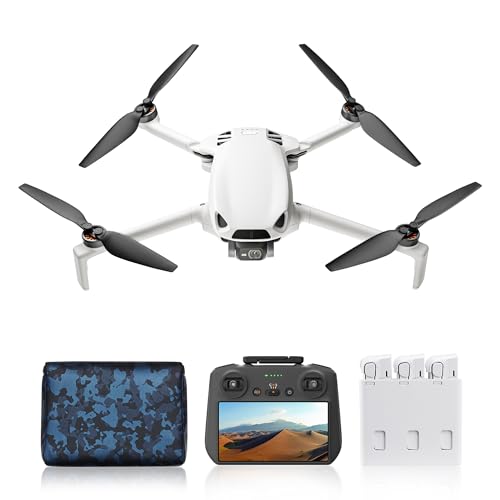
Skyrover S1 Mini Combo with Screen Controller, Auto Track, 120-Min Flight
SKYROVER X1 Mini Drone 4K, 9.32-Mi Transmission, 360° Sensing

DJI Mini 4 Pro Fly More Combo with DJI RC 2, 102-Min Flight

Holy Stone HS175D GPS Drone 4K, Auto Return, 46-Min Flight
The Skyrover S1 Mini is the kind of starter drone that lowers the barrier without skimping on image quality. Its 1/2″ CMOS sensor (a sensor larger than what most beginner drones ship with, which helps in dim conditions) records 4K/60fps video with 8K/48MP stills, all from a frame that weighs under 249 g. For most newcomers, that means skipping FAA Remote ID registration and skipping the bulky case.
Forward obstacle avoidance (sensors that detect objects ahead and stop the drone before contact) gives a layer of protection when you’re still learning stick control. Pair it with the companion remote for tactile flying, or use the app for casual framing. It’s a sensible first step before considering the gimbal-equipped Combo later in this list.
Standout Benefits
- Sub-249 g build removes registration friction for casual flyers.
- Forward obstacle avoidance reduces tree-and-wall collisions during early flights.
- 1/2″ sensor captures usable footage even in lower light.
- Compact folding design fits a jacket pocket for hikes and weekends.
- App and remote support give flexibility across skill levels.
Things To Consider
- Lacks a mechanical gimbal (the motorized mount that physically steadies the camera), so video relies on electronic stabilization.
- Single-battery flight time may feel short for back-to-back shooting days.
- Less mature brand ecosystem than the DJI options further down.
Made For
First-time pilots who want real 4K footage without registration hassle or a steep learning curve.
Consider Something Else When
The Potensic ATOM SE is a smarter call if you prioritize longer total airtime across multiple batteries.
The Skyrover S1 Mini Combo is where this lineup starts to feel like a creator’s tool rather than a toy. The standout upgrade is the 3-axis mechanical gimbal (a three-motor mount that tilts, pans, and rolls to keep footage level), which locks the horizon steady even during aggressive banking turns. Combined with the same 1/2″ CMOS sensor as the base model, that’s the difference between social-media clips and footage a client will actually accept.
Three batteries stretch total airtime to roughly 120 minutes, and 39,000 ft of video transmission (the live feed from drone to controller) lets you scout distant compositions without losing the picture. Auto Track follows a chosen subject hands-free, which matters when you’re filming solo. The same caveats about brand maturity apply, but the value-per-feature is hard to argue with here.
What Works In Its Favor
- 3-axis gimbal produces level, cinematic footage without post-processing.
- Three batteries deliver around 120 minutes of cumulative airtime.
- Auto Track follows moving subjects for solo vlog sessions.
- Long 39,000 ft transmission range supports ambitious compositions.
- Stays under 249 g for easier travel and lighter paperwork.
Honest Caveats
- Carrying three batteries and the remote adds bulk to your kit bag.
- Sensor is strong but not flagship-grade; the SKYROVER X1 line offers larger sensors.
- Auto Track works best with clear, isolated subjects, not crowded scenes.
Who Will Love This
Vloggers and solo creators who want gimbal-grade smoothness without DJI-tier pricing.
Look Elsewhere When
The DJI Mini 4 Pro Fly More Combo is worth the step up if you value mature app support and obstacle coverage on all sides.
The DJI Mini 3 Fly More Combo sits in that comfortable middle ground where most shoppers land. DJI is the household name in this category, and the Mini 3 has been refined across enough generations that the firmware feels mature rather than experimental. The DJI RC controller with its built-in screen means no phone-tethering and no midday visibility headaches.
You also get three batteries in the Fly More package, which translates to roughly three times the session length of a single-battery starter. The catch is that the Mini 3 lacks the omnidirectional sensing (full 360° obstacle detection) you’ll find on the Mini 4 Pro, so careful piloting still matters. For most travelers and family shooters, it’s a comfortable, predictable choice.
What Stands Out
- DJI RC remote with built-in screen removes phone dependency.
- Three batteries extend session length across a full day of casual shooting.
- DJI’s mature app ecosystem supports reliable firmware updates.
- Sub-249 g form factor keeps it travel-friendly.
- Wide accessory compatibility for filters, cases, and replacements.
Trade Offs
- No omnidirectional obstacle avoidance, so sideways and rearward crashes are still possible.
- Newer Mini 4 Pro model now exists if cutting-edge features matter.
- App activation requires downloading DJI Fly directly from DJI’s site.
Right Fit For
Travelers and family documentarians who want reliable performance from a known brand.
A Better Fit Elsewhere
The DJI Mini 4 Pro Fly More Combo is the upgrade path when omnidirectional sensing becomes a priority.
The Potensic ATOM SE leans hard into endurance. Its 93-minute total flight time across the included batteries covers a full weekend shoot without scrambling for a wall outlet. The brushless motor (a motor without physical brushes, meaning longer life and quieter operation than brushed alternatives) helps the drone resist Level 5 wind, which on a windy ridge can be the difference between usable footage and a recovery mission.
EIS, or electronic image stabilization, crops and shifts the frame digitally to smooth out bumps, which keeps the camera module light. There’s no mechanical gimbal here, so aggressive maneuvers will show some shakiness in the footage. The 60W parallel charging hub refills three batteries at once, a small detail that matters when you’re charging between golden-hour sessions.
A Few Highlights
- 93 minutes of total flight across multiple batteries.
- Brushless motor resists strong winds and lasts longer than brushed alternatives.
- 4KM FPV transmission (the live video link back to your screen) supports distant scouting.
- Parallel charging hub refills all batteries simultaneously.
- GPS stabilization helps with stable hover and return-to-home accuracy.
Points To Keep In Mind
- Electronic stabilization crops into the sensor, which limits wide-angle compositions.
- No mechanical gimbal means footage gets choppy during sharp turns.
- Potensic’s app support is less proven than DJI’s mature ecosystem.
Best Suited To
Multi-session shooters who prioritize airtime over gimbal-grade smoothness.
Skip It When
The Skyrover S1 Mini Combo fits better for gimbal-stabilized footage in single sessions.
The SKYROVER X1 Combo is the most stacked pick on the list for travelers who fly in unpredictable environments. The 1/1.32″ sensor (a larger sensor that gathers more light for cleaner low-light footage) paired with an f/1.7 aperture (a wide lens opening that lets in more light) keeps footage clean as the sun drops, and the AI Night Shot mode pushes that further into dusk and dawn. That’s a meaningful upgrade over the smaller sensors in earlier picks.
360° obstacle sensing wraps the drone in a protective bubble, and 9.32 miles of transmission range handles ambitious scouting flights. Three batteries push total airtime near 96 minutes. Vertical shooting mode matters for creators posting directly to phone-first platforms without cropping afterward. The trade-off is price, and the X1 sits at the upper end of the consumer bracket.
Advantages To Know
- 1/1.32″ sensor with f/1.7 aperture excels in low-light situations.
- 360° obstacle sensing protects against collisions from any direction.
- AI Night Shot extends usable shooting into dusk and dawn.
- Vertical shooting mode saves crops for social-first content.
- 9.32-mile transmission supports long-range scouting work.
Points To Note
- Carries a higher price tag than most sub-249 g competitors.
- AI Night Shot processing may soften fine detail in stills.
- Sensor size increases the drone’s footprint slightly, even when folded.
Perfect Match For
Travelers and night-shoot enthusiasts who fly in variable light and need full obstacle protection.
Another Choice May Suit
The DJI Mini 4 Pro Fly More Combo is a steadier pick for those who value brand maturity over raw specs.
The SKYROVER X1 with Screen Controller shares the same airframe and sensor as the previous pick but adds a 5.5-inch HD touchscreen remote at 700 nits of brightness. Nits measure screen brightness; 700 means the display stays readable in direct afternoon sun, which is the exact situation where a phone screen washes out and you lose your framing.
Everything else carries over: 4K/60fps HDR video, 360° obstacle avoidance, and roughly 96 minutes of total flight across three batteries. The real difference is workflow. Skipping the phone tether saves setup time and dodges the dropped-connection or overheating-phone headaches that pop up in warm climates. If you’ve ever fumbled with cables mid-flight, this configuration addresses that pain directly.
Positive Points
- Built-in 700-nit screen stays visible in direct sunlight.
- Eliminates phone-tethering and the connection drops that come with it.
- Same 1/1.32″ sensor handles low-light and night shooting well.
- 360° obstacle sensing adds confidence in tight environments.
- Three batteries carry a full weekend of casual flying.
Softer Spots
- Screen-equipped controller adds weight and bulk to your pack.
- Costs more than the standard-controller X1 Combo.
- Screen controller batteries need their own charging cycle.
Who Should Grab It
Pilots who fly in bright sunlight and want a self-contained, cable-free controller setup.
Reach For A Different Pick When
The standard SKYROVER X1 Combo (without the screen) is a leaner option when portability matters more than sun visibility.
The Skyrover S1 Mini with Screen Controller is the most workflow-friendly version of the Mini Combo line. It pairs the 3-axis gimbal and Auto Track from the standard Combo with a built-in touchscreen remote, so solo creators can frame a shot, lock onto themselves, and fly hands-off without juggling a phone. That’s the appeal for vloggers working without a camera operator.
Three batteries push airtime to roughly 120 minutes, and 7.45 miles of transmission handles most scouting missions. The gimbal still produces level footage when Auto Track loses a subject briefly. Compared with the SKYROVER X1 with Screen Controller, this one trades the larger sensor for a lighter airframe, which keeps the kit comfortable to carry on long shoots.
Notable Gains
- Built-in screen remote simplifies solo creator workflows.
- Auto Track keeps subjects centered without a camera operator.
- 3-axis gimbal smooths footage even during subject reacquisition.
- 120 minutes of total flight covers multi-location shoots.
- Stays under 249 g for registration-free flying.
Possible Compromises
- Smaller sensor than the SKYROVER X1 line, so low-light footage is weaker.
- Auto Track works best with clear, isolated subjects.
- Three batteries plus a screen-equipped controller add noticeable kit weight.
Built With In Mind
Solo creators who want hands-free subject tracking and a self-contained controller for run-and-gun shoots.
Where A Sibling Pick Shines
The SKYROVER X1 with Screen Controller makes more sense if low-light and night footage are routine priorities.
The single-package SKYROVER X1 Mini is the most stripped-down version of the X1 family, which is exactly why some shoppers will prefer it. You get the 1/1.32″ sensor, f/1.7 aperture, 4K/60fps HDR video, and 360° obstacle sensing, but in a lighter configuration without the extra batteries and screen remote of the Combo versions.
That means around 32 minutes of flight per battery, which suits short travel shoots, quick real-estate passes, and casual sunset sessions. The 9.32-mile transmission range matches its bigger siblings, so range isn’t compromised. Owners commonly report that this single-battery setup forces a slower, more deliberate shooting style, which can actually improve composition.
What Makes Sense
- Lighter, simpler kit for travelers who don’t want battery management.
- Same 1/1.32″ sensor as the Combo version for strong low-light footage.
- 360° obstacle sensing matches the larger Combo kits.
- Sub-249 g weight keeps registration simple.
Things To Weigh
- ~32 minutes per flight limits back-to-back sessions without a recharge.
- No extra batteries in the package, so spares cost extra.
- Standard controller (not screen-equipped) needs a phone for live view.
Whose Shelf It Belongs On
Travelers who want premium sensor quality without the bulk of multiple batteries.
Swap It Out When
The SKYROVER X1 Combo is a smarter upgrade if you regularly shoot full-day events.
The DJI Mini 4 Pro Fly More Combo is the most refined package in the consumer bracket. DJI’s RC 2 controller brings a brighter integrated screen and snappier menu system, while the drone itself adds omnidirectional obstacle avoidance (a full 360° safety net around the aircraft). Smart Return to Home plots a smarter path back when the battery runs low or the signal drops.
Three batteries stretch total airtime to around 102 minutes. The Mini 4 Pro keeps the sub-249 g weight class, which preserves the simpler regulatory profile pilots value. For serious hobbyists stepping up from a Mini 3 or first drone, this Combo covers every gap without forcing prosumer pricing.
The Helpful Details
- Omnidirectional obstacle avoidance covers every flight axis.
- DJI RC 2 controller has a brighter screen than the older DJI RC.
- Smart Return to Home uses path planning rather than a straight retreat.
- Around 102 minutes of total flight across three batteries.
- Sub-249 g weight preserves registration-free flying in many regions.
A Few Limitations
- Costs more than most competitors on this list.
- App activation requires downloading DJI Fly from DJI’s site.
- Heavier controller than phone-tethered setups, depending on preference.
Best Suited To
Serious hobbyists stepping up to a refined, well-supported platform with full obstacle coverage.
Not Your Match When
The SKYROVER X1 Combo is worth considering if larger sensors and night shooting matter more than brand maturity.
The Holy Stone HS175D is the most approachable drone on the list. GPS-assisted flight, Auto Return, Altitude Hold, and Follow Me work together to keep the aircraft stable and recoverable, which matters when younger or first-time pilots are at the controls. The 110° wide-angle lens with 90° adjustable tilt fits more scenery into family and vacation shots.
Around 46 minutes of total flight across the included batteries is reasonable for weekend outings. Waypoint Fly and Circle Fly add creative options without manual stick work. Owners commonly report that the brushless motor holds up well to occasional bumps, and the foldable frame packs into a small carrying case for travel.
Everyday Perks
- GPS-assisted hover and Auto Return reduce flyaway risk.
- Brushless motor runs quieter and lasts longer than brushed equivalents.
- Follow Me, Circle Fly, and Waypoint Fly add creative autopilot modes.
- Foldable design fits in a small bag for family trips.
- Sub-249 g weight keeps the regulatory side simple.
Honest Caveats
- No mechanical gimbal, so footage relies on electronic stabilization.
- Smaller sensor than Mini 4 Pro or X1 line picks in low light.
- Wind resistance is more limited than larger brushless builds.
Perfect Match For
Casual family flyers who want forgiving flight modes and easy recovery features.
A Better Fit Elsewhere
The DJI Mini 3 Fly More Combo is the upgrade path when footage quality starts to matter more.
What Matters Most Before Choosing Commercial Drones
Weight And Registration Reality
Every drone here sits under 249 g, which is the threshold below which FAA Remote ID registration is not required for recreational flyers in the United States. That one spec reshapes ownership: less paperwork, fewer restrictions, and easier travel through airports. For commercial pilots operating under Part 107, the rules differ, but the under-249 g class still helps for sub-projects and personal scouting work.
Stabilization: Gimbal Versus EIS
A 3-axis mechanical gimbal physically tilts, pans, and rolls to keep footage level during sharp turns and wind gusts. Electronic image stabilization (EIS) crops into the sensor and digitally shifts the frame, which works for gentle motion but breaks down during aggressive maneuvers. For vlog-style shooting and client work, a gimbal is the better long-term investment. For casual travel clips, EIS often suffices.
Battery Count And Real Airtime
Manufacturers quote flight time per battery and total airtime across included batteries. A single 30-minute battery is plenty for a quick sunset, but real estate walkthroughs and event coverage demand multiple packs. The Fly More Combo packages from DJI and SKYROVER address this directly with parallel charging hubs that refill three batteries at once.
Obstacle Avoidance Coverage
Forward-only sensing protects the most common crash direction but leaves the drone vulnerable from the sides, rear, and above. Omnidirectional or 360° sensing wraps the aircraft in a full safety net. For new pilots flying near trees or indoors, that extra coverage is worth the price step.
Controller Type And Screen Brightness
Phone-tethered controllers save money but lose visibility in direct sun and add setup steps. Built-in touchscreen controllers cost more but stay readable at 700+ nits (brightness units, where higher means easier outdoor viewing) and eliminate cable drops. The right choice depends on how often you fly in midday sun.
Practical Considerations Across These Picks
Where Shoppers Go Wrong
Chasing the largest sensor without checking wind resistance can backfire, since bigger sensors often pair with heavier airframes that struggle in gusts. Equally, picking the longest flight time without checking charging speed means waiting hours between sessions. Look at total session length, including recharge, not just airtime per battery.
When Paying More Pays Off
Higher-tier picks like the DJI Mini 4 Pro Fly More Combo and SKYROVER X1 with Screen Controller cost more because they bundle features that matter in the field: omnidirectional sensing, brighter controllers, and larger sensors. When you fly regularly in variable conditions or for paying work, the upgrade pays back in fewer reshoots and lost aircraft.
Frequently Asked Questions
Do I Need To Register Drones Under 249 g?
In the United States, recreational flyers operating drones under 249 g do not need to register with the FAA. Commercial operators working under Part 107 follow different rules regardless of weight, so check local regulations before using any of these drones for paid work.
How Important Is A Mechanical Gimbal?
A mechanical gimbal produces noticeably smoother footage during wind, banking turns, and walking shots. Electronic stabilization works for slow, steady movement but introduces crop and shakiness during aggressive flying. For client-facing or social-first video, a gimbal is worth the upgrade.
What Does Obstacle Avoidance Actually Do?
Obstacle avoidance sensors detect objects around the drone and either stop or reroute before contact. Forward-only systems cover the most common crash direction, while omnidirectional systems wrap protection around every axis. New pilots benefit most from full coverage, since most beginner crashes happen laterally.
How Far Can These Commercial Drones Actually Fly?
Transmission range quoted by manufacturers reflects ideal lab conditions with clear line of sight. In real environments, expect 20-50% less range due to trees, buildings, and interference. Always keep visual line of sight on the aircraft, since regulations require it in most regions regardless of technical range.
Are Spare Batteries Worth Buying?
For anyone flying longer than a single battery allows, spare packs transform the experience. Most Fly More Combo packages already include three batteries and a charging hub, but adding a fourth cold-weather pack extends sessions into evening shoots without downtime.
Bottom Line
The right pick comes down to your flying context rather than raw spec count. Creators working with clients benefit most from the DJI Mini 4 Pro or SKYROVER X1 with their larger sensors and full obstacle coverage. Family and casual pilots get the most value from forgiving kits like the Holy Stone HS175D or Skyrover S1 Mini base model. Match the drone to your typical shooting day, not the spec sheet, and the kit will earn its place.


