

Hurricane season, winter storms, and unexpected blackouts all have one thing in common: they cut you off from the outside world. A good emergency communication device keeps weather alerts flowing, lets you signal for help, and tops up your phone when the grid goes dark. The eight picks below cover everything from household weather radios with hand cranks and solar panels to wearable personal safety devices built around a monitored help button. Each one was chosen for a specific kind of prepper, so you can match the gear to your routine instead of buying something that sits in a drawer.
A Side-By-Side Look

Roxicosly Emergency Weather Radio Hand Crank

Mesqool Solar Hand Crank Radio 12000mAh

Raynic 12000mAh Hand Crank Emergency Radio

Raynic Solar Hand Crank NOAA Radio

Raynic Solar Crank NOAA Radio Type-C

Raynic Portable NOAA Weather Radio
Raynic Solar Crank Radio Reading Lamp

Medical Guardian MGMini Alert Necklace
The Details Behind The Selections
Off-grid cabins and backcountry camps tend to lose power slowly, with sun often the only resource available. The Roxicosly radio leans into that reality with an oversized monocrystalline solar panel that pulls in daylight faster than smaller cells found on budget models. You still get the standard hand-crank backup, a flashlight, and a USB-out port for topping off a phone when towers go dark.
Compared to the Raynic models below, this one prioritizes charging surface area over extra power ports. For most households, that trade-off is fine. The included NOAA weather band helps you catch warnings without scrolling a phone screen.
Practical Advantages
- The large solar panel recharges during normal daylight, cutting how often you crank
- NOAA weather band pulls automated alerts when towers stay up
- Hand crank doubles as a backup when sunlight disappears for days
- USB-out port can bump a phone enough for a 911 call or a short text
Points To Note
- Solar charging slows dramatically under cloud cover or window glass
- Lacks the multi-band coverage you will find on the Raynic units
- Cranking for minutes at a time can fatigue wrists during extended use
Feature Snapshot
Best Suited To
Off-grid cabin owners and campers who rely heavily on solar power during multi-day outings.
A Better Fit Elsewhere
Households needing the most charging options should look at the Raynic 12000mAh Hand Crank Emergency Radio for its broader power flexibility.
Rural homes surrounded by hills or heavy tree cover often struggle with weak NOAA reception. The Mesqool radio addresses that pain point with a higher-sensitivity signal chip, noise-reduction circuitry, and an extended antenna. The 12000mAh battery also gives you more standby time than the smaller Raynic units below, which matters during multi-day outages.
Where the Roxicosly leans into solar surface area, this one leans into reception clarity. For anyone whose nearest weather tower sits miles away, that emphasis is the right call.
Useful Touches
- Higher-sensitivity chip pulls weak NOAA signals from distant towers
- Extended antenna folds out for directional aiming in tricky terrain
- 12000mAh cell supports longer standby than 5000mAh competitors
- Three-band coverage covers NOAA, AM, and FM
Trade-Offs To Consider
- Larger battery adds weight compared to smaller 5000mAh radios
- No SOS siren or reading lamp, unlike the Raynic Solar Crank Radio Reading Lamp
- Solar panel is smaller than the Roxicosly, so daylight charging is slower
Quick Technical Notes
Who It Suits Best
Rural weather watchers in valleys or wooded lots who struggle to catch NOAA alerts on weaker radios.
Skip It When
Urban preppers who mainly need an SOS siren should reach instead for the Raynic Portable NOAA Weather Radio.
Six power sources is unusual even in this category, and the Raynic 12000mAh unit leans into redundancy for households bracing for multi-day blackouts. You can charge through USB, AC adapter, AAA batteries, solar, hand crank, and the internal rechargeable cell. That flexibility matters when any one option fails mid-storm.
Where the Mesqool radio specializes in reception, this one specializes in never running dry. The trade-off shows up in size; this is a chunkier tabletop-friendly unit, not a pocket companion. Camo-green styling also gives it a slightly outdoor look.
Everyday Wins
- Six charging methods cover nearly any outage condition
- 12000mAh capacity rivals larger power banks for phone top-ups
- Built-in SOS siren adds a layer of signaling beyond the radio
- LCD display shows remaining battery at a glance
Honest Caveats
- Larger footprint than compact Raynic 5000mAh models
- More ports and buttons mean a learning curve for first-time users
- Headphone jack absent compared to the Raynic Solar Hand Crank NOAA Radio
The Numbers That Matter
Made For
Long-term blackout kits where multiple power options and a generous battery outweigh the need for portability.
Look Elsewhere When
Anyone wanting a pocketable radio for hiking should consider the lighter Mesqool Solar Hand Crank Radio 12000mAh instead.
Suburban family homes usually need one radio that does everything reasonably well, not one that excels at a single feature. The Raynic Solar Hand Crank NOAA Radio fits that brief: 5000mAh battery, AM/FM/SW/NOAA coverage, hand crank, solar panel, SOS siren, flashlight, and headphone jack for quiet listening during overnight alerts.
Compared to the 12000mAh Raynic above, this one trades raw capacity for portability and a headphone jack. For most households, that balance is the right starting point.
Features That Help
- Headphone jack lets you monitor alerts overnight without disturbing others
- Auto-scan NOAA alerts catch warnings while the radio sits in standby
- Compact body fits a kitchen counter or bedside table easily
- Handy SOS siren for signaling from inside or outside
Things To Consider
- 5000mAh is smaller than the 12000mAh units, so fewer phone top-ups per charge
- Lacks Type-C input that the Raynic Solar Crank NOAA Radio Type-C adds
- No reading lamp, unlike the Raynic Solar Crank Radio Reading Lamp
Perfect Match For
Suburban families who want one capable radio for kitchen, nightstand, or storm shelter without overpaying.
Consider Something Else When
Folks who camp often or run extended blackouts should reach for the Raynic 12000mAh Hand Crank Emergency Radio for more reserve capacity.
Anyone who has upgraded to a newer Android phone knows the frustration of carrying micro-USB cables just to charge a radio. The Raynic Solar Crank NOAA Radio Type-C swaps the older port for USB-C input, matching what most modern phones already use. You also get the same 5000mAh cell, four-band coverage, SOS siren, and flashlight shared with the earlier Raynic model.
For a household that consolidated to USB-C cables years ago, this is the version that actually fits the existing cable drawer. The trade-off is nothing meaningful; the feature set stays intact.
What Stands Out
- Type-C input matches modern phone and laptop cables
- Same reliable 5000mAh capacity as the older Raynic models
- Headphone jack for overnight alert monitoring
- SOS siren and flashlight stay standard
Practical Considerations
- Type-C charging cable often not included in the box
- Battery size matches the smaller Raynic, not the 12000mAh models
- No reading lamp option like the dedicated blackout version
Who Should Grab It
Newer smartphone owners who already standardized on USB-C and want one cable for everything.
Not Your Match When
Anyone who still uses micro-USB devices should consider the Raynic Solar Hand Crank NOAA Radio to match existing cables.
First-time preppers often buy radios with every bell and whistle, then realize they never use half the buttons. The Raynic Portable NOAA Weather Radio strips the interface down to what you actually touch in an emergency: NOAA alerts, AM/FM, flashlight, SOS siren, USB-out charging. The 5000mAh battery and Type-C input handle the basics without bloat.
Where the Type-C version of this radio above added a headphone jack, this one trims it to keep the controls simpler. For someone learning the category, fewer buttons is sometimes the better gift.
The Upside
- Streamlined controls help beginners learn the category quickly
- Type-C input aligns with newer charging cables
- SOS siren and flashlight remain standard safety basics
- Compact size fits in a drawer or car glove box
Soft Spots
- No headphone jack, unlike the Raynic Solar Hand Crank NOAA Radio
- Battery is smaller than the 12000mAh units for extended use
- Solar panel is small compared to the Roxicosly, so daylight charging is slow
Spec Overview
Right Fit For
First-time preppers and apartment dwellers who want a low-fuss device that covers the core safety basics.
Swap It Out When
Anyone needing overnight headphone monitoring should reach instead for the Raynic Solar Hand Crank NOAA Radio.
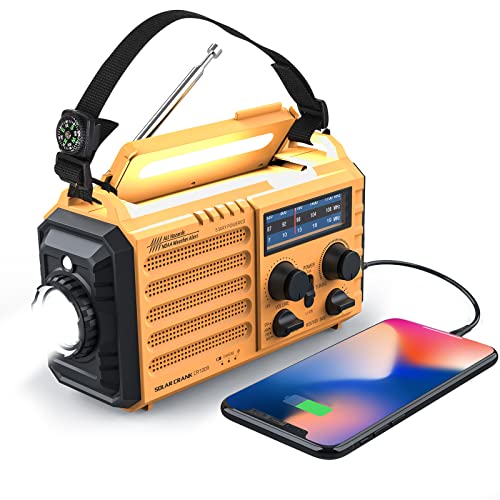
Multi-day blackouts hit hardest at night, when phones run dry and the only light source becomes whatever flashlight you remember to charge. The Raynic Solar Crank Radio Reading Lamp adds a panel-style reading lamp alongside the standard flashlight, letting you read a paper map, sort through paperwork, or keep a child calm without burning phone battery on the screen.
Compared to the other Raynic units in this list, this one trades the headphone jack and Type-C port for that lamp panel. For households that lose power often, the swap is usually worth it.
What Earns Its Place
- Reading lamp provides soft light without draining phone battery
- Five-way charging covers solar, crank, AC, battery, and USB
- NOAA alerts auto-scan in standby for overnight warnings
- SOS siren supports signaling in low-light emergencies
Minor Gripes
- No headphone jack for overnight audio monitoring
- Charging input is the older micro-USB style, not Type-C
- Reading lamp uses extra battery, so overnight runtime shortens
Built With In Mind
Power-outage households in storm-prone regions who need reading light during multi-day blackouts.
Reach For A Different Pick When
Anyone prioritizing headphone monitoring should instead consider the Raynic Solar Hand Crank NOAA Radio for quieter overnight listening.
Older adults living alone face a different communication problem: not storms, but falls and sudden health events. The Medical Guardian MGMini is a wearable pendant with an SOS button, two-way speaker, and 24/7 monitoring through a subscription service. The included lanyard and belt clip let you wear it however feels natural, and the device works at home and on the go.
Compared to the weather radios above, this one is a personal safety companion rather than a weather alert tool. For seniors, that distinction is the whole point: a monitored call button that connects to a real person.
Noteworthy Benefits
- One button connects to a 24/7 monitoring team in seconds
- Two-way speaker lets you talk to a responder directly through the device
- Location assistance helps responders find you at home or away
- Wearable form factor keeps it accessible during a fall
Worth Bearing In Mind
- Requires an ongoing subscription, unlike the radios above
- Cellular coverage required for the device to reach the monitoring center
- Charging the device every few days is part of routine ownership
Feature Rundown
Whose Shelf It Belongs On
Older adults living independently, plus family caregivers who want a monitored option beyond a basic phone.
Where A Sibling Pick Shines
Anyone whose main worry is storm alerts and power outages should pick a weather radio like the Raynic Solar Hand Crank NOAA Radio instead.
Matching Your Gear To Your Risk Profile
Before choosing an emergency communication device, think honestly about what kind of disruption you actually face. Coastal and rural households face the longest outages, where solar panels, hand cranks, and large batteries matter most. Suburban families usually want a single all-purpose radio that covers NOAA alerts, phone charging, and a flashlight without overpaying for capacity they will not use. Older adults living alone face a different risk entirely: falls, sudden medical issues, and the need for a one-button connection to a real person rather than a radio broadcast.
Bands and alerts matter more than people expect. NOAA is the U.S. National Oceanic and Atmospheric Administration weather radio network, broadcasting continuous forecasts and automatic warnings. AM and FM cover local news during routine outages, while shortwave (SW) lets you catch global broadcasts from far away, useful for severe geopolitical events. Auto-scan NOAA alerts are worth having so the radio wakes up to a warning even when nobody is listening.
Charging flexibility shows up in real ownership. A radio with only a USB port is dead the moment the power bank dies. Look for at least three independent charging paths: solar, hand crank, and one wall option. The 12000mAh models above are overkill for a small apartment but reasonable for a family running multiple phones during a multi-day outage.
Personal safety devices fill a different gap. Medical alert pendants like the Medical Guardian MGMini solve the “what if I fall alone” problem, not the “what if the power goes out” problem. They require subscriptions and cellular coverage, but they connect to a staffed 24/7 monitoring center, which a weather radio simply cannot do.
Key Considerations Across These Picks
Where Shoppers Go Wrong
A common trap is buying the highest-capacity radio without considering the carrying weight, or chasing a feature like shortwave reception you cannot operate without a manual. Solar panels sound impressive but produce little power under cloud cover or indoor windows. Hand cranks require real effort over minutes, not seconds. Match the radio’s strengths to your routine: if you camp, prioritize solar; if you live in an apartment, prioritize simplicity and Type-C cables.
The Case For Spending Up
The jump from a 5000mAh to a 12000mAh radio roughly doubles the phone top-ups and standby time per charge. Spending up also buys multi-source charging, which matters during prolonged outages. For most suburban households, a balanced 5000mAh unit covers the basics. For storm-prone regions and off-grid homes, the higher capacity and more charging paths justify the step up.
Frequently Asked Questions
Do I need a weather radio if my phone already shows alerts?
A dedicated weather radio keeps working when cell towers go down or your phone battery dies, and NOAA auto-scan alerts wake the radio in standby. Phones are convenient but vulnerable to the very outages they are meant to help you through.
How long does a hand-cranked radio actually last on a charge?
Most models in this list run 6 to 12 hours of moderate listening per full charge. Cranking for one minute typically adds several minutes of radio or a brief flashlight burst, so crank regularly during daylight rather than waiting until the battery is empty.
What does NOAA weather band mean?
NOAA is the National Oceanic and Atmospheric Administration, which broadcasts continuous weather updates and emergency warnings on dedicated VHF frequencies. Radios with NOAA bands pick up those broadcasts and, in many models, automatically scan for alert tones.
Are medical alert devices useful for emergencies beyond falls?
Yes, any emergency where you cannot reach a phone benefits from a monitored button. Some devices add GPS location assistance so responders find you quickly, and two-way speakers let you describe the situation directly to trained staff.
Should I keep the device plugged in all the time?
Most modern emergency radios use lithium battery chemistries that hold up well to occasional top-ups. Owners commonly report keeping the radio off the charger most of the time and topping it up before forecasted storms, which keeps the battery healthy over years of standby.
Closing Thoughts
The right emergency communication device depends on what you actually worry about: storms and blackouts call for radios, while personal safety calls for a monitored wearable. Most households do well starting with a balanced weather radio like the Raynic Solar Hand Crank NOAA Radio, then adding a specialized device if their risks warrant it. Match the gear to your routine, and the rest takes care of itself when conditions get rough.


