

Hybrid teams live and die by how a meeting sounds, not how it looks. The wrong speakerphone turns a quick sync into a relay of “sorry, can you repeat that,” while a well-matched setup makes a six-person standup feel like you’re all in the same room. This list rounds up ten solid options for huddle spaces, home offices, and mid-size conference rooms, with notes on what each one actually does well (and where it trades off).
The Lineup, Simplified

Jabra Speak 410 Corded Speakerphone for Softphones

Synbit Bluetooth Speakerphone with Daisy Chain

TONGVEO Wireless Conference Speaker 360° Voice Pickup
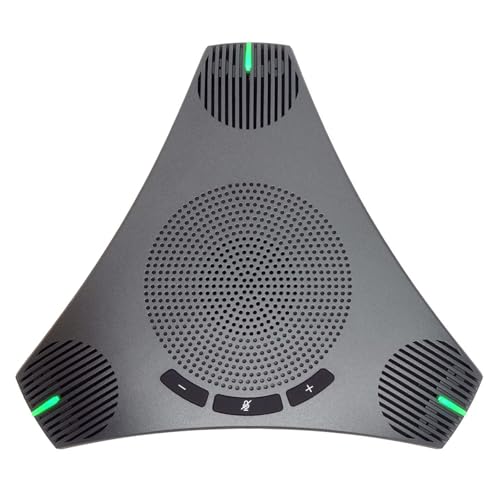
Synbit USB Speakerphone 360° Voice Pickup

EMEET M0 Plus Conference Speaker and Microphone
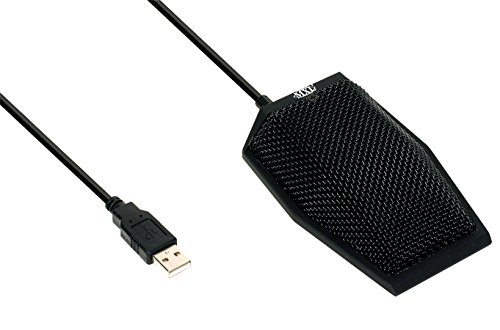
MXL AC-404 USB Boundary Condenser Conferencing Microphone

EMEET Luna Plus Kit with Satellite Mic

EMEET Luna Conference Speaker for 8 Users

Nearity A20S 4-Pack Conference Speaker with Daisy Chain

EMEET M2 Bluetooth Conference Speaker
More On The Choices That Made The List
The Jabra Speak 410 is the kind of speakerphone that just shows up and works, which is why it has stuck around in offices for years. It connects over USB, so there’s no pairing, no dongles, and no driver hunting on a borrowed laptop. The 360-degree mic picks up voices from around a small table, and the unit itself is small enough to toss in a bag between home and the office.
For solo callers or two-person chats in a quiet space, the audio stays clean and predictable. Setup in Zoom, Teams, or a softphone takes seconds, and you can route calls through it without fiddling with audio menus. Larger rooms with lots of cross-talk will start to expose its limits, but for what it’s built to do, the experience is consistent.
Features That Help
- True plug-and-play USB means no pairing, no extra software, and no flaky wireless handoffs.
- 360-degree voice capture covers a small meeting table without people leaning in.
- Compact form factor travels well between home setups, hotel rooms, and office desks.
- Broad softphone compatibility keeps call routing simple across common platforms.
Points To Note
- The corded USB connection is reliable but limits where you can place the unit on a crowded table.
- It handles one or two voices well; six people talking over each other will sound muddy on the far end.
Who It Suits Best
Solo professionals, two-person calls, and anyone who needs a set-it-and-forget-it speakerphone for a small home desk.
A Better Fit Elsewhere
Teams running daily standups of six to eight people will get fuller coverage from the EMEET M2 Bluetooth Conference Speaker.
Where the Jabra is a one-room workhorse, the Synbit SPK400 is built to grow with the room. The big story here is daisy chaining, which simply means linking multiple speakerphones together so audio reaches the back of the table without shouting. For L-shaped or longer rooms where one mic array can’t cover everyone, that flexibility changes the whole meeting.
It offers both wireless and USB connections, plus 360-degree omnidirectional pickup and DSP-driven echo and noise cancellation. The DSP (digital signal processing) chip actively shapes incoming audio to suppress echo and steady-state background hum. For mixed-platform offices, the connection flexibility means you can hop between a laptop, a phone, and a meeting room PC without re-cabling.
Practical Advantages
- Daisy-chain support lets you spread coverage across long or oddly shaped rooms without a giant tabletop unit.
- Triple connection options (Bluetooth, wireless dongle, USB) make it easy to match whatever device the room runs.
- Active echo and noise reduction keep HVAC hum and keyboard clatter from bleeding into the call.
- 360-degree voice capture means nobody has to think about where to sit.
Trade Offs
- Daisy-chained setups need power and cable routing per unit, which adds a little install time on a clean table.
- The Bluetooth pairing step is fine but not as instant as a pure USB plug-and-play.
Made For
Mid-size meeting rooms, growing teams, and offices that want one expandable system instead of replacing gear every year.
Consider Something Else When
Solo home-office users may find the Nearity A20S 4-Pack Conference Speaker more unit than they need.
TONGVEO pitches this model at groups of eight to twelve, which already tells you it’s not a personal-desk toy. The four-mic array, full-duplex design, and claimed eight-hour call time suggest a unit meant to anchor longer working sessions, not just quick syncs. Full duplex means both sides of the call can speak at once without audio cutting out, the way a real conversation works.
Connection flexibility is the second headline: USB, dongle, and Bluetooth all come standard, so the speakerphone can follow a meeting room PC, a hot-desk laptop, or a phone. For teams that bounce between platforms, that keeps the room from being tied to one specific cable. In a glass-walled office, the AI-driven noise cancellation does meaningful work, since echo off hard surfaces is usually the worst offender.
The Practical Payoff
- Full-duplex audio means interruptions, side questions, and quick clarifications don’t clip or cut out.
- Eight-hour battery life covers a full day of back-to-back meetings on a single charge.
- Three connection paths (USB, dongle, Bluetooth) keep it flexible across meeting room setups.
- AI noise cancellation targets common office sounds that would otherwise leak into the far end.
Honest Caveats
- Battery life claims depend heavily on volume and connection type, so heavy daily use may still need a top-up.
- Multiple input modes mean the first-time setup has a small learning curve for less technical staff.
Right Fit For
Mid-sized teams that run hour-plus calls and want a wireless unit that won’t die mid-meeting.
Look Elsewhere When
Smaller huddle rooms of two to four people may prefer the lighter footprint of the EMEET M0 Plus Conference Speaker.
Synbit’s second entry on this list is a simpler sibling: USB-only, 360-degree pickup, and a focus on loud, clear output for small spaces. The smart voice enhancement and Hi-Fi tuning are the parts that matter, because at home the speakerphone often has to compete with a dishwasher, a window unit, and a dog. Its two high-sensitivity omnidirectional mics are designed to grab voices from any seat at a small table.
This is the speakerphone you plug in once, leave on the desk, and forget about. Without Bluetooth pairing, there’s no “wait, why isn’t this connecting” moment on a Monday morning call. The trade-off is mobility: it lives where the cable ends. In a permanent home-office setup, that constraint is a non-issue.
Strong Points
- USB-only design removes Bluetooth hiccups and gives you reliable audio every time you sit down.
- Hi-Fi speaker output stays clear at conversation volumes, even when household noise is in the background.
- Two omnidirectional mics cover a four-person home meeting without seating rearrangements.
Less-Strong Areas
- No wireless option means you can’t pop it onto the kitchen counter for a quick call away from the desk.
- It shines in smaller rooms, so a six-person living-room meeting may stretch its range.
Whose Desk It Belongs On
Remote workers, freelancers, and small teams who need loud, clear calls from a fixed home-office setup.
Not Your Match When
Users who genuinely need wireless flexibility will be happier with the TONGVEO Wireless Conference Speaker 360° Voice Pickup.
The M0 Plus is EMEET’s answer for tight spaces that still need real conference-room behavior. A four-mic array, the VoiceIA noise algorithm (EMEET’s branded DSP stack for filtering background sound), and a 3W speaker punch above what you’d expect from a unit this small. In a huddle room or a hot desk, it acts as a small but capable hub.
Compared to the earlier EMEET M2 on this list, the M0 Plus is a smaller, more focused take. It’s the kind of device that disappears into the meeting until someone asks “wait, how is this sounding so good?” The footprint keeps it from dominating a small table, which matters in shared workspaces where every inch is contested.
What Makes Sense
- Four-mic array with EMEET’s upgraded VoiceIA algorithm sharpens voice pickup in cluttered rooms.
- Compact footprint leaves space on the table for laptops, notebooks, and coffee.
- Solid speaker output for a unit this size, useful in glass-walled huddle rooms that don’t dampen sound much.
Some Limits To Know
- The smaller body means shorter battery life than larger EMEET units, so daily charging is part of the routine.
- It’s tuned for small groups, so larger meetings may leave the far seats sounding thin.
Who Should Grab It
Teams running huddle-room meetings, and offices that want real conference performance without a giant tabletop device.
Another Choice May Suit
For larger rooms needing a satellite mic, the EMEET Luna Plus Kit with Satellite Mic is the better fit.
The MXL AC-404 does something most of the others on this list don’t: it ignores the round “speakerphone” format and sits flat on the table like a small podium mic. Inside, three condenser capsules work together to deliver a 180-degree pickup pattern with a stated 25-foot range. For permanent conference rooms, courtrooms, and lecture-style settings, that boundary-mount design has real advantages.
USB connectivity keeps installation simple, and a built-in headphone monitoring jack lets a presenter or operator hear exactly what’s going to the far end. It’s a microphone-first device, so it doesn’t include its own speaker. Pair it with external monitors or use it as a dedicated capture mic for a room that’s already wired for playback.
A Few Highlights
- 180-degree boundary pickup covers podiums and conference tables with a single low-profile unit.
- 25-foot pickup range supports larger seated meetings without scattering extra mics.
- Headphone monitoring jack offers real-time audio checks for the operator or presenter.
- Plug-and-play USB setup drops into any modern computer without extra hardware.
Possible Compromises
- It has no built-in speaker, so you’ll need separate playback or a paired speakerphone for the local room.
- It’s a permanent-install mindset, so mobile teams will find it less flexible than the wireless options here.
Best Suited To
Courtrooms, lecture halls, worship spaces, and any room that needs a flat, wide-pickup mic and already has its own audio playback.
Skip It When
Huddle-room teams that want a single all-in-one box will do better with the EMEET M0 Plus Conference Speaker.
The Luna Plus Kit is the most ambitious EMEET on this list, and the one aimed at the largest rooms. The main unit already packs an eight-mic array for up to ten people, and the dedicated satellite mic pushes coverage out to around fourteen seats. That extension is the real trick: instead of daisy-chaining identical boxes, you anchor the main unit and place the satellite where the table is widest.
For a long boardroom, that flexibility solves the classic problem of “the people at the far end never get heard.” Combined with EMEET’s noise reduction stack, the kit is built for meetings where clarity matters more than portability. The trade-off is that you now have two devices to place, power, and remember to pack up after a meeting.
The Helpful Details
- Main unit’s eight-mic array handles up to ten participants with consistent voice pickup.
- Satellite mic extends coverage to roughly fourteen people in wider rooms.
- Targeted at boardrooms and larger conference tables where one box always falls short.
- Built on the same EMEET noise-reduction foundation as the rest of the Luna line.
Practical Considerations
- Two-piece setup adds cabling and a small placement job each time you reconfigure a room.
- Overkill for huddle spaces, so smaller teams won’t tap most of what it offers.
Whose Shelf It Belongs On
Mid-to-large conference rooms that host cross-functional or client-facing meetings with up to fourteen attendees.
Where A Sibling Pick Shines
For rooms that need even more scale and don’t mind a multi-box install, the Nearity A20S 4-Pack Conference Speaker covers more ground.
The standard Luna sits in a useful middle ground: a single-unit speakerphone that comfortably handles eight-person meetings without the bulk of the Plus Kit. EMEET’s VoiceIA noise reduction is built to handle the everyday office offenders, like air conditioning, keyboard clicks, and the low hum of a busy open-plan floor. The 360-degree pickup keeps seating flexible.
Where the M2 is a stripped-down workhorse, the Luna steps up with a more polished noise-handling stack and a fuller speaker for clearer playback. For recurring team standups in a fixed room, the experience is closer to “set it and stop thinking about it.” It also pairs naturally with EMEET’s own software for firmware updates and settings tweaks.
Reasons It Performs
- VoiceIA noise reduction actively filters HVAC hum and keyboard chatter from the call.
- Eight-person capacity suits most standard team standups without spilling into the Plus Kit tier.
- 360-degree pickup means no “hot seat” tricks to make sure the far side gets heard.
Worth Bearing In Mind
- It’s a single-unit design, so very long tables will still need the Plus Kit or a daisy-chained alternative.
- Software tuning via the companion app adds a small setup step some teams will skip.
Who Will Love This
Teams that run daily eight-person meetings in a fixed conference room and want predictable audio without extra boxes.
Reach For A Different Pick When
Offices with bigger, oddly shaped tables should consider the EMEET Luna Plus Kit with Satellite Mic.
The Nearity A20S arrives as a four-pack for a reason: this system is designed to be deployed across a large or irregular room, with daisy chaining tying the units into a single audio environment. Each unit carries eight MEMS (micro-electro-mechanical systems) mics, the small, durable mic capsules that handle background noise well, and the AI 2.0 algorithm tackles echo, reverberation, and steady noise in real time. The result is voice capture that holds up even in glass-walled rooms where echo usually wrecks a call.
For organizations outfitting a large boardroom, an executive briefing center, or a multi-purpose space, the four-pack approach removes the “where do we put the second mic” debate. The honest trade-off is installation overhead: more units means more power drops, more cables to hide, and a longer first-time setup. Once it’s in, though, the audio coverage is hard to beat at this tier.
Notable Gains
- Four units cover large, L-shaped, or glass-walled rooms without dead zones.
- AI 2.0 algorithm targets echo and reverberation, the two biggest problems in modern conference spaces.
- MEMS mics offer durable, consistent voice capture with strong background-noise rejection.
Where It Is Less Suited
- The four-pack footprint and cabling are more than a small huddle room can use.
- Initial setup needs a little planning to place each unit for balanced pickup.
Built With In Mind
Large conference rooms, executive boardrooms, and spaces with challenging acoustics that one-box systems can’t tame.
Swap It Out When
Smaller rooms of eight people or fewer will do just fine with the EMEET Luna Conference Speaker for 8 Users.
The M2 has been one of the most common EMEET units on office desks for a reason: it covers the five-to-eight-person meeting slot with barely any fuss. Four AI-tuned mics deliver 360-degree pickup, and the self-adaptive tuning means the speakerphone adjusts its voice profile based on the room it’s in. In practice, that means less manual fiddling with levels between quiet home calls and louder group sessions.
Bluetooth plus USB gives you both wireless flexibility and a hardwired fallback when battery is low or the laptop doesn’t trust Bluetooth. LED indicators on the unit keep call status visible at a glance, which matters more than it sounds when you’re running between meetings. It’s not the flashiest unit here, but for the daily grind it’s hard to argue with.
A Strong Showing
- Four-mic array with 360-degree pickup covers the common five-to-eight-person meeting size.
- Self-adaptive tuning adjusts voice handling without manual reconfiguration between calls.
- Dual Bluetooth and USB connections provide a wireless option and a reliable wired fallback.
Factors To Consider
- Battery life is fine for a workday, but heavy all-day use will still need a top-up or USB power.
- Larger groups pushing past eight people will start to stretch its pickup range.
Perfect Match For
Small teams running daily business calls who want a set-and-forget speakerphone that just keeps working.
Where Another Pick Suits Better
Offices hosting larger or noisier meetings should consider the TONGVEO Wireless Conference Speaker 360° Voice Pickup instead.
What To Weigh Before Choosing Conference Room Microphone And Speakers
Room Size And Pickup Pattern
The single biggest decision is how many people you need to cover, and from how far. Omnidirectional 360-degree mics work well for round and rectangular tables, since everyone sits roughly the same distance from the center. For long or L-shaped rooms, look for systems that can daisy chain or that include a satellite mic, like the EMEET Luna Plus Kit with Satellite Mic or the Nearity A20S 4-Pack Conference Speaker. A boundary mic like the MXL AC-404 takes a different approach, using a flat surface and a wide 180-degree pattern to grab voices across a podium or wide table without anyone crowding a central device.
Connection Type And Setup Reality
USB-only units are the most predictable, since they don’t require pairing, drivers, or charging. Bluetooth and wireless dongles add flexibility, but introduce one more step that can go wrong on a Monday morning. Consider who actually sets up the room: an IT-managed office can handle multi-mode pairing, while a rotating hot-desk environment benefits from the simplicity of a USB-only speakerphone like the Synbit USB Speakerphone 360° Voice Pickup.
Noise Handling In Your Specific Room
Background noise isn’t a single problem. Air conditioning hum, keyboard chatter, hallway foot traffic, and glass-wall echo all need different handling. Look for DSP (digital signal processing) with explicit noise and echo reduction, plus full-duplex support, so two people can talk at once without the audio cutting out. A unit that handles a quiet home office well may struggle in an open-plan floor, so match the tech to the actual acoustic environment.
Practical Ownership Factors
Portable units need daily charging routines, and the claimed battery life is usually optimistic. Larger installs need cable management and a real plan for where each unit sits, especially in glass-walled rooms where echo can ruin a great mic array. For permanent conference rooms, software support and firmware updates are worth checking, since they keep the unit usable as your meeting platform evolves.
Key Considerations Across These Picks
Common Shopping Slip Ups
A frequent trap is picking a unit based on raw mic count alone, without thinking about room shape. A single eight-mic array can’t cover a long table the way two well-placed four-mic units can. Another misstep is ignoring software: a speakerphone that doesn’t play nicely with your meeting platform creates daily friction, no matter how good its hardware looks on paper. Finally, don’t skip the cable and power planning. A daisy-chained system needs power drops and cable runs, and a portable unit needs a charging home.
Where The Extra Money Goes
Higher-tier models tend to spend their budget on better DSP, more durable mic capsules (like MEMS arrays in the Nearity A20S), and room-expansion features like daisy chaining or satellite mics. You also tend to get stronger echo handling, which matters in modern glass-walled conference spaces. The upgrade is worth it for rooms that host client calls or larger internal meetings, where a single misheard sentence costs more than the price gap between tiers.
Frequently Asked Questions
How many people can one conference room microphone and speaker actually cover?
Coverage depends on the room shape, mic sensitivity, and the unit’s tuning. A typical omnidirectional speakerphone handles four to eight people on a round or square table, while larger or oddly shaped rooms often need daisy-chained systems or a kit with a satellite mic to reach the back seats.
Do I need Bluetooth if I already use USB?
Not necessarily. USB is more reliable and doesn’t need charging, so it’s ideal for fixed setups. Bluetooth adds flexibility for hot-desk users or anyone who wants to take calls away from the desk, but it also adds pairing steps and battery management that some teams find more trouble than it’s worth.
Will these speakerphones work with Zoom, Teams, and other platforms?
Most modern conference speakerphones use standard USB audio classes or common Bluetooth profiles, which means they show up as basic audio devices to your meeting software. Compatibility issues are rare and usually come down to platform-specific settings rather than the hardware itself.
What’s the difference between omnidirectional and boundary microphones?
Omnidirectional mics pick up sound equally from all directions and work well for round tables. Boundary mics sit flat on a surface and use the table itself to reflect sound into the capsule, giving them a wide pickup pattern across a podium or large rectangular table. Boundary designs often need a separate speaker for playback.
How important is full-duplex audio?
Very important for natural conversation. Full duplex means both sides of the call can speak at the same time without the audio cutting out, which is how real meetings work. Half-duplex systems force one side to stop talking before the other can be heard, which feels clunky in any back-and-forth discussion.
Closing Thoughts
The right speakerphone depends less on spec sheets and more on the room it actually lives in. Solo callers and small huddle rooms do well with compact USB units, while growing teams and larger boardrooms need expansion features like satellite mics or daisy-chained arrays. Match the device to your room, your meeting platform, and the way your team actually works, and the rest tends to fall into place.


