

A framing nailer firing at 130 decibels, a chop saw screaming through cedar, a skid-steer growling across a grading site. Construction headphones are the difference between finishing a workday with your hearing intact and ringing ears that linger for hours. The right pair tames harmful noise without cutting you off from coworkers, alerts, or a halfway-decent playlist that makes eight hours of drywall feel shorter.
Your Options, Compared

Walker’s Razor Slim Electronic Muff

Walker’s Razor Slim Passive Earmuff

3M Peltor Optime 101 Earmuff (NRR 27)

Dr.meter Noise Cancelling Headphones 2-Pack

E-One Aluminum Universal Headphone Stand (Silver)
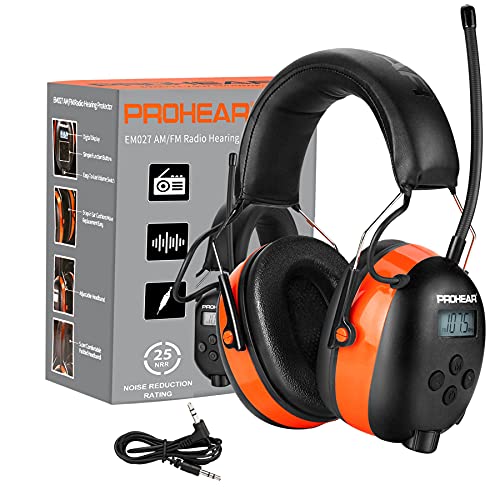
PROHEAR 027 AM FM Radio Earmuffs (25dB NRR)

PROHEAR 037 Bluetooth 6.0 Earmuffs (30dB SNR)

PROHEAR 033 Bluetooth 5.4 Radio Earmuffs (25dB NRR)

BLXSounds USB-C Wired Earbuds

Gaosen 50-Pack Classroom Earbuds
Meet The Standout Selections
The Razor Slim Electronic Muff leans into the slim-cup form factor that has made Walker’s a familiar sight on ranges and loud job sites. Electronic amplification means quiet sounds (voices, range commands, a coworker calling your name) come through clearly while anything over a safe threshold gets compressed, so you can wear these on a busy site without feeling sealed off.
Compared to the bulkier passive muffs that come later in this list, the Razor profile sits lower on the head and tends to play nicely with hard hats and brimmed caps. For shop teachers, volunteer range officers, and DIYers who want awareness, this is a sensible everyday pick.
Reasons It Performs
- Slim profile fits under most hard hats without shifting
- Electronic amplification keeps conversations audible at safe levels
- Compresses impulse noise, so a sudden nail-gun pop won’t blow out your ears
- Folding headband design saves space in a tool bag
Things To Consider
- Electronics rely on batteries that need occasional swaps, especially on long job cycles
- Cushion padding can wear down with daily use and may need replacing
Who It Suits Best
Range instructors, weekend woodworkers, and anyone who wants awareness of their surroundings along with solid attenuation.
Where Another Pick Suits Better
Tradespeople who don’t want to manage batteries at a loud site should consider the Walker’s Razor Slim Passive Earmuff instead.
The passive version drops the electronics from the Razor Slim, which makes it lighter, simpler, and harder to break. There’s nothing to charge, no switch to flip, and no amplification to misbehave in a dusty environment. You put them on and the world gets quieter.
The trade-off shows up in awareness: without amplification, a coworker shouting behind you stays muffled. Landscapers, weekend mowers, and apprentices who just need reliable attenuation tend to land here.
The Value In It
- No batteries or electronics to maintain
- Low-profile cups that fit under a hard hat
- Lightweight enough for long mowing or trimming sessions
- Often one of the most affordable options in the category
Trade Offs
- No amplification means quiet voices stay hard to hear on busy sites
- Padding tends to compress over years of daily wear
- Less useful in situations where situational awareness matters
Made For
Shop classes, homeowner mowing crews, and anyone outfitting multiple workers on a tight budget.
Skip It When
Range shooters and instructors who need to hear quiet commands should choose the electronic Walker’s Razor Slim Electronic Muff instead.
3M’s Peltor Optime 101 is the no-nonsense over-the-head muff that shows up on factory floors and industrial sites everywhere. The over-the-head band keeps the weight off your neck, and the wide cushions seal comfortably across a range of head sizes.
Where the Razor Slim picks earlier focus on slimness, the Optime 101 leans into classic cup geometry. Crews that already use other 3M PPE tend to standardize on this profile for consistency and parts availability.
The Case For It
- Wide, replaceable cushions that hold up to daily industrial use
- Over-the-head band avoids interference with hard-hat ratchet mounts
- Recognized brand with established industrial distribution
Worth Noting
- Larger cup footprint can bump against hoods and tight cabs
- Plain passive muff means no audio, radio, or Bluetooth
- Less stylish for off-site wear than the slim Razor profile
Key Specs
Perfect Match For
Plant workers, warehouse crews, and industrial trades who need a workhorse muff that holds up to daily wear.
Consider Something Else When
DIYers who also want to listen to music while working should consider the PROHEAR 037 Bluetooth 6.0 Earmuffs instead.
The Dr.meter 2-Pack steps outside the job-site lane and into family territory. Two pairs in the box mean one for you and one for the kid who flinches at fireworks, or one for the yard and one for the indoor movie marathon. The padded headband and adjustable fit keep things comfortable across smaller heads.
These aren’t designed for chainsaw-grade noise, but for the average household cacophony they handle the job. Think vacuum cleaners, monster-truck shows, and stadium games.
Why It Works Well
- Two-pack value covers a family without buying separately
- Padded headband adjusts down for children and teens
- Soft cups seal well enough for most indoor noise
Points To Note
- Not rated for industrial construction noise
- Cushion durability on smaller heads tends to wear faster
Who Should Grab It
Parents prepping for fireworks season, concerts, or movie nights with sensitive ears.
A Better Fit Elsewhere
Working adults who need hearing protection for actual job-site noise should choose the 3M Peltor Optime 101 Earmuff instead.
A curveball entry: the E-One stand doesn’t protect your ears, it gives your headphones a home. Made from solid aluminum with a silver finish, it sits on a workbench, a desk, or a shelf and keeps bulky muffs from getting kicked around the shop.
If you wear earmuffs multiple times a day, tossing them on a bench invites crushed cushions and bent headbands. A solid perch solves that. It is a workshop accessory more than PPE, and a surprisingly useful one.
Bright Spots
- Solid aluminum build resists tipping and shop wear
- Universal shape accepts most over-ear headphones and earmuffs
- Compact footprint fits on a narrow shelf or workbench edge
Honest Caveats
- Does not provide any hearing protection on its own
- Base can slide on very smooth surfaces without felt pads
Best Suited To
Anyone who cycles through multiple over-ear sets at a workstation and wants them organized.
Reach For A Different Pick When
Anyone who actually needs to protect their hearing on a job site should look at the PROHEAR 033 Bluetooth 5.4 Radio Earmuffs instead.
The PROHEAR 027 is the “give me tunes while I work” option. AM/FM radio built into the cups, a digital display for tuning, and a stated NRR of 25 dB. The radio pulls double duty: entertainment and a way to catch weather alerts during a long afternoon in the yard.
At 25 dB NRR, you are covered for most mowing, snowblowing, and light shop tasks, though louder table-saw work may want more attenuation. It is the everyday pick for solo work where you want company without streaming from your phone.
Strengths Worth Knowing
- Built-in AM/FM radio with digital tuning display
- Lightweight shell for yard and shop wear
- Weather radio capability on supported AM bands
- Bright orange shell improves visibility on busy sites
Less Ideal Details
- 25 dB NRR is on the lighter side for heavy industrial use
- Antenna reception can struggle inside metal-clad shops
Feature Card
Who Will Love This
Homeowners with acreage, snowblower users, and anyone who likes a radio while working outdoors.
Look Elsewhere When
Bluetooth-first users who want phone streaming should consider the PROHEAR 037 Bluetooth 6.0 Earmuffs instead.
The PROHEAR 037 is the heavyweight in this roundup. A 30 dB SNR rating (SNR, or Single Number Rating, is a European attenuation metric that approximates real-world noise reduction) puts it well above the rest for noisy environments, while built-in Bluetooth 6.0 streams audio from your phone without fuss.
The rechargeable 1100 mAh battery is rated for around 120 hours of playback. For crew leaders who need all-day protection with phone connectivity, this is the workhorse pick.
What Pays Off
- 30 dB SNR handles loud tool use and engine noise
- Bluetooth 6.0 streams cleanly with modern phones
- Long battery life stretches across multi-day work weeks
Where It Is Less Suited
- Battery means you cannot just grab and go
- Heavier shell can feel warm in summer
At A Glance
Right Fit For
Tradespeople and foremen who want strong protection plus phone streaming for podcasts or calls.
Swap It Out When
Anyone who specifically wants AM/FM radio reception should consider the PROHEAR 033 Bluetooth 5.4 Radio Earmuffs instead.
The PROHEAR 033 is the most loaded option in the lineup: Bluetooth 5.4 plus AM/FM radio, with a stated 25 dB NRR and OSHA-compliant (the U.S. Occupational Safety and Health Administration’s hearing-conservation thresholds) construction. If you want one muff that does everything, this is the one to look at.
The trade-off is complexity. More features means more buttons and more chances to fiddle with the controls mid-task. For someone who only wants one pair to do it all, it works; for purists, the PROHEAR 027 keeps things simpler.
A Few Strong Suits
- Bluetooth and AM/FM both built in
- OSHA-aligned 25 dB NRR for typical job-site use
- Rechargeable battery rated around 48 hours of playback
Practical Considerations
- More controls means a learning curve on the cups
- Battery dependency like other Bluetooth options
Quick Facts
The Right Fit
Versatile users who want phone streaming, radio, and hearing protection all in one shell.
Not Your Match When
Anyone working in consistently loud industrial noise above 100 dB should choose the higher-rated PROHEAR 037 Bluetooth 6.0 Earmuffs instead.
Included here as the “different” entry: these are USB-C earbuds, not safety muffs. With newer phones dropping the headphone jack, plug-and-play Type-C listening has become the path of least resistance for everyday audio. They pair naturally with iPhone 15, 16, and 17 devices plus many Android phones.
They do not protect against construction noise at all, but they do deliver music, calls, and podcasts during a commute or a quiet office. Consider these for the personal-listening side of your day, not the job-site side.
Everyday Wins
- USB-C plug works with most modern phones without an adapter
- Wired design sidesteps battery and pairing hassles
- Lightweight enough to live in a pocket
Worth Bearing In Mind
- Zero hearing protection; not for loud environments
- Cable can snag during active use
Built With In Mind
Commuters, students, and anyone with a USB-C phone who wants a no-fuss wired option.
Another Choice May Suit
For hearing safety plus audio in one shell, the PROHEAR 033 Bluetooth 5.4 Radio Earmuffs are the right tool.
The Gaosen 50-Pack exists for a different kind of crowd control. Fifty individually bagged wired earbuds with a standard 3.5 mm jack (the universal headphone plug found on most computers and Chromebooks) cover a classroom, a library, or a training room with one purchase. Multi-colored shells help kids keep track of their own pair.
This is bulk-buy territory. A classroom teacher running thirty stations does not want to track individual replacements, and a bulk pack solves that headache in one shot.
What Stands Out
- Individually bagged pairs simplify classroom distribution
- Multi-color shells help students identify their own
- 3.5 mm jack fits standard school Chromebooks and laptops
Things To Weigh Up
- Bulk wired design is not useful for individual everyday listening
- Some units may need occasional replacement from wear
Whose Shelf It Belongs On
Schools, libraries, training rooms, and any shared space where many people need basic audio at once.
Where A Sibling Pick Shines
Personal everyday listeners should consider the BLXSounds USB-C Wired Earbuds instead.
What Matters Most Before Choosing Construction Headphones
Noise reduction rating is the headline number, but context matters. NRR (Noise Reduction Rating) measures how many decibels a muff knocks off the incoming sound in laboratory conditions. Real-world results land somewhere below that number depending on fit, glasses, and beard. For heavy tools, an NRR of 25 or higher handles most scenarios; louder industrial work calls for the 30+ range.
Form Factor And Comfort
Over-ear cups distribute pressure across the skull and tend to win on long shifts. In-ear plugs and slim-cup muffs trade some attenuation for portability and hard-hat clearance. Try on a pair before committing to a full workweek, especially with safety glasses that can break the seal around the temples.
Audio Features You Actually Use
Bluetooth, AM/FM radio, and amplification each add weight, controls, and battery dependency. If you mostly want quiet, a passive muff like the Walker’s Razor Slim Passive does the job without anything to charge. If music and calls keep you sane during an eight-hour shift, the PROHEAR line covers Bluetooth and radio in one shell.
Durability And Maintenance
Cushions compress over years and are the most likely wear item. Replaceable pads extend the life of an otherwise solid muff by a couple of years, and rotating two pairs lets each air out between shifts.
Smart Choices Before You Commit
Pitfalls Shoppers Hit
Chasing the highest NRR number without thinking about fit often backfires. A poorly sealed 30 dB muff underperforms a snug 25 dB muff, so prioritize how it sits on your head with your glasses or hard hat. Another common slip is buying electronics for a quiet shop, then dealing with batteries that die mid-task.
Where The Extra Money Goes
Higher-tier muffs typically deliver stronger shells, replaceable cushions, and audio quality that holds up over a long day. The PROHEAR 037’s 30 dB SNR and 120-hour battery reflect that step up. For occasional weekend use, a value pick like the Walker’s Passive still does the work.
Frequently Asked Questions
What NRR do I need for construction?
For most residential and light commercial work, an NRR of 25 handles mowers, trimmers, and power tools comfortably. For louder industrial environments, look for 30 dB SNR or higher. Comfort and seal matter as much as the rating itself.
Can I wear construction headphones under a hard hat?
Slim-cup muffs like the Walker’s Razor Slim series are designed to fit under most hard hats without shifting. Bulkier over-the-head muffs may push against the suspension and reduce both comfort and seal, depending on the hat style.
Are Bluetooth earmuffs safe on a job site?
Wired connections or low-volume Bluetooth keep audio from masking important sounds like backup alarms. Keep volume at a level where you can still hear a coworker shout from a few feet away.
How long do earmuff cushions last?
Daily-use cushions typically last one to two years before compression affects the seal. Replaceable pads are available for most major models and cost less than a new muff.
Do passive muffs protect hearing as well as electronic ones?
For straight noise reduction, well-sealed passive muffs match electronic models. Electronics mainly add amplification of quiet sounds and compression of impulse noise, not extra attenuation.
Wrap Up
Construction headphones earn their keep by protecting hearing you only get one set of. For tradespeople on loud sites, the PROHEAR 037 or 033 strike the best balance of protection and connectivity. Weekend warriors and budget shoppers will do fine with the Walker’s Razor Slim Passive. Match the muff to your environment, swap cushions when they compress, and your ears will thank you in a decade.


