

Your iPhone fills up faster than you’d like. ProRes video, high-res photos, downloaded playlists, and offline maps all crowd into the same internal storage, and the dreaded “Storage Almost Full” alert hits at the worst times. An external drive gives you breathing room without paying for a pricier phone tier. The eight options below cover creators moving heavy footage, commuters offloading podcasts, and anyone who wants a simple plug-and-play backup before the next trip.
A Fast Comparison Of The Options

SAMSUNG T7 Portable SSD 1TB USB 3.2 Gen 2 (Blue)
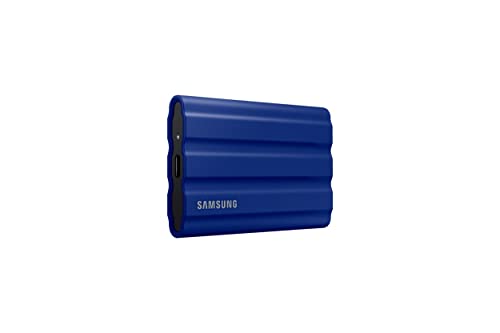
Samsung T7 Shield Portable SSD 2TB USB 3.2 Gen 2

Verbatim 32GB Store ‘n’ Stay Nano USB 3.0 (Blue)

Verbatim Pocket 1TB External SSD USB-C 3.2 Gen 2

Verbatim Pocket 512GB External SSD USB 3.2 Gen 2
Verbatim 16GB Store ‘n’ Stay Nano USB 3.2 Gen 1 (Blue)

Verbatim 32GB Store ‘n’ Go Dual USB-C/USB-A (Blue)
Verbatim 64GB Store ‘n’ Go Dual USB-C/USB-A (Blue)
The Strengths Of Each Pick
The SAMSUNG T7 Portable SSD slips into a jacket pocket without a bulge and still moves files at speeds that put older external hard drives to shame. With USB 3.2 Gen 2 on board, it reaches read and write rates up to 1,050MB/s, which is the difference between a coffee-break transfer and a lunch-break transfer for a full photo library. The aluminum shell stays cool under load and shrugs off the bumps of daily commuting.
For most people who want one drive that handles travel, backup, and editing without ceremony, this one earns its place. iPhone users shooting ProRes video benefit most from the speed, but anyone tired of “Storage Full” alerts will feel the difference within a week.
Everyday Perks
- Up to 1,050MB/s speeds slash large file transfers to seconds rather than minutes
- USB 3.2 Gen 2 interface works with modern iPhones, iPads, Macs, and PCs without adapters
- Credit-card footprint fits easily in pockets, sling bags, and camera cubes
- Solid aluminum chassis stays cool and handles everyday drops
- 1TB holds roughly 250,000 JPEG photos or around 30 hours of 4K iPhone footage
Honest Caveats
- Not rated for water or dust, so beach days and trail heads call for a protective sleeve
- Sustained writes can slow once the internal cache fills, common with very large video projects
- No integrated cable management, so you may find yourself fishing for the right USB-C cable
Feature Snapshot
Who It Suits Best
Content creators, students, and professionals who want one reliable SSD for travel, backup, and quick edits across iPhone and laptop.
Skip It When
The Samsung T7 Shield Portable SSD 2TB is a smarter fit when you shoot outdoors or near water and need a drive that shrugs off rain and dust.
The Samsung T7 Shield Portable SSD wraps the standard T7 platform in a tougher elastomer (a flexible rubber-like shell) and bumps capacity to 2TB, doubling the storage you can take into rough environments. It uses the same USB 3.2 Gen 2 interface as the regular T7, which means the same up to 1,050MB/s throughput, but with added resistance to water, dust, and drops. For creators shooting at the coast or on dusty trails, that armor matters more than raw specs.
You give up some of the slim aluminum feel in exchange for peace of mind, and that trade-off pays off the first time the drive lands on a wet dock or a gravel parking lot. It still pairs cleanly with iPhone Pro models over USB-C.
What Earns Its Place
- 2TB capacity holds roughly a year of iPhone ProRes footage plus editing scratch
- Water and dust resistance protect against splashes, sand, and unexpected rain
- USB 3.2 Gen 2 speeds keep transfers quick at up to 1,050MB/s
- Rubberized exterior absorbs minor drops and bumps better than bare metal
Trade Offs
- Thicker and heavier than the standard T7, so pocket carry is less subtle
- Premium build typically costs more than the non-Shield T7
- External elastomer may show scuffs and grime over time, depending on your carry habits
The Right Fit
Outdoor videographers, travel photographers, and field recorders who shoot in unpredictable weather and want fast, roomy storage that survives the trip.
Reach For A Different Pick When
The Verbatim Pocket 1TB External SSD is a lighter carry for creators who mostly shoot in controlled settings and value a pocket-friendly footprint over ruggedness.
The Verbatim Store ‘n’ Stay Nano is built for situations where you want storage that simply stays put. Its low-profile shape barely sticks out of a USB-A port, so it can live in a car stereo, a work laptop, or a media PC full-time without getting snapped off in a bag. The 32GB capacity is small by SSD standards, but for MP3 libraries, document stashes, and offline car audio, that is often plenty.
Compared to the larger SSDs in this list, this is a different kind of tool. You won’t edit 4K footage from it, but you will wonder how you ever got along without it for everyday file shuffling.
Everyday Wins
- Low-profile design sits nearly flush with USB-A ports, so it stays plugged in safely
- USB 3.0 speeds handle music, documents, and small media libraries with ease
- Snag-free shape reduces the chance of catching on bags or pockets
- Tiny footprint slips into any everyday carry without weight or bulk
Points To Note
- 32GB fills up fast with modern photo and video files, so it suits light duty only
- USB-A only, which means most current iPhones need an adapter or dock to read it
- Not designed for the vibration and heat extremes of every car environment
Who Should Grab It
Commuters who want a permanent storage add-on for car stereos or office laptops and don’t need to move large media files.
A Better Fit Elsewhere
The Verbatim 64GB Store ‘n’ Go Dual USB-C/USB-A suits shoppers who want one drive that plugs directly into an iPhone without an adapter.
The Verbatim Pocket 1TB External SSD earns its name honestly. The body is small enough to ride on a keyring, yet it carries 1TB and pushes up to 1,000MB/s through a USB-C 3.2 Gen 2 connection. That combination is what creators actually want: a drive they forget is in their pocket until they need it. Compared to the larger Samsung T7 above, this one trades a bit of chassis mass for a smaller daily footprint.
You may find the included cable holder and keyring hook genuinely useful, since stray USB-C cables tend to vanish into the same black hole as spare phone chargers.
What Helps Most
- Up to 1,000MB/s transfers keep large photo and video libraries moving fast
- Ultracompact body fits on a keyring or in a coin pocket
- USB-C interface plugs straight into modern iPhones, iPads, and laptops
- 1TB capacity covers a heavy year of mixed phone and camera media
Worth Noting
- Small body can be easy to misplace, so the keyring loop is more useful than it sounds
- Runs warmer under sustained heavy writes, depending on your workload
- Cable is short, which is great for travel but awkward behind desktop towers
Quick Facts
Best Suited To
Traveling creators, mobile editors, and frequent flyers who want high-speed storage that disappears onto a keychain until they need it.
Look Elsewhere When
The SAMSUNG T7 Portable SSD is the stronger call for desktop-bound professionals who want a sturdier chassis and don’t mind the extra size.
The 512GB version of the Verbatim Pocket SSD keeps the same chassis and speed as the 1TB model, just with half the storage. For many iPhone users that is a sweet spot: enough room for a couple of months of photo and video backups, plus a small editing scratch folder, without paying for capacity that sits empty. The compact shape and built-in keyring holder remain the main reason to pick it over a traditional external drive.
It also lists compatibility with PC, Mac, PS5, Xbox, and iPhone, which makes it a single drive for a household that hops between devices. The honest read is that 512GB fills up faster than you’d guess once you start saving ProRes clips.
Useful Touches
- Up to 1,000MB/s transfer rates speed up offloads and direct edits
- Keyring and cable holder reduce daily annoyance with stray cables
- USB 3.2 Gen 2 over USB-C matches current iPhone and iPad ports
- Works across PC, Mac, console, and phone ecosystems without reformatting in most cases
Soft Spots
- 512GB may feel tight for creators keeping multiple project archives on one drive
- No ruggedization, so the small body still needs a pocket or pouch on rough trips
- Short cable can be limiting when used with rear desktop ports
Whose Shelf It Belongs On
iPhone shooters and casual creators who back up regularly but want a smaller, lighter SSD than a 1TB model.
Swap It Out When
The Verbatim Pocket 1TB External SSD makes more sense once your library starts crossing the 400GB mark and you want fewer manual cleanups.
The 16GB Verbatim Store ‘n’ Stay Nano is the smallest member of this roundup, aimed at people who want a near-permanent storage bump on older laptops, kiosks, or car stereos. It uses USB 3.2 Gen 1, which is plenty for moving documents, school projects, and small media collections. The snag-free low-profile design is the same one used on its 32GB sibling, so it stays out of the way once plugged in.
Capacity is the obvious ceiling here. Anything beyond a few hundred documents or a small music library will push past 16GB quickly, so this is a niche pick for a niche need.
A Few Strong Suits
- Lowest-cost entry on this list, useful for outfitting several machines at once
- Low-profile build keeps the drive seated in tight USB-A ports without catching
- USB 3.2 Gen 1 speeds handle everyday file transfers without fuss
Things To Consider
- 16GB fills up fast with modern photos, videos, or app backups
- USB-A only, so iPhones need an adapter or compatible dock
- Too small for anyone managing current-generation media libraries
Made For
Students, families, and small offices that need cheap, forgettable storage for documents and modest media libraries.
Not Your Match When
The Verbatim 32GB Store ‘n’ Stay Nano USB 3.0 is the better step up if your files regularly push past 16GB but you still want a leave-in drive.
The Verbatim Store ‘n’ Go Dual flash drive puts both connectors on one body, which solves the most common iPhone storage problem: getting files off the phone without a hub or adapter. The USB-C end plugs straight into modern iPhones and iPads, while the USB-A end handles older laptops, car stereos, and printers. 32GB is modest, but for offloading photo batches, freeing app space, or carrying a presentation between devices, it earns its keep.
You won’t be editing 4K footage from it, but for quick transfers it is faster and simpler than juggling cables. Owners commonly report that the sliding mechanism takes a gentle touch over time.
Useful Strengths
- Dual USB-C and USB-A connectors remove the need for adapters in most setups
- USB 3.2 interface moves files faster than older USB 2.0 sticks
- Compact body travels well on keychains or in small pockets
- Plugs directly into iPhone 15 and newer models without extra accessories
Factors To Consider
- 32GB caps how many full-resolution iPhone photos and videos you can carry at once
- Retractable tip mechanism needs care, since rough handling can wear the slider over time
- Flash-based storage is slower than SSD options for big video transfers
Perfect Match For
Travelers, students, and casual iPhone photographers who want a small, adapter-free drive for quick file moves between phone and laptop.
Where Another Pick Suits Better
The Verbatim Pocket 512GB External SSD is the right step up for users who regularly offload gigabytes at a time and want SSD-class speed.
The 64GB Verbatim Store ‘n’ Go Dual is the roomier twin of the 32GB version above, doubling capacity while keeping the same dual USB-C and USB-A layout. For iPhone users shooting a vacation’s worth of clips or carrying a music library for offline playback, that extra headroom is the difference between enjoying the trip and rationing storage. It still uses USB 3.2, which is faster than older flash drives you may have lying around.
It is not an SSD, so don’t expect the same throughput as the Samsung T7 or Verbatim Pocket line, but it is far more pocketable and cheaper per unit. Think of it as a media swap card rather than a serious editing drive.
The Value In It
- Dual connectors work with both modern iPhones and older USB-A devices
- 64GB holds a sizable batch of iPhone photos, music, or podcasts
- USB 3.2 speeds outpace legacy USB 2.0 sticks in everyday transfers
- Light, retractable design travels easily without bulk
Points To Keep In Mind
- Flash memory speeds trail SSD options during very large video transfers
- Sliding connector can loosen with frequent use over time
- No rugged features, so it needs a pocket or pouch during active travel
Right Fit For
Frequent travelers and casual iPhone users who want a single drive that bridges phone and laptop without adapters.
Consider Something Else When
The Verbatim Pocket 1TB External SSD fits better for users who want SSD-class speed and far larger capacity in a similar pocket footprint.
Picking Storage That Suits How You Shoot
Match The Connector To Your Phone
The single biggest decision before anything else is connector type. Recent iPhones use USB-C, while older Lightning models need either an adapter or a drive with a built-in Lightning or USB-C plug. Picking a drive that matches your current port removes a daily friction point, since adapters are exactly the kind of small accessory that disappears from bags at the worst time.
Decide Between Speed And Capacity
SSDs (solid state drives) deliver the fastest transfers and handle big video files with ease, but they cost more per gigabyte than flash drives. USB flash drives are cheaper and physically smaller, which makes them great for swapping music, documents, and photo batches between devices. Match the drive to your dominant workload rather than the one that sounds best on paper.
Think About Where It Will Live
A drive that rides on a keychain needs different durability than one that sits in a camera bag or stays plugged into a laptop. Rubberized, water-resistant designs survive accidental drops and weather, while low-profile flash drives are designed to stay inserted for long stretches. For most iPhone users, a balance of pocket-friendly size and modest ruggedness hits the sweet spot.
Plan For Two Years From Now
iPhone storage keeps growing, and so do file sizes with each camera generation. Picking a drive that holds roughly double what you need today gives you room to grow without replacing it next year. That logic is why 1TB and 2TB SSDs dominate this list for heavy users, even when 32GB or 64GB feels like enough right now.
Key Considerations Across These Picks
Pitfalls Shoppers Hit
The most common misstep is buying a USB-A drive for an iPhone that only has USB-C, or trusting a marketing claim about speed that the phone’s port can’t actually deliver. Another frequent miss is underestimating how quickly ProRes and 4K clips fill even “large” flash drives, leading to weekly cleanups instead of monthly ones. Check your iPhone model and current average file sizes before settling on capacity.
What The Higher Tier Buys
Stepping up to a 1TB or 2TB SSD buys two things at once: faster transfer speeds for editing directly from the drive, and enough capacity to keep multiple projects on hand without juggling folders. The premium also covers rugged features like water and drop resistance on models like the T7 Shield, which matter once a drive leaves the desk. For casual backups and media swaps, the extra spend rarely makes sense, but for creators it tends to pay for itself in time saved.


