

Dead battery anxiety is a small daily annoyance that compounds fast. A long commute, a wedding reception with no outlets in sight, a flight with one working armrest USB, a camping weekend where your phone doubles as the map. Any of those scenarios rewards a charger you actually want to carry, not one that lives in a drawer because it is too heavy, too thick, or missing the cable you need.
This roundup focuses on portable power banks that earn their pocket space. Slim magnetic packs for iPhone-first users, multi-cable bricks for families and shared bags, and higher-capacity units for road trips or festival weekends. Every option below is a realistic carry, not a lab curiosity.
The Lineup, Simplified

charmast Power Bank with Built-in 4 Cables

Ntaanoo MagSafe Power Bank 5000mAh Wireless Magnetic

Ntaanoo MagSafe Power Bank 10000mAh Magnetic
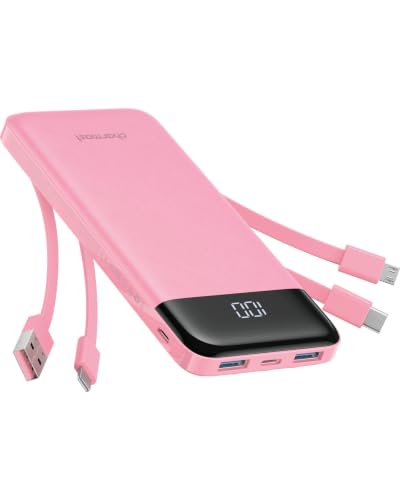
charmast Power Bank with Built-in Cables X 4

VRURC Portable Charger 10000mAh 22.5W Built-in Cable

VRURC Slim Power Bank Built-in 4 Cables

VRURC 20000mAh Fast Charging Power Bank 4 Built-in Cables
Taking A Closer Look At The Options
This is the charger that solves the family problem. Instead of juggling a tangle of cords, the unit stores three output cables plus opens up one USB-C port and two USB-A ports. Six devices can sip power at once, which is the difference between peace and a small riot at a long airport layover.
Capacity sits at 10,000mAh, which roughly covers two to three full phone refills. The reinforced cables tuck neatly into grooves, so the brick slides into a backpack pocket without snagging. Compared to the slimmer magnetic picks later in this list, this one prioritizes ports over portability, and that trade shows up in its slightly thicker body.
A Favorable Mix
- Six outputs running at once remove the “whose turn is it” dance on family trips.
- Built-in cables cover USB-C, Lightning-style, and Micro-USB devices, so most phones and older tablets are covered.
- 10,000mAh capacity handles two to three phone refills before needing the wall.
- Reinforced cable joints tend to outlive the flimsy cords most people carry separately.
Things To Consider
- Six-device output splits wattage, so each device charges more slowly than a single-port session.
- The brick is noticeably thicker than the magnetic picks in this list, which matters in a jeans pocket.
- Owners commonly report the cable grooves collect lint over time and benefit from a quick wipe before travel.
Whose Shelf It Belongs On
Households, group trips, and anyone juggling a mix of old and new phones in one bag.
A Better Fit Elsewhere
Solo iPhone commuters who want a snap-on magnetic fit should look at the Ntaanoo MagSafe Power Bank 5000mAh Wireless Magnetic instead.
This is the smallest unit in the roundup, and that is the whole pitch. At roughly 0.38 inches thick and 119 grams, it snaps to the back of a compatible iPhone and disappears into a jacket pocket or a small crossbody bag. For short days out, you stop thinking about whether you brought a charger.
Capacity is 5,000mAh, which realistically tops up a modern iPhone to about 60 to 80 percent depending on the model. The magnetic ring is the key feature: MagSafe-compatible cases and bare phones align without fiddling, so one-handed use during a commute stays possible. Against the charmast brick above, this one trades ports and capacity for true pocketability.
Features That Help
- 0.38-inch thickness slides into front jeans pockets where thicker bricks simply do not fit.
- Magnetic alignment keeps your phone usable one-handed while it charges.
- 119-gram weight is light enough to forget it is attached during a long commute.
Points To Keep In Mind
- 5,000mAh is a partial refill, so heavy phone users on multi-day trips may run short.
- Wireless charging is slower than a wired cable, and the unit runs warm during a full session.
- Best suited to MagSafe-compatible iPhones, so Android households should pivot to a wired pick.
Who It Suits Best
Solo iPhone commuters and travelers who want a snap-on top-up and do not mind charging every night.
Look Elsewhere When
Families with mixed devices should reach for the charmast Power Bank with Built-in 4 Cables instead.
The bigger sibling to the slim magnetic pick above doubles capacity to 10,000mAh while keeping the magnetic snap-on convenience. That extra reserve covers a long travel day plus an overnight without hunting for an outlet. The unit still reads as pocketable, just at the upper edge of what you want to lug in a front pocket.
USB-C wired input handles the recharge, and the magnetic array keeps the phone and pack aligned during use. Compared to the family-focused charmast brick, this one is built for a single user who values clean cable-free use over multi-device sharing.
Practical Pluses
- 10,000mAh covers a full travel day with reserve for the next morning.
- Magnetic alignment lets you keep using your phone one-handed while it charges.
- USB-C input is the modern standard, so the same cable that charges your laptop can refill the bank.
Honest Caveats
- At full capacity, the pack runs warm during a wireless session, which is normal but worth noting.
- Heavier than the 5,000mAh version, so front-pocket carry gets old on long walks.
- Wireless charging tops out below wired speeds, so a fast refill still calls for a cable.
Made For
Solo iPhone travelers, commuters, and content creators logging long days away from outlets.
Skip It When
Multi-device households should consider the charmast Power Bank with Built-in 4 Cables for shared use.
This charmast variant is essentially the same cable kit as the first pick in this list, repackaged into a slightly leaner shell. You still get USB-C, Lightning-style, and Micro-USB output cables, plus the same USB-C and dual USB-A ports for external cords. The appeal is simple: one brick covers the household cable mess without taking over a backpack.
10,000mAh capacity is unchanged, which means two to three phone refills per charge. Compared to the VRURC 22.5W pick below, this one prioritizes cable variety over raw charging speed, so it favors mixed households over power users chasing quick top-ups.
Why It Works Well
- Three built-in output cables remove the need to pack separate cords for older devices.
- 10,000mAh capacity is the everyday sweet spot for phones and small tablets.
- USB-C and dual USB-A ports handle anything the built-in cables miss.
- Cable grooves keep the unit tidy in a backpack or carry-on sleeve.
Trade Offs
- Charging speed is standard rather than fast, so expect longer refill times than the VRURC 22.5W pick.
- Six-device output means each port slows down when many devices are plugged in at once.
- The shell is still thicker than the magnetic packs, which matters in a small crossbody bag.
Best Suited To
Dorm rooms, shared bags, and households where the device mix changes trip to trip.
Consider Something Else When
Power users chasing the fastest refill should look at the VRURC Portable Charger 10000mAh 22.5W Built-in Cable.
The pitch here is speed. 22.5W fast charging over USB-C pushes a meaningful top-up into a short window, which is the difference between a quick coffee stop and a full reset before heading out the door. A single built-in cable keeps the unit tidy, and the blue finish helps it stand out in a black fabric bag.
10,000mAh is enough for two full phone refills on most modern flagships. Unlike the multi-cable charmast picks above, this one assumes you mainly charge one device at a time and want it done fast. For solo users with newer USB-C phones, that is a fair trade.
The Helpful Details
- 22.5W output refills a phone noticeably faster than standard 10W banks.
- Single built-in cable reduces clutter for solo users who only need USB-C.
- 10,000mAh capacity covers two full phone refills for most modern flagships.
- USB-C input means the same cable that charges your laptop can refill the bank.
Small Caveats
- Only one built-in cable means mixed-device households still need to pack extras.
- Fast charging generates more heat during long top-ups, which is normal but worth knowing.
- Capacity sits at 10,000mAh, so multi-day off-grid trips will outrun it.
Quick Facts
Perfect Match For
Solo power users with newer USB-C phones who want the fastest practical top-up in a compact brick.
Reach For A Different Pick When
Mixed-device households should consider the charmast Power Bank with Built-in Cables X 4 for cable variety.
This is the slim VRURC option in the lineup, built around the same four-cable idea as the charmast picks but trimmed down for everyday carry. Micro-USB, USB-C, a Lightning-style cable, and a USB-A cable are all tucked into the body, which covers older Android phones, newer USB-C flagships, and entry-level tablets in one brick.
10,000mAh capacity means two to three phone refills, depending on battery size. Where it differs from the charmast units above is the form factor: the slim body targets jacket pockets and small crossbody bags, so it suits users who want cable variety without a thick brick in the bag.
Where It Excels
- Four built-in cables cover Micro-USB, USB-C, Lightning-style, and USB-A in one body.
- Slim profile slips into jacket pockets where thicker bricks feel bulky.
- 10,000mAh capacity handles a full day of mixed phone and tablet use.
- Cable grooves keep the body tidy without external cord wraps.
Things To Weigh
- Slim build holds less heat dissipation than thicker bricks, so fast charging can warm the surface.
- Single device fast charging is faster than running all four cables at once.
- Capacity is mid-tier, so multi-day off-grid trips will outrun it.
Who Should Grab It
Pocket-carry users with a mix of newer and older devices who want cable variety without a thick brick.
Swap It Out When
Long-haul travelers should consider the VRURC 20000mAh Fast Charging Power Bank 4 Built-in Cables for extra reserve.
This is the heavy hitter of the roundup. 20,000mAh roughly doubles what the other 10,000mAh packs offer, which covers a full weekend of phone and tablet use without a wall outlet. Festival goers, road trippers, and van lifers tend to gravitate here for that reason alone.
Four built-in cables plus one extra USB and one extra USB-C port means the same variety as the slimmer VRURC option, just with more reserve. Compared to the magnetic picks earlier in the list, this one trades pocketability for raw capacity, and that shows up in a heavier bag.
The Value In It
- 20,000mAh covers a full weekend of phone, tablet, and earbud charging.
- Four built-in cables cover USB-C, Lightning-style, Micro-USB, and USB-A devices.
- Extra USB and USB-C ports add flexibility for non-tethered accessories.
- Fast charging keeps multi-device top-ups moving at a sensible pace.
Some Limits To Know
- Heavier than the 10,000mAh picks, so front-pocket carry is unrealistic on long days.
- Larger body takes up meaningful space in a small crossbody or sling bag.
- Fast charging generates more heat during a multi-port session, which is normal but noticeable.
Built With In Mind
Road trippers, festival weekends, and households that want one brick to share across a long trip.
Where A Sibling Pick Shines
Solo commuters who want true pocket carry should pick the Ntaanoo MagSafe Power Bank 5000mAh Wireless Magnetic instead.
What To Weigh Before Choosing A Portable Power Bank
Capacity in mAh tells you how much energy is in the tank, but real-world refills depend on the phone you carry. A 5,000mAh pack tops up a modern phone to roughly 60 to 80 percent, while a 10,000mAh pack covers two to three full refills. A 20,000mAh unit is overkill for a daily commute but a lifesaver on a long weekend.
Output wattage matters as much as capacity. Standard 10W output handles an overnight refill, but 22.5W fast charging pushes meaningful battery into a coffee break. Wireless magnetic charging is convenient but slower and warmer than wired, so users chasing speed still benefit from a cable.
Cable strategy shapes daily friction. Built-in cables cover the common cases and remove the “where is my cord” moment, while a magnetic pack removes cables entirely. Mixed households benefit from multi-cable bricks, while solo iPhone users often prefer a slim magnetic fit.
Key Considerations Across These Picks
Mistakes Worth Dodging
The classic error is buying on mAh alone. A 20,000mAh brick that lives in a drawer because it weighs too much solves nothing. Match capacity to your real trip pattern rather than the highest number on the page.
Another common slip is ignoring cable compatibility. A USB-C-only brick is great until a friend hands you a Micro-USB phone on a camping weekend. Multi-cable packs trade slimness for flexibility, and that trade pays off for shared use.
When Paying More Pays Off
Higher-tier models tend to add faster wattage, better cable kits, or meaningfully more reserve. The upgrade is worth it for power users who top up during short windows, and for anyone running multi-day trips where one brick has to cover a household. For daily commuters topping up once a day, a slim mid-capacity pack is the smarter spend.
Frequently Asked Questions
How many mAh do I really need?
For a single phone and a daily commute, 5,000 to 10,000mAh is the practical range. For road trips, festivals, or shared use across multiple devices, 20,000mAh gives meaningful headroom without going overboard.
Are magnetic power banks slower than wired ones?
Yes, wireless charging runs slower and warmer than a wired cable at the same wattage. The convenience of one-handed snap-on use is the trade, and for most commuters the speed difference is acceptable.
Can I bring a power bank on a flight?
Most airlines allow power banks in carry-on bags under 100Wh, which covers every pack in this roundup. Check your specific airline for capacity rules before packing.
Do built-in cables wear out faster than separate ones?
Reinforced built-in cables tend to last well under normal use, but they are not user-replaceable. Owners commonly report that keeping the grooves clean and avoiding sharp bends extends cable life.
Is fast charging bad for battery health?
Fast charging generates more heat, and heat is the main long-term stress on lithium-ion cells. For daily top-ups, standard speed is gentler on battery health over years of use.
The Takeaway
Pick the power bank that matches your actual carry, not the highest number on the spec sheet. Slim magnetic packs suit solo iPhone commuters, multi-cable bricks fit shared bags, and 20,000mAh reserves earn their weight on long weekends. The right pick is the one you keep in your bag without thinking about it.


